OpenAI's President Says: The Best Product Is No Product
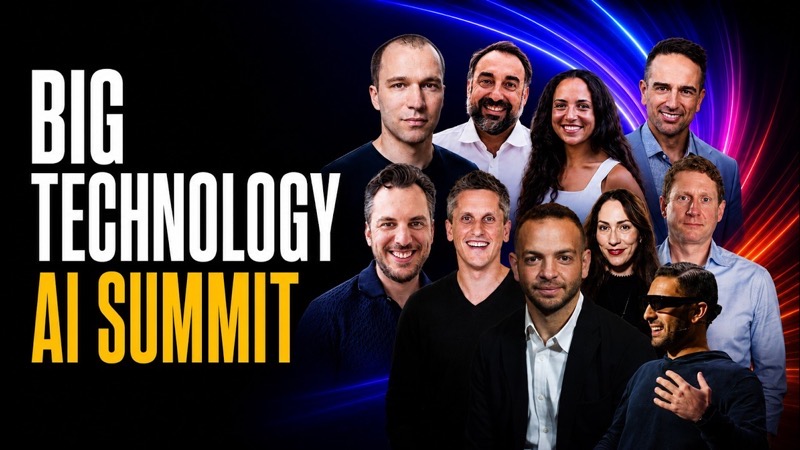
- OpenAI President Greg Brockman sat down for an interview at the Big Technology AI Summit in San Francisco: ChatGPT is about to cross 1 billion users, the company is pushing toward an IPO at a trillion-dollar valuation, and it just closed the largest venture round in history at $122 billion.
- His core thesis is that "the interface will dissolve": in the future, users won't need apps or products — they'll talk directly to a persistent AGI entity, give it a goal, and let it go act.
- Codex has gone from a coding tool to a general-purpose Agent framework; non-technical teams like PR and operations are using it heavily, and internal adoption is nearing Slack-level.
- He asserts scaling laws still hold today — every time a model seems to "hit a wall," digging in reveals an engineering bug; OpenAI's compute strategy is "buy it all," and it has been designing its own chips for years.
- OpenAI is developing multiple hardware devices and building an end-to-end, bidirectional voice model aimed at replacing "turn-taking," so conversations can be interrupted at any time, just like with a real person.
11 years in: how big is OpenAI now
OpenAI president and co-founder Greg Brockman recently sat for a closing interview with Alex Kantrowitz at the Big Technology AI Summit (Commonwealth Club) in San Francisco — their fourth conversation together, covering the Agent era, the shape of interfaces, the compute race, and the product roadmap.
In 2015, he co-founded OpenAI with Elon Musk and Sam Altman to pursue AGI. Eleven years later, the company may well go public within the next year at a trillion-dollar valuation. This interview carries weight because the person speaking stands at the top of that scale, talking about what the product becomes next.
Why it matters: this is OpenAI's president publicly confirming, for the first time, that the company is developing multiple hardware devices; internally, Codex-driven Agent use has reached Slack-level adoption; the context window has grown from 2K tokens in 2022 to 5 to 12 million tokens today; and 230 million people use ChatGPT every week to ask health questions.
He says: the best product is no product
The host restates a common framing: OpenAI is merging Codex, the browser, and ChatGPT into a single "super app," where everything starts from one prompt and the technology then reaches into your browser or computer to get it done. Brockman agrees with that lens, but wants to pull the camera back further.
He says what they're really building is AGI. When ChatGPT launched in 2022, it had no memory, wasn't connected to any tools, and had no context — that kind of conversational intelligence was only a small slice of what people need to get things done. Where OpenAI is heading is an AI that genuinely thinks ahead for you: you give it a goal, and it's constantly thinking about "what can I do for you today," tackling both extremely hard problems and small chores — you wake up to a sorted inbox, or get help working through a medical plan back and forth.
His conclusion: you barely want an "interface," you don't want a "product." What you want is to talk to a persistent entity the way you'd talk to another person, and have it help you reach your goal. The long-term direction is simplification and unification — a system where you don't have to click so many buttons, flip so many switches, or juggle so many modes. The interface will dissolve, bit by bit.
He singles out one line about the relationship between machines and people: the beauty of AI is that it pulls the machine over to the human side, instead of forcing people to adapt to files and folders — details that only make sense to the machine and don't come naturally to people.
Don't believe it? Inside the company, Codex already works this way
"Interface dissolution" sounds like a distant vision, but Brockman says it's already the present tense. Codex has "code" in the name, but it has little to do with code anymore — at its core it's a general-purpose, tool-using execution framework, i.e., an Agent. You can hook it into Slack, Gmail, or a calendar, and plenty of non-technical staff inside OpenAI are already using it.
A colleague on the PR team, organizing an event, had Codex individually ask every attendee about their dietary preferences and automatically build out the entire seating chart — handling all the busywork so she could focus on the parts she actually wanted to invest in.
Codex started out focused on software engineering, but non-engineering usage has exploded, and internally it has essentially reached Slack-level adoption. The whole company runs on Slack and barely touches email — now Codex is starting to feel the same way.
The host frames this as OpenAI becoming an "operating system," but Brockman pushes back on that framing. He says an operating system is almost a concept from another era — a layer in the stack — while what he's after is "what's the ideal interface to AGI," something you could call a kind of "personal AGI." That Agent would have its own computer, its own access — like an ideal colleague who shows up, types things on your machine, and has been granted certain access to your systems by you. That's no different in essence from the trust boundary you build working alongside a human assistant.
Why the old "AI assistant" never really worked
The first time OpenAI tried tool-calling in ChatGPT was the plugins launch in March–April 2023, and Brockman's verdict is that it "just didn't work." But he says the idea wasn't wrong — the underlying conditions simply weren't there yet, the model wasn't ready. In other words, the timing is right now not because AI suddenly got smarter, but because the underlying conditions changed.
- The model could only be exposed to 3 connectors at a time before it started forgetting things
- Context was only 2K, at most 4K tokens — essentially no memory
- Using a tool made it forget things, like early computers with only a tiny block of memory
- The model can now use hundreds of tools at once, hooked into an entire file system
- Context has grown to 5 to 12 million tokens — almost the whole internet at your fingertips
- It can control an entire browser and computer, and is already tackling unsolved math and physics problems
The context window is how much text an AI can "remember" and process at once in a single pass — think of it as the size of your desk. The bigger the desk, the more material you can spread out at once, and the smoother multitasking gets. In 2022, the desk was a sheet of A4 paper; today, it's an entire room.
He also points to an earlier failure: OpenAI once built a feature that let you hail an Uber inside ChatGPT — plenty of companies tried letting you take action inside a chat window, but none of it ever really caught on. The difference now is that the chatbot can directly take over your browser or computer, so you no longer have to worry about whether some plugin works well — it gets things done by taking over your machine.
How much trust do you hand to AI? That's the real product design question
Brockman keeps coming back to one word: trust. In the Agent era, the real differentiator isn't the technology — it's the trust boundary, how much autonomy the AI is allowed to have. He says trust has to be "earned," not simply granted, and the way you earn it is by giving the operator plenty of tools, control, oversight, and supervision — that's the critical product feature. He illustrates it with an email, at three levels of autonomy — try toggling through them yourself.
"Can I send this?"
The AI uses the Gmail connector to find the relevant people in your inbox, drafts the email, then stops and asks for your permission. The safest mode: it asks before every action, and you keep full final control.
"I've drafted it — you send it."
The connector is configured so it's not allowed to send at all, so it only goes as far as the draft, and handing off the send step back to you. Fits cases where permissions are locked down at the product level and don't rely on in-the-moment judgment.
"I drafted it, and I've already sent it."
Once you've built up enough trust with the system, it just handles the whole thing and tells you afterward. Maximum autonomy — on the condition that the trust has already been earned by its track record.
Same AI, same email — but because the trust level is different, the product looks completely different. Brockman says giving the operator "enough oversight and supervision" is exactly the core differentiator for Agent products — whoever designs that trust boundary well is the one whose Agent actually works.
No wall in sight for 80 years: what scaling laws actually are
A few years back, a popular claim was that large language models were about to hit a wall. Brockman says that's wrong. His answer has two parts — the first is basic science: scaling laws keep holding, and this is one of the most mysterious and important empirical observations he knows of. Every time something "doesn't scale as expected," digging into it turns up a bug, bad math, or a bad implementation on your own end — not an actual ceiling.
Give a neural network more compute, more data, and a better architecture, and it gets smarter. It's like expanding a factory: more production lines and better machines mean more output — and so far, no one has found a point where "more input stops helping." This pattern has held for roughly 80 years.
He says he's dug into the history himself: neural networks were designed in the 1940s, before computers even existed, proposed as a model of how the brain processes information; the first hardware implementation was the perceptron in 1959. The milestone results in this field follow an extremely smooth, deterministic path — driven by more compute being poured in.
So the fundamentals allow for it — the hard part is engineering. Building these giant supercomputers is expensive and difficult; you have to design your own networking protocols, and you need people who deeply understand every layer of the stack, because there's no abstraction layer in a neural network — any small error anywhere cascades and eventually surfaces somewhere else entirely. Get the right team together, put the mission in front of them, and put your head down — and that outcome is achievable.
"Buy it all": what's the logic behind it
The host recalls asking Brockman a few months back how much compute to buy; he answered "all of it." The host said, "no, seriously" — and he still said "all of it." That sounds like a gamble, but he says it's a fundamentals-based call. The first pillar: compute is a genuinely scarce resource — the world will never have enough compute to meet all the demand for it, and we're heading into a compute-driven economy.
His most vivid piece of evidence is the enormous gap between two user numbers.
Right now, only about 10 to 20 million people use Agents — nowhere near global scale; ChatGPT has roughly 1 billion users, but Agent capability hasn't reached that scale yet, so the depth of usage is still small compared to where it's headed. That roughly 50x gap is the market that hasn't been reached yet, which shows that large-scale Agent adoption is still at a very early stage.
The second pillar is counterintuitive: the Wall Street Journal reported that OpenAI's upcoming model could be significantly cheaper, but Brockman says a price drop won't shrink demand — it'll pull demand out of the woodwork, like Jevons Paradox. Frontier intelligence will always be the most expensive tier, but a year from now, today's level of capability will look pretty ordinary and easily within reach, while something even better shows up that makes you not want to use the old thing anymore.
When a resource gets used more efficiently, demand doesn't fall — it explodes, because lower cost lets more people, in more scenarios, afford to use it. Cheaper electricity makes people buy more appliances; more efficient oil extraction has actually driven global oil consumption up. AI getting cheaper follows the same logic.
↻ The flywheel spins — so the cheaper it gets, the more you have to "buy it all"
Read more: H100 price inversion and in-house chips
Responding to Satya Nadella's line about models "commoditizing," Brockman pushes back: no layer of the stack gets stripped out — these layers multiply on top of each other. At the very bottom, compute, you can see its value in what people are willing to pay for an H100. Hopper is the previous-generation chip; normally nobody would be buying it, yet its market price has actually gone up and inverted, because everyone is facing an avalanche of demand.
He also says OpenAI's in-house chip project has been underway for years and is progressing excitingly, with more news to announce soon — being able to fully vertically integrate the supply chain is a rare thing. He also notes a shift on the customer side: people used to think "we need to adopt AI fast or get left behind," and now they're asking "is this actually delivering ROI" — which is why OpenAI shipped a cost-control feature that same day.
He closes with healthcare: his most personal answer
Brockman brings up health multiple times throughout the interview, and closes on it. He says applying AI to medicine is his personal motivation for building everything at OpenAI. This isn't a vision — it's something happening right now, in front of him.
His friend Sid Sijbrandij, CEO of GitLab, had cancer. After going through every diagnostic test available, he fed the data into ChatGPT, and a few people helped him build a purpose-built app around it — and they ultimately got the cancer under control. In Australia, there's a dog named Rosie: her owner had a biopsy done on the cancer-stricken dog, ran the mutation data through AlphaFold, and with a chatbot's help designed an mRNA vaccine that was injected into her. The tumor shrank, and the dog could jump over tables again.
Brockman says this will absolutely become the standard, not the exception. He points out that in the past, patients were left unempowered, forced to be their own doctor — you're the one making decisions and bearing responsibility, and if a doctor makes a mistake, you're the one paying for it for the rest of your life, which creates a very different set of incentives. This is deeply personal for him too — his wife has several health conditions, and he says without ChatGPT, he wouldn't know how he'd cope with many of her conditions today.
One piece of evidence he cites is a development OpenAI announced that same day: in peer-reviewed literature, doctors have used O3 (one of OpenAI's earliest reasoning models) to help find diagnoses for people who'd spent years getting no answers from doctors — one case involved someone whose mystery condition went undiagnosed for 20 years before finally being solved. Given how much of the economy healthcare represents, and that doctor and nurse burnout is a real crisis, he says that if AI can help people prevent health problems before they even arise, it could relieve a massive amount of strain.
Without ChatGPT, I wouldn't know how I'd cope with a lot of my wife's conditions right now. Personalized medicine is happening in front of our eyes at this very moment — it's not theoretical. Greg Brockman · Big Technology AI Summit
AI is shifting from "you open an app and click through it yourself" to "state a goal, and it gets done for you"
At the summit, OpenAI president Brockman declared that "the interface will dissolve": in the future you won't need an app or a product — you'll just talk to a persistent AI. This page, with diagrams, covers his full case.
↓ One page, fully covered · includes one animated diagram
The speaker is Greg Brockman, OpenAI's president and co-founder. The company was founded in 2015 to pursue AGI; 11 years later, it may go public within the year at a trillion-dollar valuation, and ChatGPT users are about to cross 1 billion. This time, he's talking about what AI needs to become next.
First, look at what's currently broken. In 2023, OpenAI gave ChatGPT "tool use" for the first time (plugins that could act on your behalf), and Brockman's verdict was that it "just didn't work" — not because the idea was wrong, but because the AI at the time simply couldn't remember anything.
✘ Couldn't actually carry a task through from start to finish
Back then it could only connect to 3 tools at a time before it started forgetting; it could "remember" only about 2,000 words' worth of information at once (technically called tokens, roughly word count), and calling a tool would wipe out everything said before, like an early computer with just one small block of memory.
Brockman's claim is blunt: in the future, you'll barely want an "interface," and you won't want a "product" either. What you want is to talk to an AI that's always there, the way you'd talk to another person — give it a goal, and let it get it done itself. He calls this "the interface will dissolve."
This isn't just talk. Inside OpenAI, Codex (nominally a coding tool, but really a general-purpose assistant that can call all kinds of tools) is already hooked into Slack, email, and calendars — even a PR colleague uses it to individually ask attendees about dietary restrictions and automatically build out the whole seating chart. Its usage inside the company is already nearing that of Slack, which everyone has open at all times. Brockman adds one more thing: how far the AI can go for you depends on how much trust you give it — from "asks you before sending" to "just tells you it's done" — and where that trust boundary gets drawn is the real fork in Agent product design.
So why couldn't this be done in 2023, but can be done now? The answer isn't "AI suddenly got smarter" — it's that the underlying conditions changed: today's AI can use hundreds of tools at once, can take over your entire computer's browser and files, and the amount of information it can remember at once has jumped from 2,000 words to several million words. Only once that's in place does it make sense to talk about it doing your work for you. Below, watch XiaoHu (this site's author) handle the same task, comparing the old path against the new one.
The single biggest change is that AI's "memory" has gotten much bigger. The amount of information it can "remember" and process at once has grown from about 2,000 words in 2022 to 5 to 12 million words today — like a work desk going from a sticky note to an entire room.
How few people currently use Agents is exactly why OpenAI dares to "buy it all" on compute — demand is nowhere near satisfied. Brockman also says the cheaper AI gets, the more people and use cases actually pile on (economists call this Jevons Paradox), which only makes compute scarcer; he also asserts AI won't "hit a wall" — every time it looks like it's topped out, digging in reveals an engineering bug, and this pattern has held for nearly 80 years. As for his most personal motivation: 230 million people use ChatGPT every week to ask about health, and he says applying AI to medicine is why he built OpenAI in the first place.
we again?
nothing gets done...
- × Only 3 tools at a time
- × Only remembers ~2,000 words
- × Forgets everything once it uses a tool
No product either?
in 2023, but works now?
its memory got bigger.
→ 5M–12M words
clear up this plan.
it handles it all
have AI working for them...
has 1 billion.
the untapped market
the very beginning of this.
just say the goal, it's done
Members can copy or download the full Markdown, and let their AI subscribe and ask.
Found this useful? Leave your email — every new explainer, the moment it's out. Unsubscribe anytime.