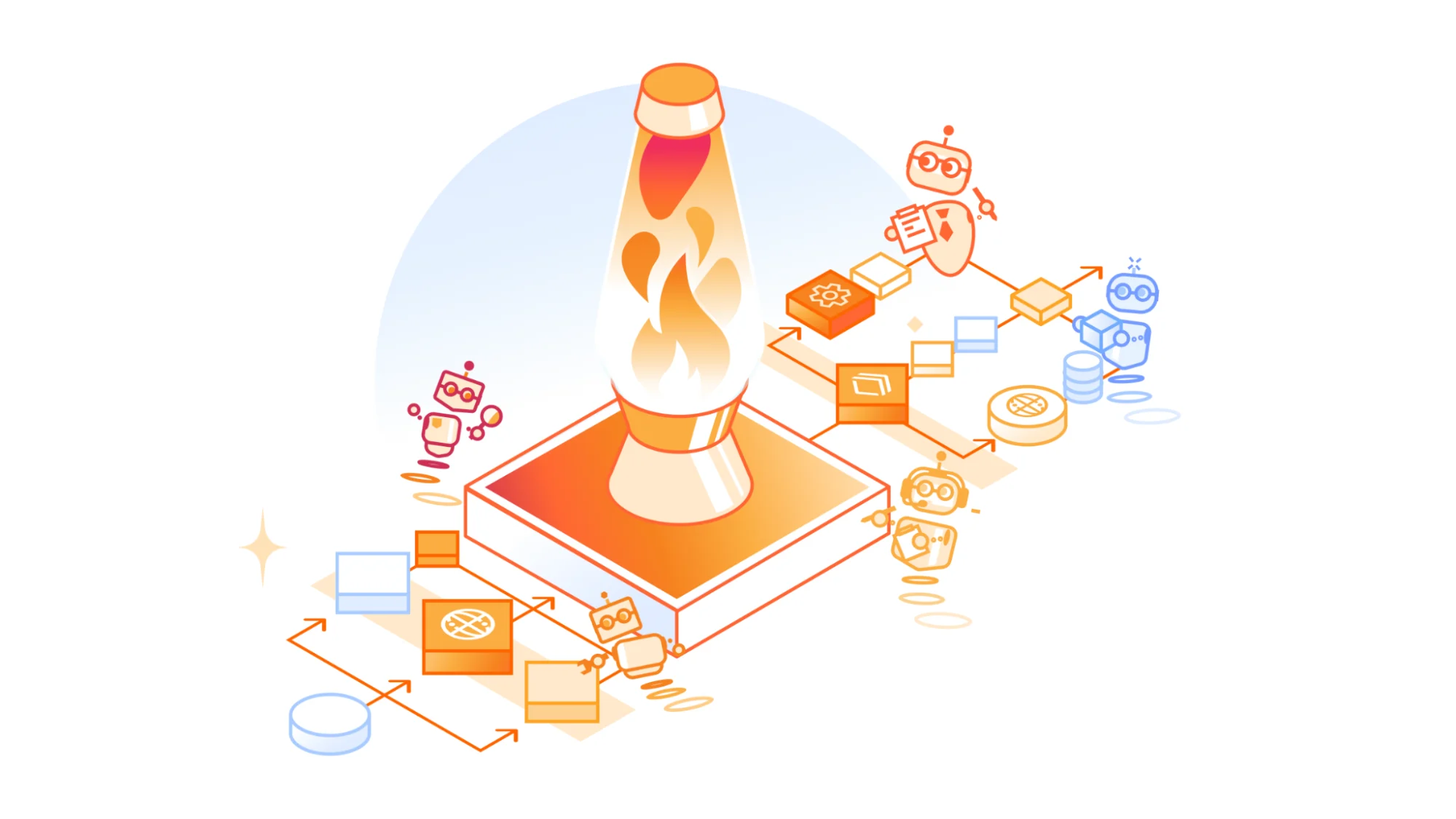
How Should Hundreds of Agents Collaborate When Writing Code Simultaneously? Cloudflare Wants You to Build the Next-Generation Git Platform
Artifacts turns repositories into programmable infrastructure: assigning independent tasks, preserving context, and connecting review with deployment. What really needs designing is how these parallel changes converge.
When it comes to writing code, many people think of GitHub. Over the past decade and more, many development collaboration tools have been built around "human programmers": finish writing a piece of code, save it as a record (Commit), create a parallel branch (Branch) to try out a new feature, and finally open a pull request (Pull Request, or PR for short) to ask colleagues for assistance with a review (Code Review), merging it into the main codebase once there are no issues.
This model worked exceptionally well in the era of human collaboration. But if the primary force writing code today is no longer humans, but hundreds or thousands of AI Agents processing tasks concurrently, does the existing GitHub still hold up?
Cloudflare has offered their answer to this question, announcing that Artifacts, their Git infrastructure designed specifically for AI, has officially entered open beta, while launching a challenge to developers worldwide: use Cloudflare's underlying capabilities to explore what kind of collaboration platform is needed when multiple Agents develop concurrently.
In simple terms, Artifacts is a cloud filesystem that supports standard Git operations, allows repositories to be managed programmatically, and preserves historical versions of files. Serving as a code foundation geared toward Agent collaboration, it allows developers to programmatically create independent repositories on demand for individual Agents, sessions, or tasks, preserving code along with Agent task background, instructions, and other context. Its main features include:
- Directly controlling repositories via Worker code: With specialized bindings, repositories can be created or forked directly within program logic, context files can be read, commits inspected, and repository-scoped Git Tokens issued, integrating these repository operations into task workflows.
- Integrating Workers builds and branch previews: Once a repository is connected to the build service, pushing to the production branch can automatically trigger builds and deployments, while pushing to other branches automatically generates an independent preview environment, making it convenient to safely test changes before going live.
- Subscribing to repository events: Supports listening to events such as repository creation, forking, deletion, pushes, and pulls, allowing subsequent workflows (such as spinning up a code review Agent, executing CI tasks, or deploying) to be automatically triggered after code changes.
- Selecting data storage and processing jurisdictions: When creating a namespace, a data storage and processing jurisdiction (such as the US or EU) can be specified, and all repositories under that namespace will automatically adhere to the corresponding jurisdictional restrictions.
- Viewing repository operational metrics: Total operations, pull volumes, push volumes, and error rates for each repository can be viewed in the dashboard or queried directly, making it convenient to monitor actual repository usage and quickly troubleshoot anomalies.
When Multiple Agents Write Code Together, the Bottleneck Shifts to Coordination and Review
To understand why Cloudflare is doing this, one must first look at the challenges the existing development model encounters when faced with large numbers of AI Agents.
In traditional software teams, committing, reviewing, and merging revolve around human-to-human collaboration, where human energy and attention are extremely scarce: code cannot be modified haphazardly, and reviews are needed to manage the risk of changes.
Now, however, with the explosion of various coding Agents, the situation has completely changed:
- A surge in concurrency: Where a project used to be maintained by ten people, in the future a project may have hundreds of Agents simultaneously fixing bugs, adding new features, supplementing test cases, and upgrading dependency libraries. As changes continue to accumulate, humans need to know which ones to prioritize reviewing and how to compare multiple approaches.
- Code conflicts and collaboration chaos: When dozens of Agents modify different logic in the same codebase, who knows what other Agents are currently changing? If two Agents modify the same file, who arbitrates?
- "Why it was modified" becomes harder to trace than "what was modified": Looking solely at which lines were changed (Diff) does not necessarily reveal the task background, constraints, and trade-offs; this context also needs to be preserved to facilitate subsequent handoffs.
Cloudflare's assessment is that collaboration models built for humans need to further adapt to large numbers of Agents developing simultaneously.
The Core Foundation: What Exactly Is Artifacts?
Many people's initial reaction might be to ask: Is Cloudflare trying to build a web UI to compete for users with Microsoft's GitHub?
Not at all. Cloudflare is doing something much more fundamental.
Earlier this year, Cloudflare launched an underlying service named Artifacts. In simple terms, it is a cloud filesystem equipped with version control capabilities, supporting Git operations, and claimed by Cloudflare to scale to millions of repositories.
It provides repository operations that can be invoked programmatically:
- Repositories can be created or forked programmatically: Developers can create repositories for each task, session, user, or Agent, giving parallel work independent version histories.
- Storing code, as well as the Agent's reasoning context: Not only does it preserve historical versions of source code, but it also persistently saves the Agent's runtime prompts, conversation logs, and contextual background.
- Native compatibility with Git syntax: Agents do not need to learn any fancy new interfaces; operations they are already familiar with, such as
git clone,git push, andgit fetch, are all supported natively by Artifacts.
Over the past period, many AI coding tools (including vibe-coding platforms that let AI generate projects via natural language) have already used Artifacts to store user-created projects, or to let multiple Agents start from the same baseline in mutually isolated independent repositories to try things out separately before comparing results.
And in the latest open beta release, Cloudflare has added several crucial pieces to this foundational puzzle.
Pushing Code Deploys Production Branches and Generates Previews for Others
After code is placed in a repository, it still needs to be built and deployed before its actual runtime behavior can be observed.
Now, Artifacts can connect to Workers Builds via repository connections:
- Automatic publishing for production branches: As long as you or an Agent pushes code to the production branch (Production Branch), Cloudflare will automatically complete the build and deploy the updated Worker live.
- Feature branches automatically generate independent previews (Workers Previews): If an Agent is developing on a temporary branch, after pushing code, the system will automatically create or update a dedicated preview environment. This environment comes with an independent, dedicated access link for testing changes before officially going live, allowing not only humans to click and view it directly, but also other testing Agents to access the link directly for verification.

Whether a new project is saved directly in Artifacts or an existing Worker is bound to a repository, the entire pipeline from development to going live is heavily compressed into the single action of a Git push.
Controlling Git Repositories Directly with Code Inside a Worker
This capability allows repository operations in task assignment to be written into code.
Cloudflare Workers is a platform for running applications and automation code. After configuring an Artifacts Binding (environment binding) in a Worker, developers can directly call repository interfaces through the binding object within Worker scripts.
For instance, the official example code below demonstrates how to automatically provision an independent environment for an Agent when the system receives a new task:
// 1. 获取主项目仓库
using project = await env.ARTIFACTS.get("my-project");
const { defaultBranch } = await project.info();

// 2. 为当前任务分叉(Fork)出一个独立仓库
const workspace = await project.fork(`task-${crypto.randomUUID()}`);

// 3. 读取主分支里的说明文件(给 AI 看的指令)
using repo = await env.ARTIFACTS.get(workspace.name);
const instructions = await repo.readFile({
  ref: defaultBranch,
  path: "AGENTS.md",
});

// 4. 将仓库地址、鉴权 Token 和任务指南准备成任务信息
const agentTask = {
  remote: workspace.remote,
  token: workspace.token,
  instructions: instructions ? await instructions.text() : null,
};
To put this process in plain terms:
- Opening an independent workstation: The main project stays untouched where it is, and the Worker forks a new repository (workspace) directly using a randomly generated task ID. The Agent can make sweeping changes inside it with complete freedom; even if things break completely, the original code remains entirely unaffected.
- Retrieving project context: The Worker reaches directly into the repository to read
AGENTS.md, retrieving the project specifications and background instructions written for the AI. - Providing repository access credentials: Obtaining the Git access credentials (Token) and remote URL (Remote) of the forked repository, handing over the code and task instructions to the Agent all at once.
The aforementioned repository operations can be accomplished by code; agentTask is merely prepared task information, and the actual step of invoking the Agent still requires developers to connect it.
Listening to Every Change to Automatically Trigger AI Code Reviews
When an Agent finishes modifying code and pushes it back to the repository, how does the subsequent workflow connect?
Artifacts features a built-in event subscription mechanism (Event Subscriptions). Whenever a repository changes—whether a repository is created, forked, deleted, or someone performs a Push, Clone, or Fetch—the system automatically broadcasts an event message outward.
You can write a Worker dedicated to receiving these messages. For example, the official documentation provides an example of "automatically triggering a review upon code push":
export default {
  async queue(batch, env) {
    for (const message of batch.messages) {
      const event = message.body;

      // 只关注“代码被推入仓库”的事件
      if (event.type !== "cf.artifacts.repo.pushed") continue;

      // 自动启动一个后台审查工作流(Workflow)
      await env.REVIEW_WORKFLOW.create({
        params: {
          namespace: event.source.namespace,
          repo: event.source.repoName,
          ref: event.payload.ref,
          commit: event.payload.after, // 最新提交的 Commit 哈希值
        },
      });
    }
  },
};
This code hooks "pushes" into "launching review workflows": the Worker filters for push events and then passes the namespace, repository, branch ref, and new commit to REVIEW_WORKFLOW. Based on this, the review workflow knows which version to inspect.
As for how to invoke review Agents, run tests, handle conflicts, and approve merges, that remains for developers to implement in their own Workflows. Event subscriptions provide the triggering and bridging capabilities.
Choosing Data Jurisdictions for Repositories and Monitoring Operational Errors
Beyond the development flow, the two things enterprise-grade development cares about most are "where data resides" and "whether repository operations fail."
1. Data Storage and Processing Jurisdictions (Data Jurisdiction)
Many enterprises (especially European enterprises) face strict legal restrictions on cross-border data transfers. Now, when creating a namespace via the API, simply specifying the data jurisdiction parameter (for example, "jurisdiction": "eu") ensures that all code repositories created under that namespace inherit the corresponding US or EU data storage and processing restrictions.
curl "https://api.cloudflare.com/client/v4/accounts/$ACCOUNT_ID/artifacts/namespaces" \
  -H "Authorization: Bearer $CLOUDFLARE_API_TOKEN" \
  --json '{"namespace":"my-eu-namespace","jurisdiction":"eu"}'
2. Visual Monitoring of Repository Metrics
When hundreds of Agents constantly pull and push code, relying solely on human eyes staring at the command line will make problems hard to spot. Cloudflare has integrated a metrics panel directly into the dashboard, displaying the total operation volume, pulls (Pulls), pushes (Pushes), error counts, and error rates for each repository.

Developers can not only view charts on the web, but also directly retrieve these monitoring metrics via API to integrate into their team's alert dashboards.
Commercialization and a $25,000 Platform Credit Prize: Designing the "Next-Generation GitHub" Together
With the rollout of the open beta, commercialization plans have also been clarified: Artifacts pricing will be based on repository operation counts (Operations) and the actual amount of data stored. This billing will officially take effect in mid-October.
However, the most eye-catching aspect is the developer challenge Cloudflare launched alongside it:
- Goal: Build the "Git platform for the AI era" in your mind using Cloudflare Workers and Artifacts.
- Hard baseline: The official announcement explicitly stated that they do not want submissions that merely tack Agents onto the existing GitHub model; projects must at least support multiple Agents concurrently modifying code. On that foundation, rethink the forms of repositories, branching, merge conflicts, and the preservation of decision context.
- How to enter: Submit a 5-to-10-minute demo video, complete source code under an open-source license (MIT, Apache, or BSD), and instructions for running and deploying the project. The competition deadline is mid-October.
- Prizes: The top three selected teams (up to 2 people per team) will be invited to fly to San Francisco to present on stage at the Cloudflare Connect conference; the winning team will also receive $25,000 in Cloudflare platform credits and an invitation to Monday's VIP speaker dinner at Connect.
Currently, users with a Workers Paid plan can enable the Artifacts open beta experience directly in the dashboard. At the end of the official blog post, Cloudflare also provides a one-click prompt copy entry for developers to guide their coding Agents to automatically initialize Artifacts repositories and push code.
The Foundation Has Been Provided; Collaboration Rules Remain the Product for Developers to Build
Artifacts provides programmable repositories, version storage, event triggers, and deployment connections. Based on this, developers can preserve session context, have multiple Agents modify code separately starting from the same baseline, and then compare the results.
What really needs designing is how these results converge: how tasks are assigned, how changes are reviewed, how conflicts are handled, and why a particular approach was chosen. Forking repositories can isolate modifications, but it will not automatically solve these collaboration challenges for teams. Cloudflare's competition is precisely an invitation for developers to build this layer.
Members can copy or download the full Markdown, and let their AI subscribe and ask.
Found this useful? Leave your email — every new explainer, the moment it's out. Unsubscribe anytime.