Deep Dive with ElevenLabs Co-founder: How to Build an AI-Native Company and Turn Customer-Facing FDEs into a Free R&D Lab
Mati Staniszewski breaks down ElevenLabs' product strategy, team management, and enterprise growth playbook, with a deep dive into the FDE approach borrowed from Palantir: deploying engineers directly to customer sites, then feeding delivery learnings back into the core product.
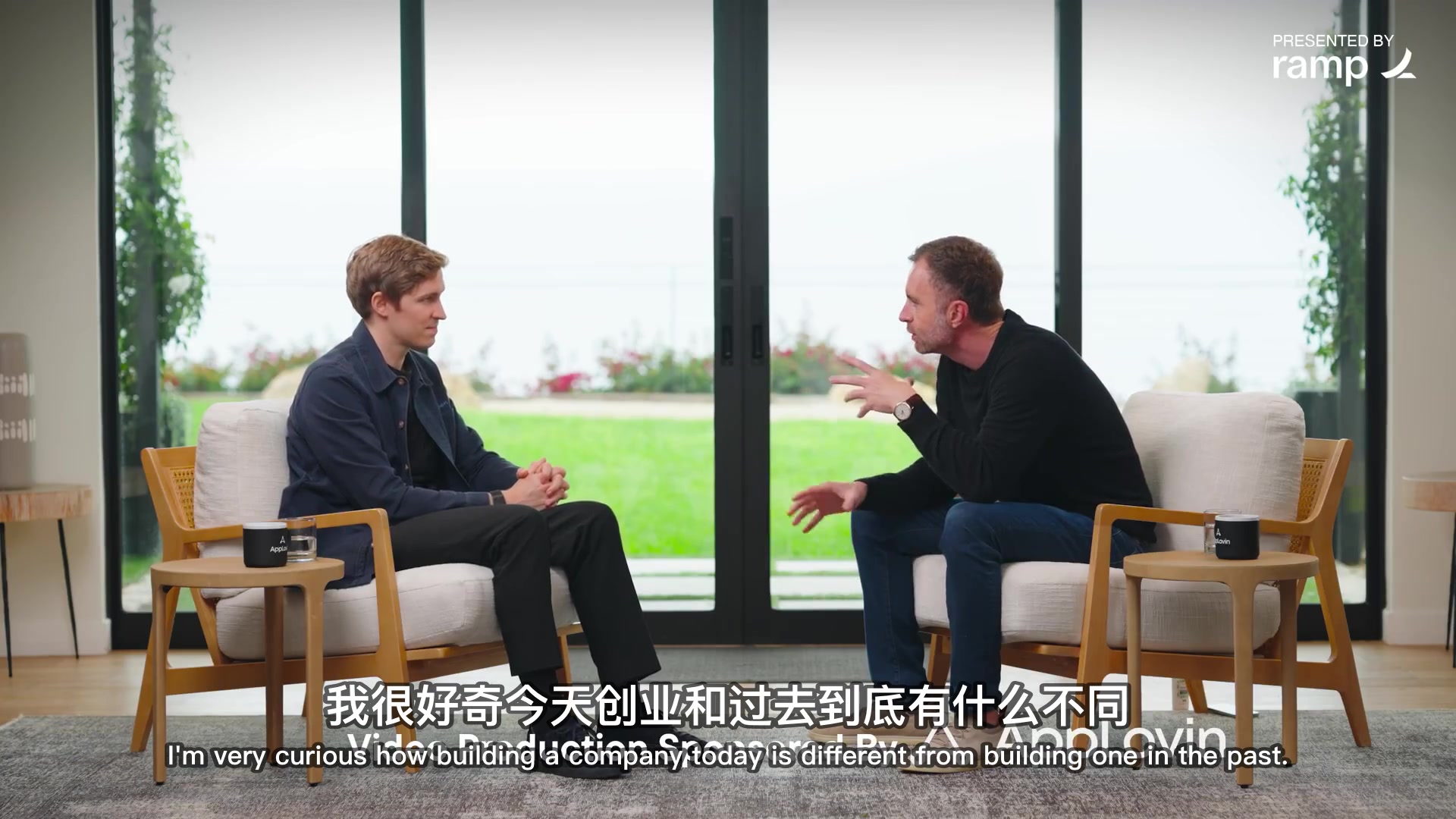
Business podcast host David Senra conducted a 71-minute in-depth interview with ElevenLabs co-founder and CEO Mati Staniszewski. Mati openly shared how they rose rapidly within a few years, along with the hardcore business logic, product strategy, and team management philosophy behind their growth.
Among the highlights, what stands out as most compelling is: borrowing the "forward deployed engineer" playbook from big data giant Palantir.
- No blind faith in suited sales reps: Mati previously worked at Palantir, the renowned Silicon Valley big data company. He brought over his former employer's playbook—rather than relying solely on traditional sales reps to pitch software, they send Forward Deployed Engineers (FDEs) directly into customer offices to solve problems side-by-side with teams at large enterprises like banks and telcos.
- Turning major clients into a free R&D lab: More crucially, these FDEs belong to the product team, not the sales team. After helping major clients solve practical problems such as voice customer service and system integrations, they bring reusable industry domain knowledge back to the company and build it into ElevenLabs' core product. The next customer therefore doesn't have to start from scratch, while real-world enterprise environments continuously surface product gaps for ElevenLabs.
Mati founded ElevenLabs in 2022 with Piotr Dąbkowski, a friend of 15 years. Piotr had previously conducted text model research at Google and worked in computer vision earlier; Mati, with a background in mathematics, built risk models at BlackRock before moving to Palantir, where he deployed optimization models into real-world environments like UK vaccine rollout and oil and gas operations. One was responsible for pushing audio research to the frontier, while the other excelled at getting models into production environments at customer sites. This division of labor later became the foundational structure of ElevenLabs.
Failing to Build End-to-End Dubbing Led to Their First Product
ElevenLabs' starting point traces back to a shared memory from the two founders growing up in Poland. When foreign movies and TV shows were imported locally, there was a long-standing practice of having a single voiceover artist read lines for every character across the entire production. Men, women, the elderly, and children all shared the exact same voice, almost entirely erasing the characters' original emotions, intonation, and identity. In 2021, the pair realized this practice was still around, leading them to wonder: could content transcend language barriers while still preserving the original voice's character and emotion?
The vision sounded like "automated dubbing," but in engineering terms, it was a long pipeline linking three distinct technologies: first transcribing speech to text, then translating it into the target language, and finally regenerating the speech in another language. Mati recalled that speech-to-text already had research backing from organizations like NVIDIA, and translation from DeepL and Google was reasonably usable, but the complete pipeline was still far from mature. Speech generation in particular was a bottleneck: existing solutions sounded robotic, and while some open-source projects offered slightly better output, they were painfully slow and unstable.
Meanwhile, when the team took their dubbing concept to creators, the feedback they received was far more concrete than technical evaluations. Creators certainly wanted their content to reach more language markets, but they faced more pressing problems right in front of them: if they flubbed a single line in a video recording, could they fix just that one sentence? Before filming, could they preview the script read aloud? When producing voiceovers, could they directly use natural AI voices?
Thus, research bottlenecks and user needs converged at the exact same point. Piotr led the research team to tackle Text-to-Speech (TTS) first, while the product side initially focused on helping creators generate voiceovers, preview scripts, and fix audio, temporarily setting full cross-language dubbing aside. According to Mati's recollection, their first-generation model in 2022 finally crossed the quality threshold of sounding "human." The more important business logic was that instead of reducing a grand vision to a mere slogan, the team identified a link within the long chain that could solve an independent problem on its own while driving underlying research forward.
Many so-called "narrow beachheads" simply mean smaller markets. ElevenLabs' entry point was different: it simultaneously reduced product complexity and concentrated limited research resources on the weakest link of the entire dubbing pipeline. Once voice generation improved, the voiceover product was immediately viable, and the future vision of automated dubbing took a step forward as well.
Research Focuses Exclusively on Audio, but Products Can Take Many Forms
What later puzzled the host was how ElevenLabs managed to combine razor-sharp "focus" with a "broad array of products." The company offered reading apps like ElevenReader, as well as tools for content creation, localization, enterprise customer service, and sales agents. Yet Mati's summary of the company remained remarkably consistent: research plus product delivery.
The host drew an analogy to Soichiro Honda's "engine research laboratory." Honda could build motorcycles, automobiles, and power equipment, but their shared technological core was the engine; if a new product didn't need an engine, Honda had no reason to enter it just for the sake of diversification. Mati agreed with this mindset. ElevenLabs' research side focuses exclusively on audio, while the product side integrates audio with knowledge bases, large language models, brand assets, and enterprise systems.
The host then conceptualized this into three layers, which Mati endorsed: the foundation is audio research encompassing text-to-speech, speech-to-text, localization, and conversational orchestration; the middle layer is a platform that integrates knowledge, brand identity, and external systems; and the top layer consists of concrete applications like ElevenReader, content creation, customer support, sales, and operations.
These three layers explain why having "many products" does not automatically mean losing focus. When evaluating new directions, the company asks: is audio the critical bottleneck in this user experience, and can our proprietary models deliver a unique improvement? If the primary determinant of success lies in video, imagery, or general reasoning, the team has little justification to build it from scratch themselves.
Digital avatars and lip-syncing served as Mati's counterexample. The team previously considered pairing cross-lingual audio with digital avatars, but at the time visual quality was the primary weak point of the overall experience. Even with great voice quality, the finished output would still be held back by the video model, so they paused investment in that area. Later, as external image and video models improved, ElevenLabs could revisit composite products like ad localization, but still opted to leverage external video capabilities—focusing internally on audio, language, and localized adaptations of existing assets without training their own foundational text-to-video models.
This boundary likewise ruled out general knowledge work and code models. ElevenLabs positions itself as a "communication platform": enterprises bring in their knowledge, brand assets, and system integrations, and then deploy consistent voice and conversational agents across the entire customer journey—marketing, sales, customer support, and operations. It competes exclusively in the layer of how people and businesses convey content, knowledge, and conversation through voice.
How Deutsche Telekom Expanded from a Content Product into the Telecommunications Network
The partnership with Deutsche Telekom illustrates how this platform enters large enterprises. The two sides did not start with the most critical, high-risk customer service workflows. Two years ago, voice agents were neither reliable enough nor fast enough in Mati's view, so Deutsche Telekom first deployed ElevenLabs in marketing and content scenarios: generating daily audio content in the Magenta app and producing advertisements.
Only after the first application was genuinely deployed and delivering value did the partnership expand into call centers. At this stage, natural-sounding voice was merely the outermost layer; the agent also had to connect to Deutsche Telekom's knowledge base and CRM to understand product details, refund procedures, and recent billing statements. On the output side, it had to integrate with telephony systems via SIP trunking or Twilio, while business teams had to translate "how a call should be handled once picked up" into workflows the agent could reliably follow.
Prior to going live, both sides conducted simulated testing and reviewed call transcripts before starting with small-scale rollouts. Going live officially did not mark the end of the project; instead, volume was scaled gradually alongside continuous evaluation, monitoring, and tuning. Further down the line, Mati noted that Deutsche Telekom even deployed agents directly into the telecommunications network, allowing T-Mobile users to bring an agent into phone calls to assist with reservations or perform real-time translation and dubbing.
This progression reveals the true logic of enterprise expansion: validate product value in lower-risk scenarios first to earn the opportunity to enter the next workflow. The closer you get to core operations, the heavier the non-model engineering becomes—integrations, testing, and continuous operations. A voice interface that looks impressive in a demo is separated from a production customer service system handling real bills and refunds by an entire layer of enterprise engineering.
Mati therefore draws a clear distinction between proof of concept and proof of value. A client willing to watch a demo only proves the technology is interesting; having the first application running in a production environment is what justifies moving forward with the second.
Deutsche Telekom's expansion path
The closer the product gets to core operations, the more it needs beyond a voice model
Select a stage to see how proof of value, system connections, and operating requirements deepen together.
Low-risk entry
First prove the product creates value in a real environment
- Application
- Daily audio content in the Magenta app and advertisement production.
- What gets added
- Connect generation capabilities to the content production workflow.
- Success condition
- Move from an interesting demo to a genuinely deployed first application.
Core workflow
Beyond voice, the product must carry enterprise systems and business rules
- Application
- Voice agents enter customer-service calls and handle product, billing, and refund questions.
- What gets added
- Knowledge bases, CRM, telephony, business logic, and communication links.
- Success condition
- Simulation, call-log review, and limited rollout before gradual expansion and continuous monitoring.
Network-level capability
The agent becomes part of the communication process itself
- Application
- Join T-Mobile users' calls to help with reservations, real-time translation, and dubbing.
- What gets added
- Move beyond one enterprise workflow and into the telecommunications network.
- Success condition
- Earlier use cases have proven value and built more mature integration and operating capabilities.
Current view: use a content scenario to prove value and earn access to the next workflow.
FDEs Must Complete Two Deliveries
A voice model sounding human in a demo is separated from answering actual customer service calls for Deutsche Telekom by an entire production system. The model has no idea which CRM customer records live in, nor does it inherently understand refund and billing procedures. It must connect to knowledge bases and telephony infrastructure, execute according to enterprise business logic, and undergo simulated testing, transcript verification, and limited-scale rollouts. Even after going live, the team must continuously evaluate, monitor, and fine-tune performance.
The people responsible for bridging this gap are Forward Deployed Engineers (FDEs). On the Deutsche Telekom project, ElevenLabs' FDEs traveled to Bonn, Germany, working shoulder-to-shoulder with the client's team on integration, testing, and rollout. Here, "forward deployed" does not simply mean geographic relocation; more importantly, it means engineers stand on the side where problems actually happen—bypassing layers of secondhand relay through sales, project managers, and management to directly see how real systems operate and where the product gets stuck.
Mati's conviction in this working model stems from Palantir. Earlier at BlackRock, due to compliance and security protocols, even sending an outbound email after joining required prior review by his team. At Palantir, immediately after onboarding, he was dispatched to Aberdeen, Scotland, working directly alongside frontline personnel in North Sea oil and gas operations to understand real-world problems and bring that knowledge back to the company. These contrasting experiences taught him that the further you are from the problem, the more likely information gets sanitized through reporting layers into requirement specs that look neat on paper but distort reality.
Yet "engineers visiting customer offices" still does not fully define an FDE. Systems integrators, implementation consultants, and post-sales support engineers also go on-site. What truly sets ElevenLabs' approach apart is that FDEs organizationally belong to the product team, not the go-to-market team, and possess a deep understanding of the product roadmap. They are accountable for immediate deployment outcomes while simultaneously evaluating whether on-site challenges should reshape the product itself.
Consequently, FDEs must effectively complete two distinct deliveries.
The first delivery is to the current customer: getting the agent up and running in real-world operations. In Deutsche Telekom's case, this meant bridging the knowledge base, CRM, and telephony systems, translating business rules into executable workflows for the agent, validating call outcomes, and progressing from small-scale pilots to a full production launch. Completing this step proves not that "the model can speak," but that the system can integrate into the enterprise's existing technical and operational environment.
The second delivery is to ElevenLabs' core product: bringing on-site learnings back from the engagement. Can a newly built connector become a standardized integration for other customers? Can recurring workflows observed in healthcare or telco engagements be transformed into better default product flows? Did a specific failure stem from this customer's idiosyncratic configuration, or did it expose a product gap that many enterprises will encounter? FDEs understand the roadmap precisely so they can hand these insights back to the product team, rather than merely leaving behind a patchwork of one-off fixes that keep the current engagement barely running.
The FDE's two deliveries
First get the customer running; then make the product more reusable
Switch between the two outcomes to see where the same deployment can take the company.
CRM, telephony, knowledge, and business rules are intertwined.
Integrate, test, launch, and observe side-by-side with the customer.
Decide which lessons can become reusable integrations or product experience.
The result remains in bespoke configuration and patches; more customers create more repeated delivery and maintenance.
Recurring problems become standard integrations or defaults, so the new project avoids retracing old ground.
Current result: field experience enters the core product, so the next customer does not start from scratch.
If the result stays in one customer's configuration and patches, it is a service. If it improves the general product, the customer site becomes an R&D accelerator.
To gauge whether the second delivery actually took place, look at the next similar customer. If the team still has to rewrite similar connectors and resolve the exact same product gaps, the previous project produced little more than individual tribal knowledge. But if existing integrations can be reused out of the box and the product's default workflows have absorbed the lessons of the prior rollout, the new customer doesn't have to start from scratch. That is true "knowledge feedback," not simply wrapping up a retrospective and filing notes into documentation.
This step also determines whether a company is selling a product or steadily sliding into customized IT services. If onboarding every new enterprise client requires hiring another team to rebuild systems and maintain proprietary patches, revenue growth will inevitably carry a proportional delivery burden; the more field engagements you take on, the more fragmented the product becomes. But if FDEs bake recurring problems into the platform, the deployment funded and validated by one customer reduces redundant work for the next. The customer site thus ceases to be merely the final delivery endpoint—it becomes the very place where universal product gaps are discovered.
What the headline calls a "free R&D lab" doesn't mean the customer's labor and resources are literally free; rather, ElevenLabs doesn't have to sit behind closed doors guessing what problems enterprises will encounter. Deutsche Telekom's service plans, billing rules, and operational playbooks remain its proprietary domain expertise and competitive advantage; what ElevenLabs takes away is how software should accommodate that knowledge—what integrations are required, how product workflows should be organized, and which capabilities belong in the core platform. A client's proprietary business cannot be packaged into a public template, but the software architecture required to support such business operations can be generalized.
Thus, an FDE is not simply an extra title squeezed between sales and R&D, but a closed loop built between them: one end pushes the product into the most complex real-world environments, while the other channels the issues surfaced by those environments back into the product. For this loop to function, FDEs must stay close to customers, report into the product team, and understand the roadmap; meanwhile, internal teams must be equipped to receive and act on these front-line signals. The challenge naturally shifts from "how to send engineers on-site" to "how the organization ensures field insights don't vanish across hierarchy."
An AI-Native Organization Is First and Foremost an Information Architecture
Once FDEs bring a wealth of signals back from the field, internal teams must have the capacity to absorb them. ElevenLabs' flat structure is not achieved simply by "having fewer management layers"; Mati describes several mutually reinforcing mechanisms.
The company avoids traditional titles, capping organizational depth at around five layers; individual product and delivery pods are small, with five people already considered a relatively large team. Mati also noted that many managers oversee close to ten direct reports. Small teams enjoy substantial autonomy, and wide spans of control eliminate intermediate layers, but this structure introduces a new challenge: how does a manager stay on top of what is happening across so many teams?
His answer is to source information as directly as possible from the people closest to the problem. Product leaders should have visibility into what frontline engineers are experiencing, and customer information should preserve raw conversations as much as possible rather than being reduced to multi-layer summaries. According to Mati, the company maintains high documentation transparency, with internal documents accessible to virtually everyone. AI then synthesizes vast volumes of records to highlight what is working and where gaps emerge, enabling managers to proactively spot where intervention is needed.
This illustrates a concrete role for AI in an organization: it expands the surface area of raw information managers can digest, allowing wide spans of control to remain workable. However, the effectiveness of this system hinges on whether documentation is thorough, whether teams are disciplined about recording insights, and how access boundaries are configured; AI summarization does not automatically yield correct decisions on its own.
Another choice is embedding engineering capabilities directly inside non-technical functions. Teams like recruiting, operations, and legal have dedicated engineers to automate repetitive workflows and upskill business colleagues in leveraging AI. Adopting new tools can therefore bubble up from within small teams, rather than waiting for top-down mandates from management and phased rollouts by a centralized IT department.
The company still centralizes certain capabilities that require cohesive execution. Mati cited legal and Revenue Engineering as examples: legal provides centralized guidance on how complex products should be sold across jurisdictions, while Revenue Engineering builds tools for call prompts, transcriptions, and CRM field auto-fill, preserving knowledge generated during sales conversations. The centralized team also develops AI SDRs (Sales Development Representatives), which local teams then adapt for regional markets.
The AI SDR on their website illustrates how "dogfooding" surfaces fresh insights. Prospective customers can either fill out a standard dropdown form or converse directly with a voice agent. Mati noted the company observed that visitors who chose conversation were noticeably more relaxed, sharing richer questions and use cases than form-fillers. Here, the voice product doubles as both a sales funnel and a user research engine.
Fewer organizational layers, small teams, transparent documentation, AI summarization, and embedded engineering within functions are not five unrelated management tricks. Together, they address a single objective: delivering field signals to those who can act on them with minimal fidelity loss, while empowering teams to turn those insights into tools or product features.
Model Advantages Will Narrow; Product and Ecosystem Must Take the Baton
Field experience can make a product more versatile, but it cannot guarantee an enduring model moat. Mati anticipates that over the long run, ElevenLabs' lead in pure research may not remain as wide as it is today, which is why platform capabilities, brand trust, and the creator ecosystem must form a second line of defense.
The Voice Marketplace is one such initiative. Voice creators and voice actors can create and verify their AI voices, earning payouts whenever other users generate audio with them. In the interview, Mati shared that the marketplace hosted around 20,000 voices, with ElevenLabs actively seeking partners whenever gaps appeared in languages, accents, ages, or styles. When the host listens to the voice named George in ElevenReader, the underlying voice actor earns royalties based on usage.
This example transforms "a model generating a voice" into a different product dynamic: the platform needs continuous access to recognizable voice assets, while creators require verification, distribution, and monetization mechanisms. The underlying research model dictates whether a voice can be reproduced with high fidelity; the marketplace mechanics determine who is willing to contribute their voice, and why users keep coming back.
The product layer also continues to branch out. Mati described the company's business at the time as comprising three core product lines and three incubating initiatives, beneath which twenty to thirty specific tools could flourish. ElevenReader turns text documents into listenable content; Eleven Productions integrates human review and localization into automated pipelines; and creator tools alongside enterprise agents form what he described as their two primary revenue engines. Unity here stems from foundational audio capabilities and communication scenarios, rather than products sharing a cookie-cutter appearance.
Which Industries Adopt Voice Agents First Reveals the Prerequisites for Deployment
Mati noted that at the time, ElevenLabs' primary revenue came from creator products and enterprise agents, with deployment use cases for voice agents growing rapidly.
In terms of industry adoption speed, he placed fintech at the forefront, citing Revolut, Klarna, and PagBank. Healthcare and telecommunications followed, while retail and e-commerce began showing more pronounced adoption around the time of the interview. He also cautioned that regulatory environments vary across regions, meaning these companies cannot be compared solely on their enthusiasm for technology.
The value of this insight does not lie in establishing a permanent industry ranking, but in illustrating that the diffusion rate of voice agents depends on multiple concurrent conditions: whether customer touchpoints are high-frequency, whether the enterprise is already digitized, whether internal systems can integrate, and whether the organization is willing to commit to testing and continuous operations. The Deutsche Telekom case further underscores that even with clear demand, the more mission-critical the workflow, the more phased the rollout will be.
The discussion on industry conferences toward the end of the interview adds another dimension to enterprise growth. In the early days, attending conferences without a mature product left Mati feeling exhausted and unproductive; today, he attends two to three per quarter, lining up back-to-back one-on-one meetings in advance to leverage gatherings where numerous clients and partners congregate as a "forcing function." The conferences themselves haven't suddenly become more valuable; what changed is that the company now knows what it is selling, who it wants to meet, and how a single meeting can expand an existing engagement from one use case to many.
Audio Is Both a Science Problem and a Matter of Taste
ElevenLabs' exclusive focus on audio does not mean the technology can be easily measured by a single metric. Mati views voice as sitting at the intersection of science and art: models require data, compute, and architecture, yet the generated output evokes deeply subjective reactions. Every voice is distinct, and the same voice can elicit vastly different reactions from different listeners, making benchmarking across text-to-speech models notoriously difficult.
When products enter brand contexts, the challenge extends from "does it sound human" to "does this voice represent how this company speaks." Intonation, pacing, emotion, and style all boil down to taste. Mati recalled that at Palantir, colleagues often referred to an "artists' colony"; at ElevenLabs, he came to understand on a much more visceral level why art and engineering must coexist. The company even conceptualized "forward deployed creatives"—creative specialists deployed on-site to work alongside FDEs—helping clients translate raw technological capabilities into fitting expressions.
A product experiment with voice agents further highlights this subjectivity. The team initially set out to build a completely flawless agent, only to find that it sounded less human as a result. After incorporating "ums," "uhs," and thoughtful pauses, Mati observed that conversation quality improved dramatically, with users far more inclined to keep talking. The design focus is therefore not about mechanically inserting filler words, but about aligning pauses, hesitations, and emotional nuance with the natural cadence of authentic dialogue.
Voice Conveys More Than Words—It Carries Identity
The host drew a comparison between podcasts and reading: even if he deeply admires an author, the emotional connection he forms with a familiar podcast voice remains far stronger. Mati added that voice carries inflection, pauses, emotional texture, and imperfections that text lacks. When hearing a familiar voice, people instantly recognize who is speaking.
This identity attribute elevates voice technology far beyond a mere content production utility. During the interview, Mati noted that ElevenLabs had helped over 10,000 people restore their voices, partnering with roughly 800 institutions. He cited a musician who lost his voice but was able to perform and tour again with his former band, a Member of Parliament who addressed the UK Parliament using an AI-reconstructed voice, and former NFL player and author Tim Green, who lost his voice to ALS and now hosts a podcast using a reconstructed voice. The host also mentioned a woman who lost her voice before her wedding and recited her vows using a reconstructed voice.
For those who have lost their voice, the value of this technology lies not merely in regaining "audible words," but in reclaiming a vocal identity that can be recognized by loved ones and remains tethered to their lived experience.
The fact that voices can be reconstructed also means they can be impersonated. When discussing accessibility use cases, Mati proactively addressed the safety flipside: the more powerful voice generation capabilities become, the more urgently identity verification, anti-spoofing measures, and authorization protocols must be established in lockstep.
Voice Will Become a Major Interface, but ElevenLabs Has No Plans to Build a "Babel Fish"
Mati's thesis on the long-term opportunity is that as machine intelligence continues to advance, how humans communicate with intelligence will become the new bottleneck. For decades, humans have had to master keyboards, screens, and programming languages to adapt to machines; the trajectory of voice agents is to teach technology to understand the communication modalities humans naturally use.
He envisions future systems capable of processing both knowledge and emotion—what the interview described as IQ and EQ: understanding what the speaker knows and wants to accomplish, while also sensing shifts in emotional tone, mastering when to pause, reflect, and re-engage in conversation at the right moment. In Mati's vision, voice will become one of the primary interfaces of the future, freeing people from constantly staring at phone screens and allowing displays to remain in pockets far more often.
In the startup's earliest pitch deck, the two founders featured the "Babel fish" from The Hitchhiker's Guide to the Galaxy—a creature placed in the ear to understand any language. ElevenLabs' North Star points toward bringing real-time voice and cross-language comprehension into the devices, environments, and workflows people already use, without needing the company to manufacture standalone hardware itself. This aligns directly with their platform strategy: embedding audio capabilities into external systems rather than trying to own every link in the interaction chain.
ElevenLabs demonstrated this long-term commitment by turning down acquisition offers. Mati revealed that the company had received three or four serious, concrete acquisition offers, the most recent arriving around June of the year preceding the recording, all of which the team rejected. His reasoning was that much of what AI will unlock has yet to be determined, while he, Piotr, and their research team happen to possess the exact skill set tailored to this challenge within a rare window of opportunity. For them, continuing to build remains far more compelling than an exit.
What ElevenLabs Really Wants to Scale Is the Velocity of Turning Problems into Products
ElevenLabs' methodology relies on several interdependent dynamics working in parallel.
Research must remain fiercely focused to crack foundational bottlenecks like voice generation, while product development must stay intimately close to users to know which research breakthroughs to turn into usable tools first. When entering the enterprise, FDEs must execute on-site deliveries while feeding hard-won learnings back into the general platform; otherwise, scaling revenue only piles on more custom service obligations. To maintain flat hierarchies and small teams, the organization must ensure raw information flows transparently and distribute engineering horsepower directly into the functions where workflow transformations actually occur.
The Voice Marketplace, brand expression, imperfect agents, accessibility reconstruction, and the "Babel fish" may appear to be disparate topics, but beneath the surface they point to a single truth: voice conveys far more than words. It encapsulates identity, emotion, rhythm, and relationships, simultaneously opening up commercial opportunities, design challenges, and security responsibilities.
The looming challenge for ElevenLabs is whether it can sustain the delicate balance between research leadership, enterprise delivery, and product reusability over the long haul. Its strategic bet, however, is unmistakably clear: stay focused on audio, deploy models into real-world production environments, and turn the problems exposed by those environments into the next release of a product everyone can use as quickly as possible.
Members can copy or download the full Markdown, and let their AI subscribe and ask.
Found this useful? Leave your email — every new explainer, the moment it's out. Unsubscribe anytime.