Figure Releases Helix 2.5: A Humanoid Robot Walks Into 30 Homes It Has Never Seen and Tidies Living Rooms, Makes Beds and Folds Towels
The key lies in Index human experience data: using the exact same robot task data, a model pretrained on Index fully completed 56% of trials across 30 unfamiliar homes, compared to only 8% without pretraining. Figure also measured a scaling curve showing that as human data doubles, robot action prediction consistently improves.
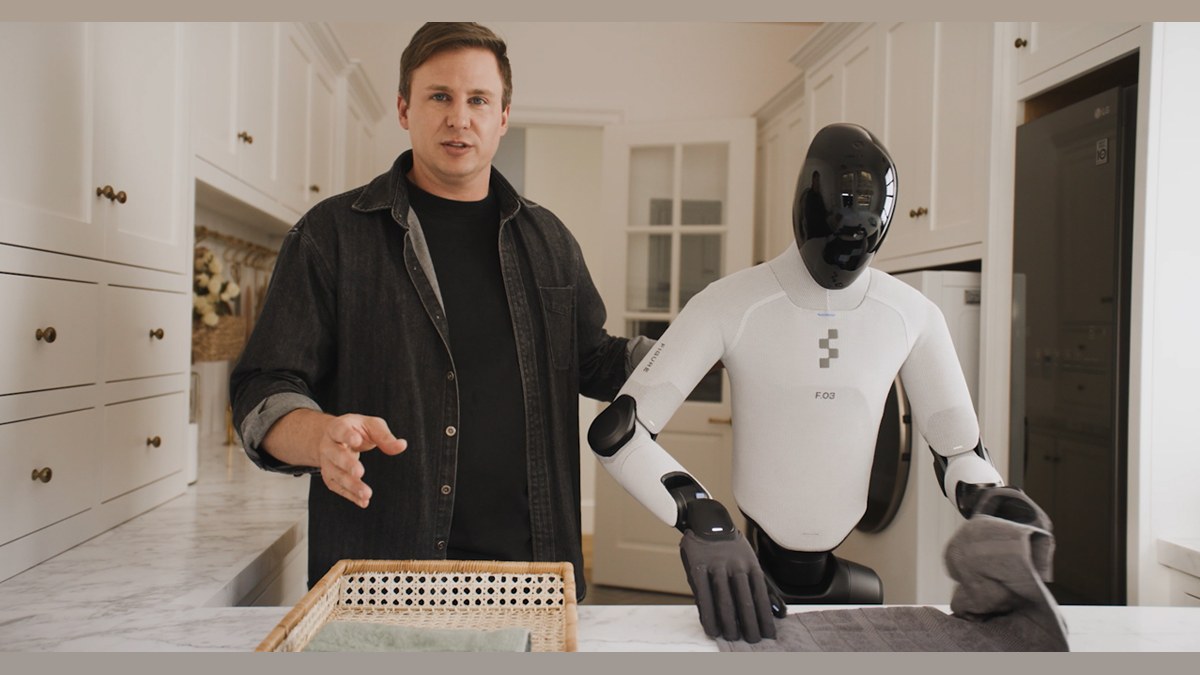
Figure AI has released its robotics model Helix 2.5, the control model for its humanoid robot Figure 03. To evaluate the model's true capabilities, Figure rented 30 houses in the San Francisco Bay Area that the team had never entered before, collected zero data inside them beforehand, and had the robot enter directly to tidy living rooms, fold towels, and make beds.
Key Capabilities of Helix 2.5
- Entering unseen homes and getting straight to work: Across 30 homes where no data had been collected and the team had never visited, the robot completed tidying living rooms, folding towels, and making beds using each home's own sofas, beds, and countertops without any on-site adjustments.
- One foundation model trained for three whole-body household chores: All three tasks were taught separately starting from the same foundation model pretrained on Index, requiring walking, grasping both rigid toys and soft towels and blankets, bimanual coordination, and searching for items while walking.
- Whole-body coordination: In tight spaces between sofas and coffee tables, or between beds and wardrobes, the robot walked while bending over, adjusting its stance, and maneuvering around beds—without separating walking and manipulation into two disconnected actions.
- Self-correction: When making a mistake or unable to reach, the robot stepped back to reposition itself, adjusted its posture, or walked around to the other side of the bed to pull a blanket corner taut (a qualitative observation from Figure, without quantitative figures).
- Capabilities primarily derived from human experience data: The model was pretrained from scratch entirely on Index, Figure's self-collected dataset of human experience. Using the identical task data, the model pretrained on Index fully completed 56% of trials, compared to only 8% without it.
- More data-efficient when teaching new tasks: Compared to a representative Helix 02 task, it achieved the same success rate with only half the task data—and did so across 30 unfamiliar homes.
- More data yields better performance, and predictably so: Every time the Index data doubled, the error in predicting the robot's next action dropped at a steady, consistent rate; results from the first three tiers could accurately predict the fourth tier.
What Makes Entering Unfamiliar Homes Truly Difficult for Robots?
When an ordinary person walks into an unfamiliar home, they can start working immediately; our understanding of the physical world transfers seamlessly from one environment to the next. We do not need to relearn how to make a bed simply because the bed height is different, nor do we need to relearn how to tidy a room because the furniture has changed. Current robots cannot do this; they learn one environment at a time. Figure's previously showcased Helix 02 was already able to coordinate its entire body to complete long-horizon tasks (such as dishwasher loading and unloading, and running autonomously for 200 hours in logistics operations), but that data was collected in the exact physical locations where the robot was deployed to work.
The root of this challenge lies in data. Large language models achieved their breakthrough by combining scalable pretraining with massive datasets and compute; in robotics, however, no internet-scale data exists for direct learning.
Helix 2.5 aims to bring the large-model playbook to humanoid robotics: first use vast amounts of data for general pretraining, then use small amounts of data to teach specific tasks. Its pretraining data is Index, Figure's self-collected dataset of human experience; the three household chores are then taught using robot data; finally, the robot enters unseen homes directly without any adjustments.
Inside the 30 Unfamiliar Homes Blind Evaluation: What Exactly Did Zero-Shot Test?
"Zero-shot" here has a well-defined scope. It does not mean the robot performed a brand-new task it had never learned. How to fold towels, make beds, and pick up toys was taught to the model beforehand using robot task data collected elsewhere. Zero-shot refers to only one thing: the homes and objects used for the evaluation were completely unseen by the model beforehand, and no adjustments whatsoever were made upon arrival. Specifically:
- Figure rented 30 houses in the San Francisco Bay Area for a blind evaluation; the team had never entered these houses previously, nor had they collected any data inside them.
- The toys, towels, and bedding used for evaluation were set aside before any experiments began and verified first by an AI model, then cross-checked by humans, to confirm they had not appeared in the task data.
- The robot directly used each home's existing sofas, beds, folding surfaces, and lighting conditions; the same fixed model checkpoint was used across all 30 homes for each task, without fine-tuning weights for evaluation homes or objects, and without using trial data or performance during evaluation to select checkpoints.
Together, these three tasks require perception, locomotion, dexterous manipulation, bimanual coordination, and whole-body control—each of which is challenging even in a fixed environment. The table below lists the task definitions provided in the original release:
| Task Name | Target Objects | Scene Conditions | Initial State Perturbations | Success Criteria |
|---|---|---|---|---|
| Living Room Tidy | 13 to 15 small handheld toys varying in shape, material, and rigidity | Native living room of the target home, including unseen furniture, flooring, and lighting | Staff randomly scatter items across the floor, sofa, and coffee table | Autonomously patrol and search throughout the room, pick up all items, and place them all in the basket |
| Towel Folding | Towels of varying sizes, colors, thicknesses, and textures | Any folding countertop in the home, varying in height and surface friction | Towels are randomly crumpled and tossed onto the countertop | Each towel is folded and placed into the basket (charts show 4 towels per trial) |
| Bed Making | Bedspreads, comforters, and pillows of varying materials, weights, and textures | Native bed in the home, with different bed frame heights, surrounding space, and lighting conditions | Staff casually mess up two pillows and the comforter | Walk around the bed, return two pillows to the top one-third of the bed, and pull the comforter flat and smooth |
Scoring is all-or-nothing: no partial credit is awarded; an entire trial must complete the full task to be considered a success. The detailed scoring criteria also set time limits for each item: a 1-minute limit per toy, with the entire trial aborted if exceeded; a 3-minute limit per towel, exceeding which marks that towel as a failure (while overall trial success requires all towels to succeed); and a 1-minute limit per pillow and per side of the comforter, exceeding which aborts the trial and marks it as a failure. If human intervention is required for safety, the trial is likewise aborted and marked as a failure.
8% to 56%: The Gap Introduced by Pretraining
In these results, how much came from Index pretraining, and how much came from the robot data used to teach the tasks? Figure conducted a controlled experiment: building two policies (policy: the model that decides how the robot should move next based on what it sees and senses) with identical architectures, using the exact same task data and training setup (hyperparameters).
The sole difference between the two models was their starting point: one was a task-specific model trained directly from random weights; the other was Helix 2.5, which was first pretrained on massive human behavioral data (Index) and then fine-tuned using the identical procedure. Helix 2.5 itself was also trained from random initialization entirely on Index; the previous generation, Helix 02, started from an off-the-shelf, pretrained vision-language model. Thus, this control compares "with vs. without Index pretraining," not "with vs. without any pretraining."
Controlled Experiment Diagram
Two Models Differing Only in Starting Point: Pretrained on Index vs. Not
Helix 2.5
Starting from random weights, pretrained first on Index human experience data
No evaluation task accounts for more than 1.90% of IndexControl Group
Random weights, no Index pretraining
- Task Teaching: Identical robot task data, collected elsewhere, excluding evaluation homes and objects
- Training Setup: Identical model architecture, optimization method, and hyperparameters
- Testing: Fixed single checkpoint per task, blind evaluation in 30 unfamiliar homes, 140 trials per task, no partial credit
Fully Completed237 / 42056%
Fully Completed35 / 4208%
Both models completed 420 trials each across the same 30 homes (140 trials per task). Broken down by task, the results are as follows:
| Evaluation Task | Without Index Pretraining (Random Init) | With Index Pretraining (Helix 2.5) | Multiplier |
|---|---|---|---|
| Folding all 4 towels | 12 / 140 successful trials (9%) | 87 / 140 successful trials (62%) | ~7.3x |
| Tidying all 13–15 toys | 7 / 140 successful trials (5%) | 56 / 140 successful trials (40%) | 8x |
| Fully making the bed (≥B) | 16 / 140 successful trials (11%) | 94 / 140 successful trials (67%) | ~5.9x |
| All three tasks combined (Pooled) | 35 / 420 successful trials (8.3%) | 237 / 420 successful trials (56.4%) | ~6.8x |
Note: The chart label for the bed-making task is marked as "≥B", whereas the bed-making evaluation criteria in the original appendix are categorized as Good / Bad / Fail, without explaining which specific tier "≥B" corresponds to.
Regarding numerical discrepancies: The blog post body and key takeaways state that "zero-shot success rate increased from 9% to 56%, by more than 6x." In Figure 1 of the original text, the pooled total across the three tasks is 35/420 (approx. 8%) versus 237/420 (approx. 56%), representing ~6.8x; the 9% in the chart corresponds specifically to the towel folding task (12/140). The original source does not explain this discrepancy; this article calculates using the trial counts from the chart.
Looking at individual task figures, the success rate for living room tidying (40%) was markedly lower than bed making (67%) and towel folding (62%). Inferring from the scoring rules, this likely relates to the assessment method: living room tidying requires finding all 13 to 15 scattered items and placing them in the basket within a 1-minute limit per item; missing even a single item or timing out on a grasp results in an immediate failure for the entire trial. Overall, using the exact same task data, having Index pretraining versus not led to a nearly 7-fold difference in combined success rate across the three tasks.
In the official video, Figure CEO Brett Adcock stated that they saw success in every one of the 30 homes ("we saw success in every one of them"). However, the official blog post only reported the aggregate success rate calculated per individual trial and did not release per-home breakdown data; therefore, this statement cannot be verified in detail against published numbers. At most, it indicates that the robot successfully completed tasks at least once in each home, rather than succeeding in every trial.
Beyond boosting success rates, pretraining also changed the amount of data required to define a new behavior. Figure compared Helix 2.5 with a representative Helix 02 behavior: the original Helix 02 policy used data collected in the very same environment where it was ultimately evaluated; Helix 2.5 achieved the same success rate using only half the task data, and did so zero-shot across 30 unfamiliar homes it had never seen before (Figure did not disclose the specific data volumes or success rate figures for either model).
What Kind of Data Is Index, Used for Pretraining?
Large language models can pretrain on text from the entire internet, but robotics lacks such off-the-shelf data. Figure's rationale is: humanoid robots move their bodies through the physical world in the same way humans do, so perhaps they can learn directly from human experience.
To this end, Figure built a data collection network called Index by launching a mobile app that pays individual creators to record videos of themselves performing tasks at home or at work. Notably, the publicly disclosed Index figures come from different points in time and are entirely Figure's self-reported disclosures:
- Scale: In the official video, the team noted that over 90,000 people contribute data each week; at the release of Helix 2.5, the official blog post stated that Index generates approximately 35 minutes of new human experience per second. When Index was officially released on 2026-08-25, Figure disclosed that its app had accumulated over 264,000 downloads across 108 countries, having paid $15 million to creators up to that point.
- Task and scene coverage: The data spans everyday household chores like cooking, cleaning, laundry, and scooping litter boxes, as well as changing motor oil, clearing restaurant tables, and physical operations in logistics centers, restaurants, factories, and offices. Creators record in their respective environments, contributing diverse floor plans, lighting conditions, furniture layouts, and handling habits.
Figure explained that pretraining was intentionally made broad so that any behavior could subsequently be fine-tuned. According to the methodology described in its appendix, the team generates video embeddings for each clip in Index and text embeddings for activity and object descriptions generated by vision-language models, clustering them into multi-level semantic categories to calculate each category's proportion of total duration. Statistics show that the specific behavioral categories involved in the three evaluation tasks each accounted for no more than 1.90% of the entire Index pretraining dataset.
The original post concluded from this that when teaching tasks with identical data, starting from a model already trained on extensive human experience yields vastly superior transfer. However, Figure did not disclose specifically how Index pretraining transforms human video into actionable training signals for robots (such as training objectives or mapping human hand motions to robot kinematics), nor did it publish the model's exact architecture or parameter scale.
Doubling Human Data Steadily Improves Robot Action Prediction
Beyond success rates, Figure also presented a scaling law. To Figure's knowledge, this is the first time a "human-to-robot transfer" scaling law has been measured on humanoid robots.
In large language models, scaling laws demonstrate that model prediction loss decreases smoothly as data volume and compute increase, enabling researchers to predict the performance of larger-scale models ahead of time using smaller training runs.
Figure posed a corresponding question: does a similarly predictable law exist when transferring human experience to humanoid robot action prediction?
To test this, Figure held model size and subsequent task-training methods constant, varying only the volume of Index pretraining data by training 4 models on 1x, 2x, 4x, and 8x Index data (smaller data tiers were fully subsumed within larger tiers). All 4 models were fine-tuned on the identical task data, and validation loss was evaluated on the same held-out dataset excluded from training.
What does loss measure here? On a batch of robot task data excluded from training, the model is tasked with predicting "how the robot should move next." The discrepancy between the model's predicted actions and the actual actions in the data constitutes the loss here; a smaller gap indicates more accurate action prediction.
The results are remarkably clean: each time human data doubles, loss decreases by a roughly consistent step.
Based on estimates read from the original chart (the original post did not list exact numbers), as pretraining data increased from 1x to 8x, validation loss decreased steadily from approximately 0.02897 to roughly 0.02789. Fitting a trendline using only the results from the first 3 smaller data volumes (1x, 2x, 4x), the team predicted the test loss of the largest 8x model to four decimal places prior to training it; the prediction error accounted for only 0.54% of the total variation across the 8x data range.
Viewed from another perspective: the loss itself sits around 0.028, and across an 8x data increase, it decreased by only about 0.0011 (approx. 3.7%) in total, with the prediction error representing only 0.54% of that shift. In other words, the curve is remarkably orderly and highly predictable, but because it measures action prediction error, the magnitude of reduction at each step is modest.
Redrawn from Original Figure 2
Every Time Index Data Doubles, Action Prediction Loss Drops by a Step
- Measured loss across four models
- Extrapolated trendline fitted on 1×, 2×, and 4× points alone
According to Figure's explanation, this implies one might estimate beforehand the returns from "doubling human experience once more" before training. However, the original text also clarifies that this experiment tested only data scaling, while model size and task training remained fixed. In terms of compute investment, Figure committed $3.5 billion in compute to train Helix (the original article links to its partnership announcement with Nscale).
This curve also has boundaries: the original post did not disclose actual task success rates for these 4 models. Whether and how quickly lower action prediction loss translates into higher real-world success rates in homes remains unknown.
Why Whole-Body Coordination Is Essential
Most research on robot generalization takes place in environments custom-tailored for machines: tabletop arms operate within fixed workspaces; wheeled robots require ample clear floor space for their bases to navigate and turn. Typical homes offer no such conveniences. Humanoid robots must navigate through cramped, cluttered spaces, adjusting their stance to see, reach, and manipulate objects. Tasks thus become whole-body problems: a robot may need to walk over to locate an item, then alter its stance to reach it—seeing, walking, and grasping cannot be solved in isolation.
Traditional robotic systems typically decouple walking and upper-body manipulation into two separate controllers, chaining them together with predefined switching rules (state machines): walk, stop, stabilize, reach, grasp, walk again. In robot control, the industry is exploring unified neural networks that directly coordinate the entire body (such as Google DeepMind's Gemini Robotics 2). Figure's own previous release, Helix 02, already used a single neural network to control the full body; thus, Helix 2.5's core breakthrough is not "whole-body control" itself, but achieving it zero-shot across 30 unfamiliar homes it had never seen before:
In these unmodified home environments, all three tasks require active perception: the robot must walk through rooms and adjust its body position and orientation to inspect blind spots and reach items.
Over long-horizon, multi-step tasks, one qualitative capability demonstrated by Helix 2.5 is whole-body self-correction: when encountering a failure or mechanical constraint, the robot can step back to readjust its stance, shift its angle, or walk around the entire bed to fix a blanket corner. Figure considers this ability to recover autonomously after errors and continue driving the task forward an important effect of Index pretraining (the original post provided no specific statistical data).
What These Experiments Show—and What They Have Yet to Prove
What these results show:
- Index pretraining makes identical task data far more effective: The three tasks still need to be specified using robot task data, but Index pretraining makes that same task data vastly more effective in unfamiliar environments. To Figure's knowledge, this is the first demonstration of whole-body zero-shot generalization for humanoid robots at this scale.
- Zero-shot generalization to unseen environments: Across 30 real homes where zero data was collected, facing unfamiliar furniture and objects without any on-site fine-tuning, the pooled per-trial success rate across three long-horizon whole-body tasks reached 56%.
- Data required to teach new tasks cut by half: In a comparison provided by Figure, Helix 2.5 achieved the same success rate as the previous generation Helix 02 using only half the task data, while achieving zero-shot generalization across 30 unfamiliar homes.
What these results have yet to prove:
- Still far from fully autonomous home operation: A pooled success rate of 56% means nearly half (44%) of trials were not completed in full, and the original post did not disclose the breakdown of failure causes (such as how many were due to timeouts versus safety-related human interventions).
- Lower action prediction loss has not yet been proven to translate into higher task success rates: While Figure demonstrated that doubling data smoothly reduces action prediction error (loss), it did not publish real-world task success rates across the 30 homes for the 4 models trained on different pretraining data volumes. How much and how quickly a decrease in action prediction loss translates into real-world success rate gains remains unproven by data.
- Limited task scope and evaluation independence: The evaluation covered only three household chores selected and evaluated by Figure itself; "zero-shot" applies solely to the evaluation environments and objects. New skills themselves still require robot task data to teach and cannot generalize out of thin air to untrained new tasks.
This does not mean general-purpose humanoid robots have been solved. In Figure's own words, this provides the first evidence that whole-body capabilities can be learned from human experience and transferred to new scenes without rebuilding from scratch each time. Figure's formula is: pretrain broadly, teach specific behaviors once, and rely on generalization at deployment.
Members can copy or download the full Markdown, and let their AI subscribe and ask.
Found this useful? Leave your email — every new explainer, the moment it's out. Unsubscribe anytime.