AI can copy your work in seconds — but eight things it can't touch
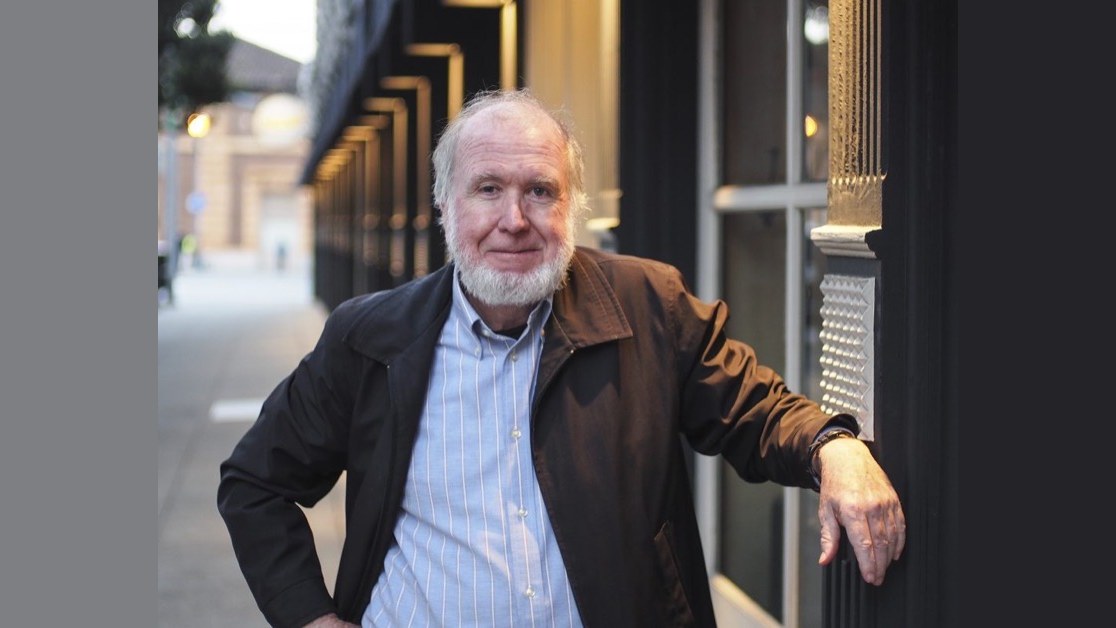
- Kevin Kelly — Wired co-founder and author of the classic essay "1,000 True Fans" — wrote "Better Than Free" in 2008. Tim Ferriss asked him to update it in 2026 and republished it.
- Core argument: when copies become super abundant, they become worthless — and whatever can't be copied becomes scarce, and valuable.
- He names eight uncopyable, sellable qualities — he calls them "generatives": immediacy, personalization, interpretation, authenticity, accessibility, embodiment, patronage, and findability.
- In 2008, the machine that made copying free was the internet. In 2026, it's AI — and AI doesn't just copy, it generates variations of text, images, music, code, and advice in seconds.
- Tim Ferriss added eight real-world case studies — from Brandon Sanderson's $41.75 million crowdfunding campaign to Stratechery's $15-a-month subscription — showing how these ideas actually become a business.
AI can copy everything you make in seconds. So what's left to sell?
Say you wrote a book, shot a photo, made a track, wrote some code, or gave someone advice. If anyone can copy it identically in seconds — or have AI spit out a pile of variations on the spot — how do you still make money off it?
That question isn't new. Kevin Kelly (Wired co-founder and author of the classic essay "1,000 True Fans") already answered it in 2008, in an essay called "Better Than Free". Back then, the machine turning copies free was the internet; in 2026, Tim Ferriss asked him to update it and republish it, because now the copying machine is AI, and the situation is even more extreme: it doesn't just copy, it can generate passable variations of text, images, music, code, and advice in seconds.
The trigger for this republication was a piece Tim Ferriss wrote in June — "Has AI Already Killed Nonfiction?" In the first quarter of 2026, U.S. adult nonfiction book sales fell 9% year over year, with self-help hit hardest, down 26.3%. A reader left a comment recommending Kevin Kelly's old essay, and that's how this update came to be.
Kevin Kelly's answer fits in one line: once copies are free, sell what can't be copied.
The cheaper copies get, the more the uncopyable is worth
Start with how the old world worked. In the analog era, copying something took real effort — writing a book, printing a photo, casting a statue, doing it again was a hassle. That difficulty was itself a constraint, and it capped how many copies could exist.
Because copying was hard, humans invented copyright: creators got exclusive copying rights for a period of time, and nobody else could copy without permission. Selling legal copies became how most creators made a living.
The digital age tore that constraint down. Copying became perfect and free — the internet is basically a superconducting copy machine. Copies race through it, and the moment something touches the network, it gets copied forever, and those copies never disappear. When copies are free and everywhere, making a living by selling copies is no longer an option.
When copies are super abundant, they become worthless — and whatever can't be copied becomes scarce and precious. So when copies are free, what you sell is what can't be copied.
So what can't be copied? Kevin Kelly starts with one example: trust. Trust can't be bought, and it can't be copied — it's earned slowly, over time. It can't be downloaded, and it can't be faked for long. All else being equal, a stranger will always rather deal with someone they trust. In a world full of copies, an intangible thing like trust just keeps getting more valuable.
Eight things that can't be copied — and are worth money because of it
Kevin Kelly calls this whole category of value "generatives." It's a word he coined for value that has to be generated and grown alongside a specific transaction, right there in the moment — it's not a commodity, and you can't clone it, hoard it, fake it, or bank it ahead of time. When you pay for something you could have gotten for free, this is what you're actually paying for.
It's like the scent of a flower. You can photograph a flower, print it, copy it endlessly — but that scent, released live, grown by someone tending it, can't be copied. Generative value is that scent.
He counts roughly eight of these. Here's the full lineup first, then we'll go through each one — every entry draws a line between what's free and what's worth paying for.
1. Immediacy
Pirated copies will show up eventually, but getting it straight from the creator the moment it exists — that head start is itself sellable.
2. Personalization
The generic version is free, but you'll pay more for a version tuned specifically for you. Personalization runs on an ongoing back-and-forth between creator and audience — it takes time and repeated fine-tuning, so it can't be copied. Marketers call this "stickiness": both sides get invested in this generative asset, and neither wants to start over with someone else.
3. Interpretation
There's an old joke: the software is free, the manual costs $10,000. It's not really a joke — that's how consultants make a living. Red Hat has spent twenty-five years selling exactly this: support, training, and consulting wrapped around free Linux. The code itself, a pile of bits, is free; it only creates value for a user once someone explains it and teaches them to use it.
4. Authenticity
You might get an app for free, but you may want to be sure it's bug-free, reliable, and warrantied — you'll pay for that assurance. Artists have dealt with this for a long time: photographs and prints often carry the artist's signature as proof of authenticity, which drives up the price of the copy.
5. Accessibility
Free doesn't mean convenient. A place that delivers something already free in a format we actually want to use — Spotify, Amazon Prime — can charge for that. We want our kind of music, anywhere, anytime. Ownership is overrated, honestly; even free stuff needs to be stored, backed up, and maintained to stay accessible, and a middleman charges for handling that.
6. Embodiment
A digital copy has no body. You can drop a free copy onto your phone. But maybe you want to watch it on a 16K screen — or in 3D? A PDF is fine, but sometimes the same words printed on pure white cotton paper, bound in leather, just feel better in your hands. Nothing has more embodiment than a live performance.
7. Patronage
Kevin Kelly believes audiences actually want to pay creators. Fans like rewarding artists, musicians, and writers this way because it lets them feel connected. But they'll only pay when three conditions are met: it's easy, the amount feels fair, and they're sure the money goes straight to the creator.
8. Findability
A price tag of zero doesn't pull attention toward a work — sometimes free actually makes something easier to overlook. But no matter the price, a work nobody sees has no value; an undiscovered masterpiece might as well not exist. When millions of books, songs, apps, and agents are all competing for our attention, and most of them are free, simply being found is worth money.
In this section, Kelly points to his own alternative to big platforms: the essay "1,000 True Fans." A creator doesn't need a million fans — just about a thousand true fans who'll buy everything you make, each spending roughly $100 a year, paid directly to you with no middleman skimming a cut, and that's $100,000 a year, enough to live on. Even a taste that only one person in a million shares still has roughly 7,000 people who share it worldwide, so rounding up a thousand true fans isn't as hard as it sounds. The real bottleneck is still findability: how does that one-in-a-million person find the other thousand people worldwide who share their taste? Kelly says one of AI's promises is making that kind of decentralized matchmaking actually work.
Money doesn't chase copies. It chases attention.
If you've read this far, you'll notice a conspicuous absence: Kevin Kelly never once mentions advertising.
Advertising has always been treated as the cure for the "free" problem, since it's a magnet for attention, and it's practically the only solution most people actually use. Kelly admits advertising works, but to him it's just one of many ways to capture attention, and in the long run it'll only be part of this new way of making money, not all of it. Behind that is a whole piece of logic: in the network economy, money doesn't follow the path of copies, it follows the path of attention, and attention has its own routes.
He also flags something else: maintaining these eight qualities is far harder than copying. It takes a new set of skills. In a world of free copying, distribution used to be handled by "that giant copy machine in the sky" — you didn't have to think about it; the legal skills built around copyright stopped mattering; the old knack for hoarding and manufacturing scarcity is likewise obsolete. What you actually need to practice now is understanding how abundance breeds a spirit of sharing, how generosity becomes a business model, and how to cultivate the qualities that a single click can't reproduce.
And those are all skills rooted deep in human relationships, the kind AI still isn't very good at.
When copies are super abundant, they become worthless. And the uncopyable becomes scarce, and valuable. Kevin Kelly, "Better Than Free"
Eight real people who turned this into a living
To ground the framework, Tim Ferriss added eight friends and past podcast guests at the end of the piece, each one having pushed one or two of these values to the extreme.
| Who · Their edge | Free vs. paid |
|---|---|
| Brandon SandersonEmbodiment · Physical | Crowdfunded $41.75 million for four secret novels. Fans paid extra for early access, lavishly illustrated leather-bound editions, merch bundles, and a year-long experience. |
| Ben ThompsonInterpretation | Tech news is free everywhere; subscribers pay $15 a month for his analysis. Stratechery was the direct inspiration for Substack, and proved early on that a one-person publication could scale on paid subscriptions. |
| Maria PopovaPatronage · Trust | The Marginalian has been free and ad-free since 2006, running on reader patronage. Its value is Maria's trustworthy curation and her knack for drawing unexpected connections across literature, science, philosophy, and art. |
| Derek SiversPersonalization | He says he replies to every personal email. He sells books directly from his own site, in every digital format, with print editions priced close to cost. Text travels easily; what's scarce is the direct relationship with Derek himself. |
| Ryan HolidayEmbodiment · Physical | His free Daily Stoic email reaches about a million people. What's paid: physical coins, challenges, courses, memberships, signed leather-bound books, and an actual bookstore, The Painted Porch. |
| Seth GodinTrust · Embodiment | 10,000-plus free blog posts have built up trust. Books, talks, courses, and his invention of the cohort-based workshop turn ideas anyone can access into deeper, participatory experiences. |
| Boyd VartyEmbodiment | Books and free podcasts spread his ideas cheaply; what's scarce is a five-day "Track Your Life" retreat at Londolozi — wildlife tracking, his own one-on-one coaching, walking alongside master trackers. That's not something you can download. |
| Matt MullenwegInterpretation | WordPress is free and open source; the company behind it, Automattic, charges for hosting, security, e-commerce, and support built around that open ecosystem. It's the modern version of "free software, $10,000 manual." |
Two essays this piece builds on — the highlights, with links to the rest
This piece draws on two essays by Kevin Kelly: "Better Than Free" — the 2008 original just republished — and its companion piece, "1,000 True Fans." Below are the key passages from each, expandable, with a link to the complete original at the end.
"Better Than Free" — key passages (2008 original) · read the rest at the source
Better Than Free
Kevin Kelly · 2008
Kelly opens by describing the internet as a "copying machine" — at the most basic level, every action taken online involves making a copy, and the network is built to move those copies as freely as possible. Once something touches the internet, he argues, it gets copied endlessly, and none of those copies ever go away.
That abundance breaks the old business model. For centuries, creators made a living by selling scarce, hard-to-reproduce copies — books, records, film prints — protected by copyright. Free, perfect copying pulls that floor out. So Kelly asks the practical question: how does anyone make a living selling something that can be copied for free?
His answer, distilled to two lines:
"When copies are super abundant, they become worthless. When copies are super abundant, stuff that can't be copied becomes scarce and valuable."
He starts with trust as the clearest example — it can't be bought, faked for long, or downloaded, only earned over time — and then walks through eight more qualities that share the same property: immediacy, personalization, interpretation, authenticity, accessibility, embodiment, patronage, and findability. He calls the whole category "generatives": qualities that have to be generated fresh, alongside a specific transaction, and can't be cloned or stockpiled in advance.
Read the full original
The complete 2008 essay, with all eight generatives explained in Kelly's own words and examples, is available at kk.org/thetechnium/better-than-fre.
## Better Than Free
Kevin Kelly, 2008

Kelly frames the internet as a copying machine: every action taken online involves making a copy, and once something is online it gets copied endlessly and the copies never disappear. That abundance undercuts the old model of selling scarce, protected copies.

His thesis, in two lines: "When copies are super abundant, they become worthless. When copies are super abundant, stuff that can't be copied becomes scarce and valuable."

He starts with trust — uncopyable, only earned over time — then names eight more qualities with the same property, which he calls "generatives": immediacy, personalization, interpretation, authenticity, accessibility, embodiment, patronage, and findability.

Full text: https://kk.org/thetechnium/better-than-fre/
"1,000 True Fans" — key passages · read the rest at the source
1,000 True Fans
Kevin Kelly
Author's note: this is an updated version of an essay Kelly first wrote in 2008, when the now-popular idea was still rough and new. He later rewrote it, keeping only the core and cutting dated details. This revision was included in Tim Ferriss's book "Tools of Titans."
Kelly's premise: a creator doesn't need millions of customers to make a living — just a thousand true fans, people who will buy everything you produce. He defines a true fan as someone who'll drive 200 miles to see you perform, buy every edition of your book, order your next piece sight unseen, and show up to your table once a month.
The math has two conditions: you need to earn roughly $100 in profit per true fan per year, and you need a direct relationship with them, so you keep the full amount instead of a cut split with a publisher, label, or retailer. A thousand fans at $100 each is $100,000 a year — a living, for most people.
A thousand fans is achievable in a way that a million customers isn't, especially early on. Kelly argues the number scales: fewer fans if you can earn more from each one, more if you earn less, and it scales linearly with team size.
Two technological shifts make this newly possible where it wasn't before: creators can now keep the full price of a sale by dealing directly with fans instead of through a chain of middlemen, and the internet's "long tail" means the most obscure niche is just one click from the people who care about it — so even a taste shared by only one in a million people still has roughly 7,000 people worldwide who share it, more than enough to find a thousand true fans.
Kelly is candid that cultivating a thousand true fans takes real, sometimes exhausting time and isn't for every creator — some would rather hire someone else to manage that relationship. And the 1,000 true fans model isn't exclusive: many creators, himself included, combine it with traditional publishing and other channels.
Read the full original
The complete essay, including the crowdfunding and tail-effect examples in Kelly's own words, is available at kk.org/thetechnium/1000-true-fans.
## 1,000 True Fans
Kevin Kelly

A creator doesn't need millions of customers — just a thousand true fans who'll buy everything they make. The math: roughly $100 in profit per true fan per year, paid directly with no middleman, gets you to $100,000 a year.

A thousand fans is achievable where a million isn't. The model works because creators can now keep the full sale price via direct relationships, and the internet's long tail puts even a one-in-a-million taste within reach of the roughly 7,000 people worldwide who share it.

Building this takes real time and isn't for everyone, and it isn't exclusive of other channels; Kelly himself combines it with traditional publishing.

Full text: https://kk.org/thetechnium/1000-true-fans/
How creators make a living: from selling copies to selling what can't be copied
An essay Kevin Kelly wrote in 2008 and personally updated in 2026 — the whole thing, in one page with charts
↓ One page, one scroll · with an animated diagram
First, the person: Kevin Kelly, Wired co-founder and author of "1,000 True Fans." In 2008 he wrote an essay called "Better Than Free," answering one question: once anything can be copied freely, how do creators still make money? In 2026, Tim Ferriss asked him to update it and republish it.
For centuries, creators really only had one way to make a living: sell copies. Books, records, film — copying one was hard work, and that difficulty was itself a form of protection. Copyright then gave creators exclusive copying rights for a stretch of time. That path is now closed.
✘ What it can't do: stop free copying
The internet is basically a superconducting copy machine: the moment something touches the network, it gets copied endlessly, and those copies never disappear. By 2026, AI doesn't just copy, it can generate passable variations of text, images, music, code, and advice in seconds. When copies are everywhere and free, selling copies isn't a business anymore.
Kevin Kelly's answer fits in one line: once copies are free, sell what can't be copied. Abundance makes things cheap, so the uncopyable becomes scarce, and valuable — the value in any given work shifts from "this copy" to "the part that can't be copied."
A recording of a performance
A software installer
A version tuned specifically for your living room
A support service that teaches you to actually use the free code
He coined a word for this kind of value: generative. It's not a commodity — it's a quality generated and grown alongside a specific transaction, and it can't be cloned, hoarded, or faked for long. Trust is the first example: you can't buy it, only earn it over time. So how many of these are there?
He counts eight. Here's how to read the diagram: the same thing — the free copy on the left — branches into eight paths, and at the end of each one is something the machine can't copy. That's where the money is.
This isn't theoretical. Tim Ferriss added eight real people at the end of the piece, each one pushing one or two of these to the extreme. Here are the three that show the sharpest contrast — all giving content away free, but cashing in at different points.
today's explainer.
two days of work
it spins up 10,000 variants in seconds
for me to sell?
left to sell?!
immediacy, personalization,
interpretation, authenticity,
accessibility, embodiment,
patronage, findability
leather-bound editions, a year-long experience —
none of that downloads.
- × The trust between you and your readers
- × The feel of being there live
- × The version tuned for one specific person
- × Ten years of earned credibility
the money just moves further downstream.
It can't copy the relationship
you build with readers, one visit at a time.
Members can copy or download the full Markdown, and let their AI subscribe and ask.
Found this useful? Leave your email — every new explainer, the moment it's out. Unsubscribe anytime.