Kevin Kelly’s AI Predictions: Which Came True Ten Years Later?
He foresaw general cloud-based intelligence, but underestimated how many capabilities a single model could hold. Rereading these five predictions clarifies how intelligence integrates into products, and how cheap Q&A enters daily life.
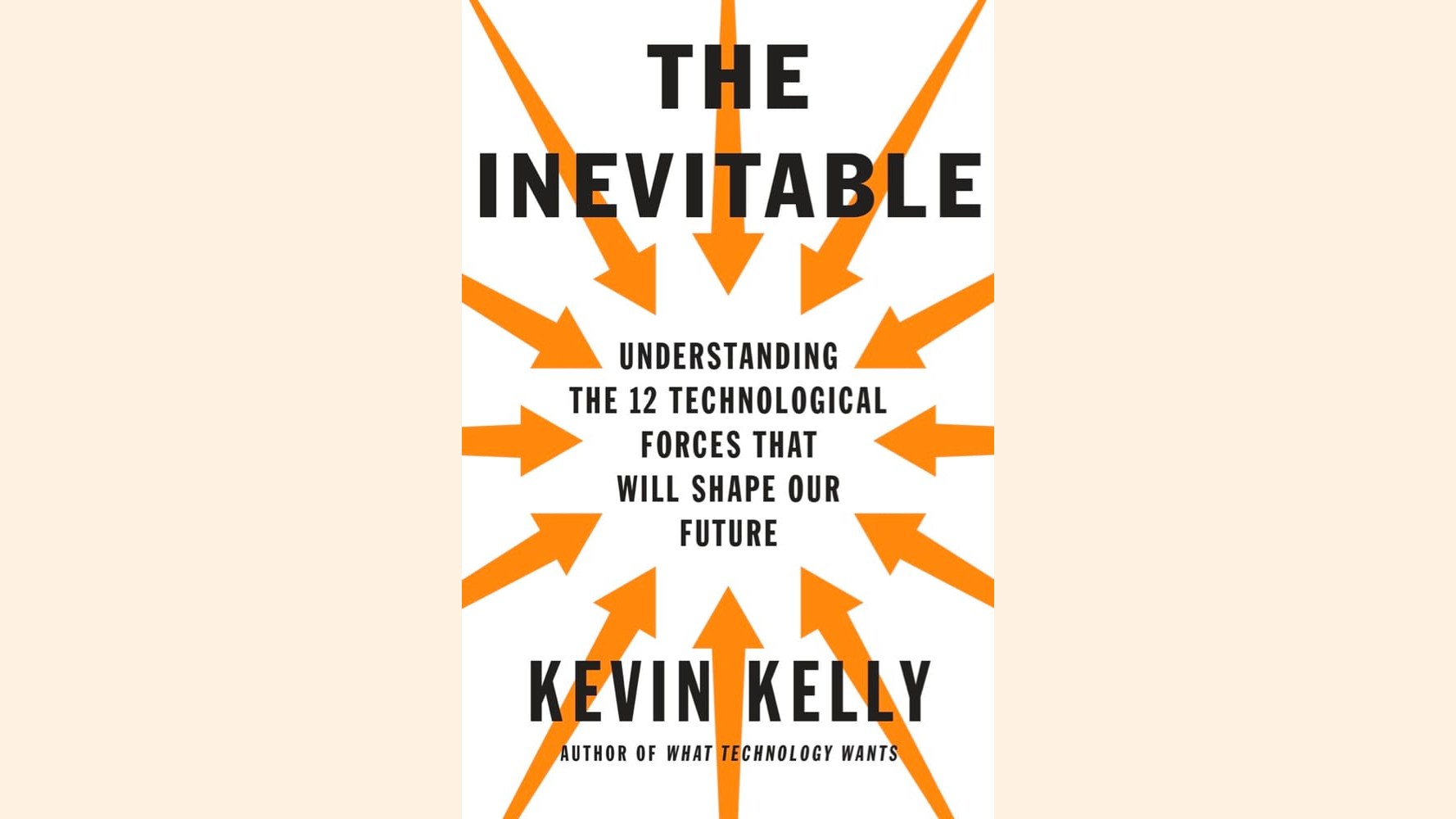
In 2016, Kevin Kelly described a vision of life with AI in The Inevitable: intelligence would run in the cloud, available on demand like water and electricity, and people would ask it hundreds of questions every day.
Ten years later, cloud intelligence has become part of products, and a single model can understand images, write code, and analyze problems. Kelly foresaw how intelligence would be supplied, but underestimated the range of capabilities a single model could have. taylor.town selected five sets of predictions from the book; rereading them helps us see what has changed over the decade.
Changes Across Five Predictions
From search to cloud delivery, then to everyday assistants we can ask at any time.
Google uses search to help AI advance, ultimately making AI its primary product.
Search is both a business and a user gateway; AI becomes a shared capability supporting products.
Users and capabilities reinforce each other, forming two or three large commercial cloud intelligences.
Applications can be diverse, while underlying resources and distribution channels can be concentrated.
Intelligence runs in the background, accessed on demand like cloud services.
Try a lighter model first
Choose a stronger model as needed
Verify results on actual tasks, then weigh cost against speed.
The cloud provides general intelligence, while specific tasks are mostly handled by narrow, specialized programs.
Configure as translation assistant
Configure as coding assistant
Applications focus on a single task, while sharing a broader-capability model underneath.
When answers are cheap enough, people may ask hundreds of questions daily about themselves and friends.
Explain light scattering from existing knowledge.
Real-time info: When the bus arrives requires stop, route, and current transit data.
Personal context: Where a friend is requires their authorized shared location.
From occasionally looking up facts to clarifying everyday questions anytime.
How did search become the gateway for AI progress?
Kelly predicted that by 2026, Google's primary product would be AI. That assessment came from a conversation with co-founder Larry Page. Around 2002, he asked Page: what kind of business does offering free web search ultimately aim to build? Page replied: "We're really making an AI."
Kelly consequently looked at the relationship between search and AI in reverse: beyond using AI, search could also help AI learn. When a user searches for "Easter Bunny" and selects the image that looks most like a rabbit, they leave behind feedback that "this image matches this term better." A large volume of such choices provided clues for refining image recognition and ranking results. In his vision, the feedback accumulated through search would grow alongside algorithms and compute, ultimately making AI Google's primary product.
Today, the two have blended together. Google incorporates AI capabilities into search, and AI features in turn bring in more queries. The search business remains massive: in Alphabet's Q2 2026 earnings release, "Google Search & other" contributed 52.8% of revenues.
Thus, this prediction is better suited for understanding how Google develops intelligence: search serves both as a revenue-generating product and as a gateway to engage user questions and gather feedback; AI, meanwhile, gradually becomes a shared capability supporting a variety of products.
Will intelligence concentrate in two or three companies?
Kelly envisioned a self-reinforcing cycle: more people using AI brings more usable feedback; feedback helps improve capabilities, and better capabilities attract more people. He believed that the companies entering this loop first would quickly pull ahead, eventually leading to two or three large cloud commercial intelligences.
Today, the intelligence industry has split into several layers: foundation models provide core capabilities, cloud platforms handle hosting and access, and applications put those capabilities to work in specific tasks. For example, Amazon Bedrock allows developers to invoke models from different companies on a single cloud platform and build their own products on top of them.
This structure allows two realities to coexist: users see a wide variety of assistants and tools, while the underlying model development and compute rely on a small number of large organizations. Determining whether intelligence is concentrated comes down to which layer controls the resources and distribution channels.
Kelly also hoped that intelligence would become a free public resource, nourishing commerce and science just as the early internet did. Here, two paths exist for expanding access: free services lower the barrier to entry, while open model weights allow developers to deploy systems on their own terms under respective licenses. The former makes AI affordable to more people; the latter gives more people the opportunity to adapt and control their own systems.
How does AI blend into products and deliver capabilities on demand?
The everyday AI Kelly envisioned was like AWS cloud services: running behind products, virtually invisible in daily use, and only noticed when it stops working. By tapping into this "intelligence grid," users could access the capabilities needed for their current task.
This form has become commonplace. Software can use AI in the background to classify text, extract fields, and assign tasks, leaving users free to focus on their work at hand. Developers invoke models through managed services such as Bedrock, removing the burden of hosting and deploying models themselves.
"Drawing only the intelligence needed" also means choosing capabilities by task: for extracting a name and date from an email, a lighter model can be tried first; for comparing multiple documents and analyzing complex problems, a more powerful model can be selected. When choosing a model, verify whether the output meets requirements on actual tasks, then decide how to balance cost and response latency.
The value of this prediction lies in shifting attention from what AI looks like to how it is supplied: intelligence can blend into existing products, becoming a readily available part of how people get things done.
He underestimated how many things a single model could do
Kelly also predicted that over the coming decade, 99% of the AIs people interacted with directly or indirectly would be narrow specialists: a translation tool that translates but does nothing else, or a driving program that drives but cannot hold a conversation.
Today's change takes place behind these applications. The same foundation model can interpret images, write code, and analyze problems; supplemented with specialized materials, prompts, and tools, it can serve diverse specific tasks. A translation assistant and a coding assistant still have their distinct responsibilities, yet they can share a single, broader-capability model.
Why did this path emerge? In The Bitter Lesson, Rich Sutton reviewed research across board games, speech, and vision: encoding human expert knowledge into rules often rapidly improves performance on a given task; enabling systems to leverage more computation through search and learning allows them to keep improving as compute grows. The latter approach leaves greater room for expanding capabilities.
The Transformer architecture introduced in 2017 made model training easier to parallelize. Gemini 2.5 demonstrates the outcome of this scaling: the same family of models can process text, images, audio, and code, as well as reason and write programs.
Google DeepMind demo; generation segment accelerated. Original video
Kelly had anticipated general cloud intelligence, but imagined specific work would be handled largely by separate, dedicated programs. The most notable change over the decade is that multiple capabilities have converged into the same foundation, from which different applications put them to use across their respective tasks.
Beyond finding knowledge: what else does AI need for daily life?
The question-answering service Kelly depicted had three traits: asking questions in everyday language, clarifying ambiguous queries through conversation, and explaining knowledge when an answer exists while gradually learning to state what remains unknown.
What mattered more to him was how daily life would shift once the cost of asking questions fell. When each answer became so inexpensive as to be practically negligible, people might ask hundreds of questions a day, mostly revolving around themselves and friends: "Where's Jenny?" "When is the next bus coming?" "Is this snack good?"
These questions are small, yet they run throughout the day. Search shifted from occasionally looking up a document to clarifying things for oneself at any time.
To handle them, an assistant needs to know where to find answers for different types of questions:
- "Why is the sky blue?" can be explained from existing knowledge.
- "When is the next bus coming?" requires the current stop, route, and real-time transit data.
- "Where is my friend right now?" requires their authorized shared location.
Similarly, asking "Is this snack good?" could be inquiring about taste, or whether it fits one's dietary needs. Only by clarifying first can the assistant know what information to retrieve and how to answer.
Asking questions in natural language has become a reality; answers can still produce factual errors or fabricated content. Moving from conversational chat to a truly helpful daily assistant requires grounding conversations in concrete sources: clarifying the question, obtaining relevant information, explaining the answer, and stating what is missing when information is incomplete.
A decade later, what should we see more clearly?
Kelly was right about how intelligence would enter daily life: supplied via the cloud, tucked behind products, and lowering the barrier to each use. What he underestimated was how capabilities would combine—one model undertaking multiple tasks, supporting many specialized applications.
This also changes the starting point for building products. Developers can obtain capabilities from existing models and focus more energy on specific tasks, relevant domain data, and user experience. For users, what matters is whether this intelligence provides fitting help in the things they are currently doing.
Source highlights · translated summary
Kevin Kelly’s 2016 AI Predictions, 10 Years Later
taylor.town selected five sets of book excerpts from The Inevitable to look back on Kelly's vision for AI. The following is a translated summary of key points.
One: Search drives AI progress Kelly argued that questions and selections in search help intelligence learn. As algorithms, data, and compute continue to grow, AI will become Google's primary product.
Two: Cloud intelligence may concentrate More users yield better capabilities, and better capabilities attract more users; early leaders may form an oligopoly of two or three players. He also hoped cheap or free intelligence would support commerce and science like the public internet.
Three: Intelligence becomes a background service Much like AWS, AI will provide industrial-grade capabilities behind products, with users drawing on them as needed.
Four: Most tasks handled by specialized programs Kelly anticipated that most AIs people encounter would remain narrow specialists in translation, driving, and similar domains. The blog author re-examines this view through The Bitter Lesson.
Five: Asking in everyday language anytime Cloud systems can explain existing answers, clarify questions through dialogue, and gradually convey what is known and unknown. When the cost of answers drops significantly, people may ask hundreds of small questions about themselves and friends daily, making Q&A a universal everyday service.
Members can copy or download the full Markdown, and let their AI subscribe and ask.
Found this useful? Leave your email — every new explainer, the moment it's out. Unsubscribe anytime.