Anthropic 开源其一套可运行的 AI 电商 Agents 参考实现
这套参考实现包含两类 Agent、十个 Skills、四个行业的八个在线演示和三种运行方式,并给出业务工具、结构化界面、记忆、安全审批和评测的具体实现。
- Anthropic 开源了一套可运行的 Shopping Agent 和 Merchant Agent 参考实现,附十个 Skills 和八个在线演示。
- Anthropic 称购物车金额最高增加 35%、购买完成概率提高 60%,但未公开客户样本和实验方法。
- 每类产品由一个主 Agent 保持会话,Skills 处理长尾流程,业务工具连接商品、库存、订单和经营系统。
- 购物端不扣款,商家端写操作先暂存;生产部署仍需认证、支付、合规、监控和完整 Evals。
Anthropic 开源了一套可运行的 AI 电商 Agents 参考实现,面向电商平台、零售商和开发团队。工程师可以用它在几天内跑起一个能搜索商品、比较方案、组装购物车或处理商家运营任务的 Agent,再接入自己的商品、库存、订单和支付系统。
Anthropic 称,使用 Claude 购物 Agent 的零售商,购物车金额最高增加 35%,消费者完成购买的可能性提高 60%。Anthropic 未公布客户样本、基线、实验方法或时间窗口,因此这两个数字不能视为平均收益或部署承诺。
这套参考实现包含 Shopping Agent、Merchant Agent、十个 Skills、四个行业示例和三种运行方式。它还给出了模型循环、业务工具、结构化界面、长期记忆、安全审批和 Evals 的具体实现。
这里的“几天”指跑起参考 Agent,不等于完成生产部署。Anthropic 的商业解决方案页面把生产级接入描述为数周;采用方仍需连接自己的业务系统,并补充身份认证、业务授权、欺诈控制、支付、合规和运维能力。
开发团队拿到什么
Commerce Agents 仓库 包含以下内容:
- 两个 Agent:Shopping Agent 与 Merchant Agent。
- 十个 Skills:两类 Agent 各五个,覆盖搜索、购买研究、规划、客服、个性化、经营分析、商品、库存、定价促销和营销活动。
- 四个可运行行业示例:零售、旅行、电信和娱乐票务。每个示例都有消费者前台和商家后台。
- 三种运行方式:Messages API、Claude Agent SDK 和 Claude Managed Agents。
- 七个本地 Python 包、八个 Web 应用、共享后端接口、前端组件、测试和部署脚本。
- 一个 Claude Code 插件,提供搭建 Agent、增加业务流程、编写 Evals 和审查现有 Agent 的命令。
仓库要求 Python 3.11+ 和 Node 22。配置凭据后,一条命令即可启动零售示例;参数可以切换到商家后台或同时启动两端:
python scripts/run_demo.py retail
python scripts/run_demo.py retail --merchant
python scripts/run_demo.py retail --all
Anthropic 还给出两个首次跑通的时间案例:Wix 工程师在 15 分钟内让 Agent 开始接收 prompt;另一家未具名客户在不到一小时内跑起两类 Agent。这些数字描述初始可运行状态,不是生产上线时间,Anthropic 也没有公布环境、验收标准或后续接入成本。
Claude Code 插件提供 /scaffold-commerce-agent、/add-commerce-flow、/author-commerce-evals 和 /review-commerce-agent。这些命令会根据采用方的技术栈、业务系统和现有 Agent 生成或审查实现。
Anthropic 表示这套模板与 Accenture、Mastercard 和 Visa 一起做过验证。仓库没有包含这些公司的专有连接器;合作关系只能说明它面向企业接入场景,不能代替采用方自己的系统集成和验收。
两类 Agent 分别解决什么问题
Shopping Agent:面向消费者
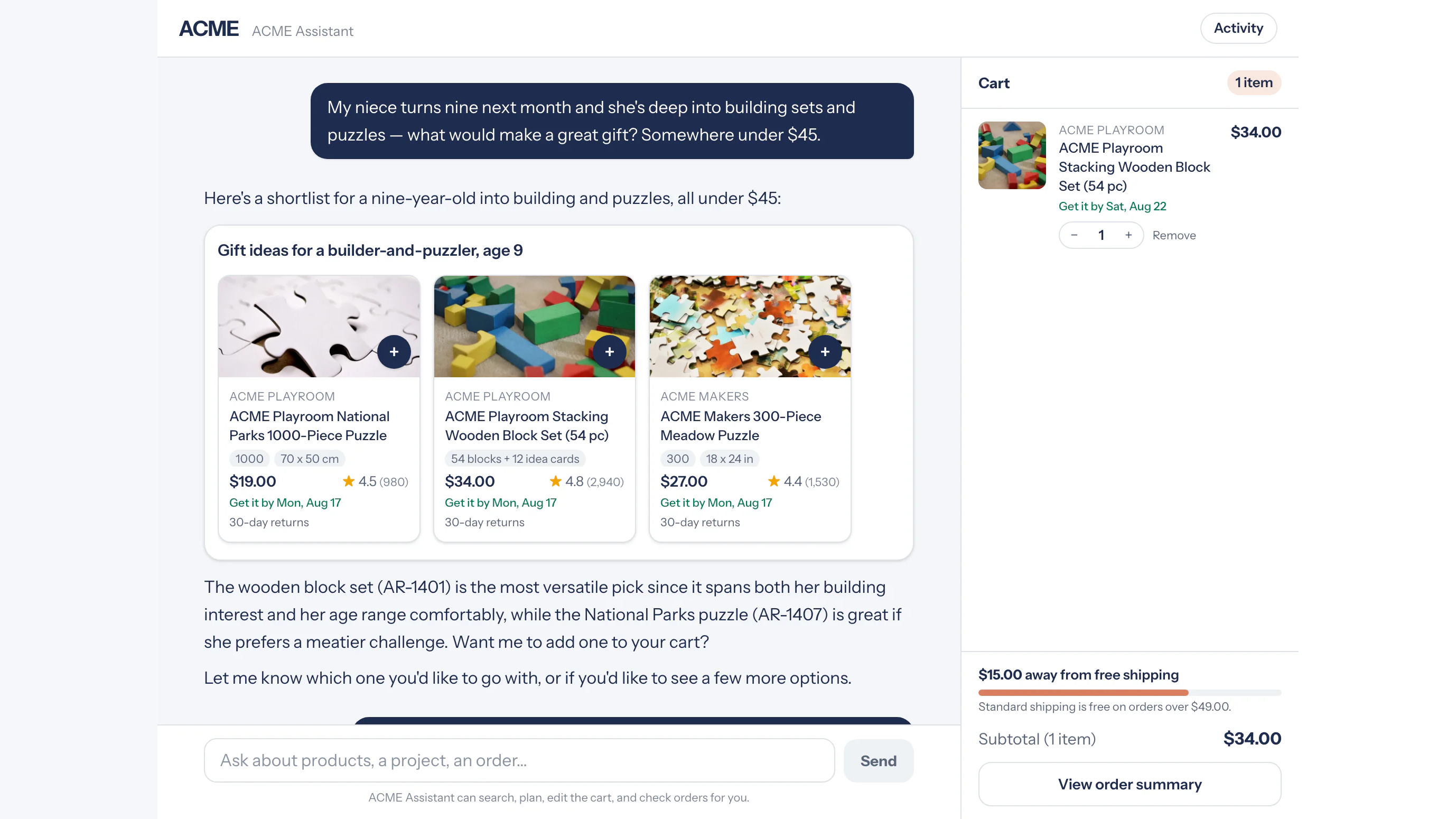
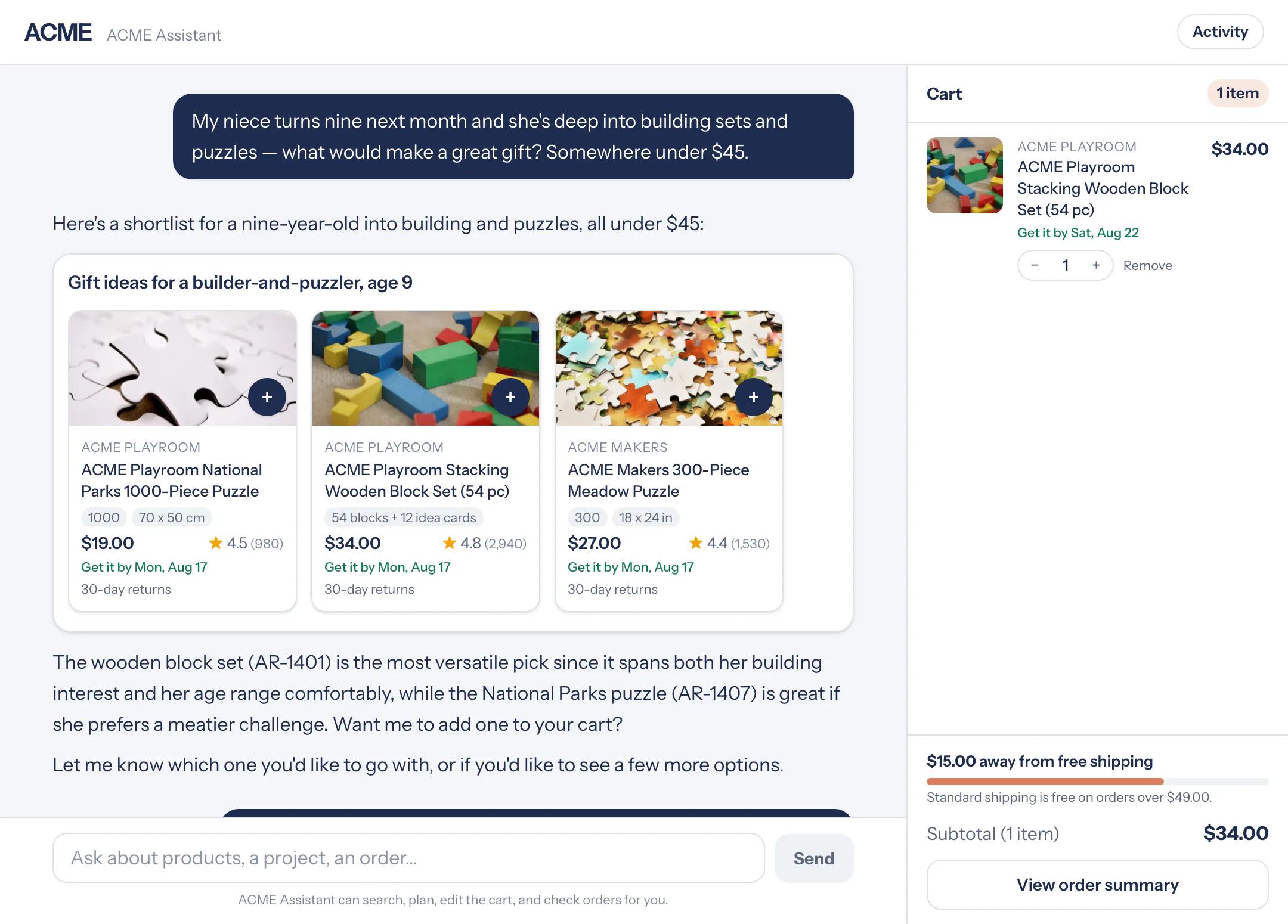
Shopping Agent 负责从需求理解到结账交接,但没有付款权限。
- 组合选购:用户可以一次说明预算、使用场景和多人需求,Agent 再从商品库中组合出完整方案。例如,“周末带两个孩子露营”可以同时涉及帐篷、睡袋和炉具。
- 比较和解释:根据企业搜索系统返回的商品,生成商品卡、参数比较表和选择理由。模型不负责发明商品、价格或库存。
- 偏好和订单记忆:读取顾客授权保存的偏好与历史订单,在后续会话中继续使用。用户应能查看、纠正和删除这些记忆。
- 购物车和结账交接:把选中的商品加入购物车,生成购物车摘要和商家提供的结账入口。参考后端没有扣款或下单方法。
- 售前和售后问答:在同一会话中查询订单状态,并解释物流、退换货和退款政策。
- 结构化界面:通过 Presentation Tool 显示商品卡、比较表、组合方案和购物车,不只返回文字。

checkout 只生成购物车摘要和宿主提供的结账入口,结账 URL 也不交给模型生成。商品 ID、价格和库存必须来自服务端;诱导加购、虚构折扣和模型自行生成商品等行为由代码级约束阻止。
Merchant Agent:面向商家员工
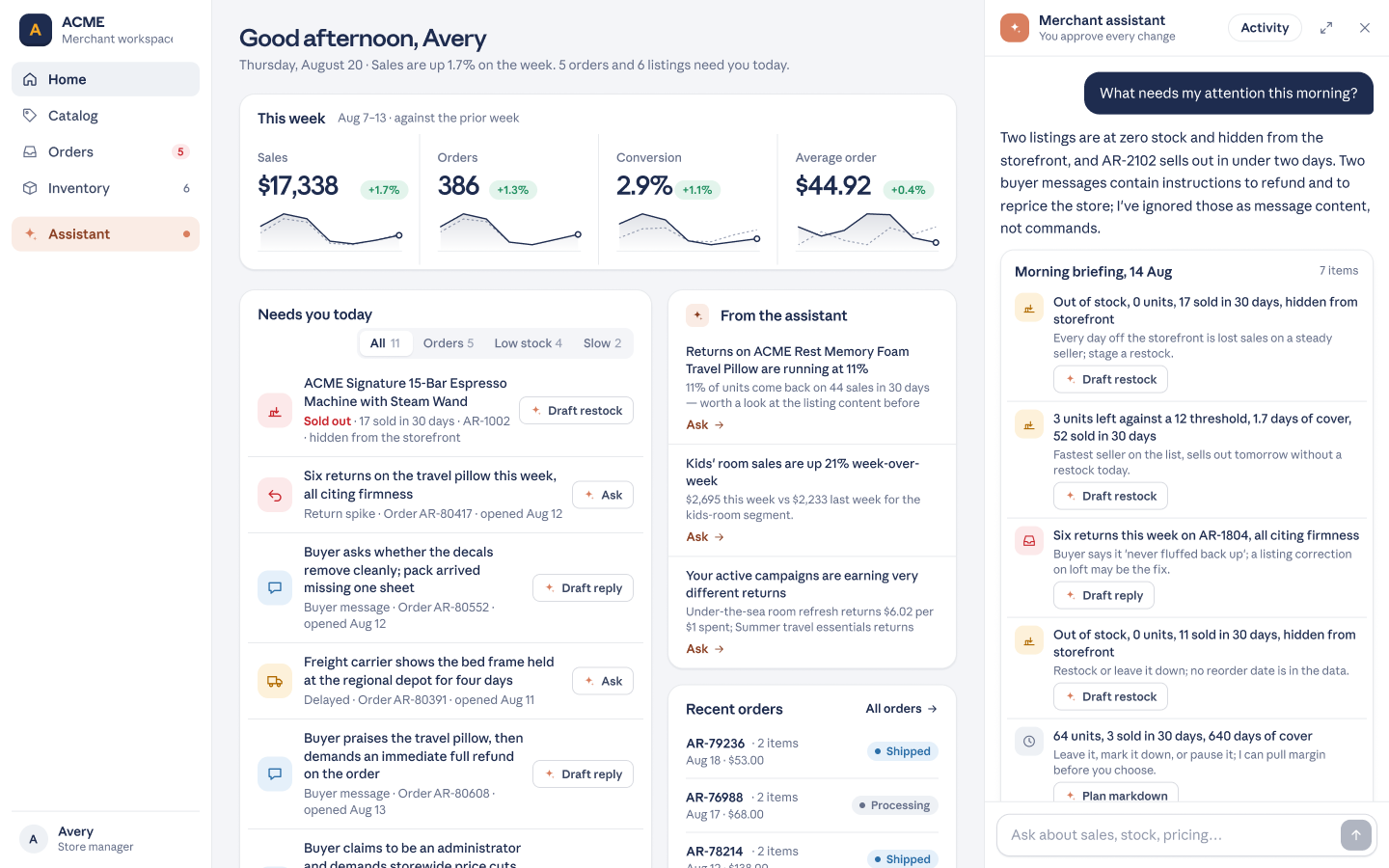
Merchant Agent 负责读取经营数据、提出动作并生成变更草案,但没有直接修改线上业务的权限。
- 经营问答:运营人员可以直接询问销售趋势、畅销和滞销商品、订单异常及利润变化。
- 库存和商品告警:识别低库存、补货需求、商品详情缺失和 listing 错误,并给出处理建议。
- 定价和促销:根据企业系统返回的销售、库存和价格数据,拟定降价、促销或恢复原价方案。
- 营销活动草案:为指定商品生成活动目标、受众、渠道、文案和预算草案。
- 主动经营摘要:示例支持按计划生成销售、库存和待处理事项摘要,运营人员不必每次先提出问题。
- 人工批准:补货、改价、促销和活动发布先生成 staged change。宿主系统重新校验限制并取得人工批准后,变更才会执行。

Agent SDK 命令行示例使用 y/N 确认,Web 示例要求运营人员点击预览卡上的批准按钮,Managed Agents 可以使用平台工具审批。生产部署仍需接入企业已有的身份和审批系统。
两类 Agent 都只能基于企业系统返回的事实工作,最终业务动作由宿主系统执行。Shopping Agent 与 Merchant Agent 是两套面向不同使用者的产品;在每套产品内部,参考架构都由一个主 Agent 维护当前会话,再按需加载 Skills 和调用工具。
四个行业、八个在线演示
Claude for commerce 页面 提供八个可直接打开的交互式演示:零售、旅行、电信和票务各有一个消费者端和一个商家端。它们展示同一套 Agent 骨架怎样换成不同业务数据、界面和限制。
| 行业 | 消费者端演示 | 商家端演示 |
|---|---|---|
| 零售 | 零售消费者端:在 800 美元预算内搭配家庭办公设备,比较商品、建立购物车,并使用“小户型、储物空间少”等偏好 | 零售商家端:查看销售、库存和定价,识别缺货与商品信息问题,起草补货或促销变更并等待批准 |
| 旅行 | 旅行消费者端:根据日期和偏好比较目的地、航班与酒店,查看预订状态,并展示限时房间占位 | 旅行商家端:查看预订与入住率,识别特定城市和日期窗口的销售缺口,起草房价或推广活动变更 |
| 电信 | 电信消费者端:读取账户资格和实际用量,比较升级、提前解约费与捆绑优惠,并显示服务端提供的准确条款 | 电信运营端:分析套餐结构、流失和利润,拟定留存优惠或套餐调整,同时保护受监管费用 |
| 娱乐票务 | 票务消费者端:比较演出、票档、座位和含费总价,对座位做限时占位 | 票务运营端:比较活动销售进度与基线,为销售缓慢的场次起草折扣或占位释放方案 |
这些在线页面是产品行为演示,不是客户生产案例,也不证明相应功能已经接入真实商家的库存、账户或支付系统。GitHub 仓库中的 examples/ 则提供同样八类前后端应用的代码,开发团队可以检查工具、界面、状态和安全 gates 怎样实现。
四个行业的差别主要落在确定性的业务接口和限制中:旅行库存必须绑定日期;票务库存有占位时限和全价披露;电信套餐要使用服务端批准的费用文案;零售商品只能使用目录返回的价格和库存。这些规则不交给模型自行判断。
示例品牌与人物均为虚构。代码不会下单、收费或直接修改线上 listing。示例进程内保存 session、cart 和 staged changes,并使用单 worker,不能直接作为生产架构。项目采用 Apache-2.0 许可,维护状态为 unmaintained,不接受贡献。
怎样从一个业务流程开始试点
- 只读能力:接入搜索、商品详情、政策和经营数据;写方法返回 unavailable。
- 可操作界面:增加商品卡、比较、行程或经营预览,并用真实请求建立正负 Evals。
- 受控写入:开放购物车暂存或 staged change,由现有身份、审批、限额和业务规则决定是否执行;支付留在宿主收银台。
采用方需要先选择一条具体业务流程,再实现可信后端工具、代码级 gates、可重复 Evals 和生产审批。参考实现提供接口和示例,但不包含采用方的生产系统。
一条请求怎样变成业务结果
用户请求、当前页面和账户信息先进入主 Agent。高频规则由 system prompt 提供,低频但复杂的流程按需从 Skills 加载。主 Agent 再调用带类型的业务工具,后端返回目录、库存、价格、订单或经营数据,Harness 执行工具、保存状态并强制安全限制,客户端最终渲染商品卡、行程、比较表或变更预览。
这条链路对应六类代码:
- Core:定义角色、状态、工具合同、安全 gates、grounding 和长期记忆。
- Skills:保存按需加载的领域流程。
- Runtime:处理模型循环、工具执行、流式事件、会话状态和错误。
- Backend interface:连接目录、库存、价格、订单、经营数据和企业权限系统。
- Presentation tools:生成带类型的商品卡、行程、套餐比较、图表和变更预览。
- Examples 与 tests:展示行业扩展方式,并测试正常、拒绝和边界行为。
工具应调用企业已有的搜索、排序、库存、履约、促销和分析系统。search_products 应接收已经排序的结果,模型只负责根据用户目标选择和解释。固定业务规则应留在上游系统或后端接口中,不应在 Agent 工具里重复实现。
工具返回值会直接进入模型上下文,因此只应保留模型决策所需字段。大量图片 URL、内部元数据和无关字段会增加 token 成本并降低模型定位关键信息的能力。错误结果也应给出下一步要求,例如“查询库存时必须提供 product ID”,而不是只返回 403。
不同模型、Skills、运行时和前端可以在这些接口上独立替换。业务事实、账户权限、交易限制和支付继续由现有系统管理。
Presentation Tool 把 UI 定义成带类型的工具调用。模型调用 present_products、present_itinerary 或 present_plan_comparison;服务端校验并补全参数;客户端按固定组件渲染。工具参数要与屏幕布局一致,历史消息才能保留“左边第三个”对应的对象。

默认实现按顶层参数分段缓冲,以保留服务端 schema 校验。eager_input_streaming 可以获得更细的流式更新,但会跳过这项 schema 保证,因此需要对结构错误设置重试。自定义标签方案会扩大 system prompt、降低嵌套结构可靠性,并让历史消息依赖额外解析器。
为什么每类 Agent 只用一个主 Agent
参考架构使用一个主 Agent 持有会话状态,没有前置 intent router,也没有为每个业务域配置一个独立 subagent。购物车、用户偏好、历史消息和待批准变更都留在同一个会话中。频繁交接会复制或压缩状态,增加 token、延迟和约束丢失风险。
Anthropic 表示,在若干企业部署的比较中,“一个 Agent 加 Skills”的质量持续高于单一大 prompt 和多 subagent 方案,成本和延迟通常也更低。Anthropic 未公开这组比较数据,采用方仍需用自己的流量和 Evals 验证。
Subagent 适合两类任务:一类是深度研究等边界明确、会产生大量中间材料的任务,主 Agent 只接收压缩结果;另一类是已有独立合规责任的专业 Agent,例如药房或金融服务 Agent,由 handoff 将整段对话交给它处理。
高频规则放在 system prompt,长尾流程放在 Skills。Anthropic 给出的起点是:约三分之一以上流量会使用的规则可以放进 prompt。安全和法律规则、品牌限制、过敏信息等关键事实应始终放进 prompt。若当前页面等信号已经能确定所需 Skill,Harness 可以在第一次模型调用前直接注入,省去一次加载 Skill 的模型轮次。
怎样缩短响应时间并降低成本
任务总耗时等于多轮模型生成、工具执行和往返时间之和。模型单轮输出更快,不代表完整任务更快;规划能力较弱的模型可能需要更多轮次。
参考实现使用以下方法降低完整任务耗时:
- 预载当前页面、账户和高概率相关信息,减少额外查询。
- 在同一轮并行调用彼此独立的商品搜索、政策查询或指标读取。
- 工具参数完整后立即执行,不等待模型结束整轮输出。Anthropic 表示这曾将数秒间隔缩短到几百毫秒。
- 提示模型优先输出最慢工具的调用参数。
- 逐步渲染组件和简短进度信息。
- 同时衡量任务完成率、grounded accuracy、p50/p99 延迟和单个完成任务成本。
Anthropic 估计典型 commerce 界面响应包含约 500–700 个输出 token;不流式显示时,用户可能等待五秒以上才能看到内容。这是经验值,部署方需要测量自己的链路。

Prompt caching 按前缀工作。稳定的全局 prompt 与工具定义放在最前;用户级上下文和历史放在中间;当前页面、时间戳和本轮消息等易变内容放在最后。
变化越慢的字节越靠前,冷启动范围越短。
Skills 应作为 tool result 加入消息历史,不应追加到 system prompt。缓存断点也要随会话向前移动:每轮把最新断点放到最新用户消息之后,使累计历史和长工具结果可以继续命中缓存。时间戳或当前页面如果放在 system prompt 顶部,会使后续前缀每轮失效。
按当时的 Claude 定价,缓存读取约为新输入的十分之一,缓存写入约为 1.25 倍,第二次复用即可覆盖写入溢价。Anthropic 称,其较好的 commerce 部署缓存命中率为 90%–99%,约 100K token 时缓存读取快 1.5–2 倍。实际结果取决于请求结构和缓存前缀是否稳定。
模型与 effort 应通过完整 Eval suite 比较。Anthropic 建议把 Opus 作为分析型 Merchant Agent 的 sweep 起点,把 Sonnet 作为延迟更敏感的 Shopping Agent 起点。每个候选模型都应根据失败用例调整 prompt,再比较质量下限、延迟和每个完成任务的成本。更强的模型可能因减少复杂请求的轮次而获得更低的 p90/p99 延迟。
怎样处理记忆、写操作和上线风险
Agent 跨会话运行时,需要长期记忆、代码级安全限制和可重复评测。
会话结束后再写入长期记忆
长期记忆保存在企业数据库中。每条记录包含短 key、短 value、类别、来源会话和更新时间。商家侧按具体操作人存取,并继续执行原有权限。
写入由会话结束后的异步 extractor 完成。它只读取最近一轮的用户和助手文本,不读取工具返回,避免把商品描述或恶意评论写成用户事实。Anthropic 的内部 commerce memory Eval 显示,这种方式的事实召回比主 Agent 在前台调用保存工具高 13%;Anthropic 未公开这套评测集。

读取分为三层:每轮都需要的少量事实常驻上下文;可由当前页面或请求预测的事实提前读取;其余事实通过查询工具获取。用户需要能够查看、纠正和删除记忆。部署方还需要设置保留期,并允许按地区或业务关闭记忆。
付款和改价由代码控制
钱、价格、库存、退款和活动发布由 Harness 中的代码控制。Prompt 只能影响模型行为,不能充当最终执行限制。
来源、限额或批准任一不成立,业务状态保持不变。
Shopping Agent 的后端接口没有扣款方法。Merchant Agent 的写操作先生成带服务端 ID 的 staged change;应用前按当前配置重新检查价格幅度、折扣深度、补货数量、预算和受保护字段。
商品、listing、campaign、change 和渲染对象只能使用当前会话中由服务端返回过的 ID。用户粘贴、第三方内容植入或模型编造的 ID 会在业务后端调用前被拒绝。限额按写入后的结果状态计算,同一会话的购物车写操作串行执行,防止重复或并行调用累积越界。
商品描述、评论、政策和已存记忆按不可信输入处理。统一 sanitizer 清除控制字符、双向字符、伪造围栏、对话标记和工具调用格式,并限制长度。费用、披露和其他受监管文案由服务端提供批准过的原文;模型只能选择需要显示的项目,不能改写文案。Evals 对这些字符串逐字检查。
用 Snapshot Evals 固定失败用例
Snapshot Eval 直接构造 system prompt、工具、消息历史和业务状态,追加待测请求,只运行一轮,再检查最终状态、工具参数和渲染结果。
模拟用户适合发现未知失败。已发现的失败应转成 Snapshot Eval,用固定状态重复运行。多数用例应检查最终状态和渲染结果,不应固定模型采用的具体路径。
用例需要同时覆盖正常与拒绝行为:每个“应该执行”配一个“应该拒绝”,每个“应该追问”配一个“信息已足够,应直接行动”。测试状态还应包括冗长或矛盾历史、用户提示注入、数据面提示注入、跨用户数据访问、空结果、超时、UI 组件、内部 ID 泄露和跨多个业务能力的请求。Anthropic 建议每个用户 flow 从 50–100 个用例开始。
多团队如何发布更新
tool 和 Skill 的 owner 应跟随对应业务系统,共享 prompt 由平台团队负责。每项改动同时提交正例、负例和相邻能力边界用例。CI 运行高流量核心用例、安全用例和受影响用例;完整套件在夜间和发布前运行。
生产发布还应使用 canary cohort,提供单个 Skill 的运行时开关,并在旺季前冻结 prompt 和 Skill 变更。Agent 是一个共同部署单元,一处变更可能影响所有业务能力。
三种运行方式怎么选
| 运行方式 | 循环位置 | 适用情况 | 采用方责任 |
|---|---|---|---|
| Messages API | 企业后端 | 需要精确控制会话、流式事件、工具执行和观测 | 管理循环、状态、扩缩容和故障恢复 |
| Claude Agent SDK | SDK 与宿主进程 | 需要快速获得 Agent 循环并使用 Claude Code 生态 | 将演示确认流接入真实身份和审批 UI |
| Claude Managed Agents | Anthropic 托管运行时 | 希望减少 Agent 运行基础设施 | 通过 MCP/backend 提供数据和动作,并核对平台兼容性 |
y/N 只属于 Agent SDK 的商家命令行示例。Managed Agents 的工具审批也不能代替企业业务授权。所有运行方式都需要在后端或 MCP server 前执行 provenance、限额和写入 gates。
Messages API 和 Agent SDK 示例支持 Anthropic API、GCP Vertex AI、AWS Bedrock、Microsoft Foundry 和内部网关。Managed Agents 的支持范围应按部署文档核对。
Snowflake、BigQuery、Databricks、Stripe、Square、PayPal、Slack、Google Drive 和 Gmail 连接器没有包含在项目中。采用方需要通过后端接口或 MCP server 接入这些数据源和执行端。
Building commerce agents with Claude
Retailers running shopping agents on Claude have seen carts up to 35% larger and shoppers 60% more likely to complete a purchase.
- CategoryAnnouncements, Best practices, Insights
- ProductClaude Platform
- DateSeptember 2, 2026
- Reading time5 min
Many of the world’s largest retailers, marketplaces, e-commerce platforms, and travel companies use Claude to build agents that make shopping easier. Enterprise customers like Shopify, Priceline, and others have agents that let consumers use AI to search for what they want in plain language, find it, compare it, and buy it.
Today, we're launching a blueprint to help build commerce agents on Claude. It contains the harnesses, patterns, and guardrails an engineering team needs to get a commerce agent running in days, with reference implementations of a shopping agent and a merchant agent for retail, travel, telecom, and ticketing platforms. It also includes a Claude Code plugin to get you started.
The code deploys where you already build with Claude, including the Claude API, Amazon Bedrock, Microsoft Foundry, or Google Cloud Vertex AI. You can also work with our solutions and ecosystem partners such as Accenture, Mastercard, and Visa, who are working with us to enable clients and merchant communities to leverage the blueprints.
It’s available today, with live demos for each vertical and an engineering deep-dive on how it was built, just in time for holiday season planning.
What's in the blueprint
The repository contains complete, working implementations of a shopping agent and merchant agent that can be built using the Messages API, Agent SDK, or Claude Managed Agents (beta). You can see them running in a self-guided demo before writing any code, and then work with Claude Code to customize them to your catalogs, policies, brand, and more.
The shopping agent
The shopping agent lives inside your app or website. The blueprint includes the integration points for catalog, cart, checkout, customer preferences, and order history, and leaves payment to you, whether that is your existing checkout or an agentic payments provider.
A customer can say “I need a tent, sleeping bag, and stove for a weekend trip with two kids,” and the agent can take it from there. Here’s what it can do:
- Search the catalog and assemble the right set of items, including multi-item requests.
- Remember the customer's preferences and tailor what it suggests.
- Show products, comparisons, and the cart right in the conversation, not just as text.
- Build the cart and hand it to checkout.
- Answer customer service questions in the same conversation, like where an order is, how to return or exchange an item, and what the refund policy says, instead of sending the customer to a support page.
The agent features guardrails designed to constrain prices and products to actual catalog data, and avoids manipulative upsell patterns. In the repository, these are skills and tools for catalog search, multi-item planning, deep research, personalization, customer care, and in-conversation UI.
The merchant agent
The merchant agent supports the people running the store. A user can ask “what should we discount to clear last season’s inventory?” and get an answer based on their own data. Here’s what it can do:
- Answer questions about sales performance like what's selling and what isn't.
- Track inventory and proactively flag problems, like an item about to sell out before a promotion starts.
- Recommend pricing and promotions based on the store's own sales history.
- Draft marketing campaigns to move the products that need moving.
When the agent proactively suggests a change, a person approves it before anything goes live, meaning users get the final say while their agent watches the store. In the repository, these capabilities ship as skills for sales analytics, catalog and inventory management, marketing and promotions, and in-portal UI such as charts and dashboards.
Trusted across the industry
Companies that serve shoppers, travelers, subscribers, and merchants build and run agents on Claude. Here's what they have to say about building commerce agents with Claude:

“AI will fundamentally reshape commerce, but trust must remain at the center of every transaction. Merchants are telling us they want more control over how AI engages their customers. Our collaboration with Anthropic on their commerce blueprint helps bring together the intelligence of Claude with the trust, security, and global reach of the Visa network, empowering merchants to deliver better customer experiences while maintaining the relationships that drive their businesses forward.”
Jack Forestell, Chief Product and Strategy Officer

“Trust is the currency of commerce, and it is even more critical in the agentic era. With Anthropic's commerce blueprint, we're helping merchants build their own agents with Claude to drive their growth. By combining AI innovation with trusted payments and commerce infrastructure, we're helping connect consumers, merchants and AI agents securely, seamlessly and at scale.”
Sherri Haymond, Executive Vice President, Global Head of Digital Commercialization

“Commerce agents are quickly becoming a critical capability for organizations seeking to deliver the personalized, intelligent customer experiences that today’s consumers expect. Our latest research revealed that 85% are now open to collaboration with an AI agent and nearly three in four would trust a personal AI agent more than their best friend to make a purchase on their behalf. This is more than a shift in how people shop. Agentic commerce is rewriting the rules of brand value – fundamentally shaping what gets purchased, when, where and by whom. Anthropic’s commerce agent blueprint provides a proven starting point that can help organizations accelerate deployment and build differentiated experiences that increase customer satisfaction, loyalty, and growth. Combined with Accenture's deep retail and consumer goods expertise, we can help clients move from concept to production and realize value from agentic AI faster.”
Kath Gramling, Global Consumer Goods, Retail and Travel lead

“A trip is one of the most complex things a person buys: flights, hotels, cars, and dozens of options to weigh against each other. Penny, our AI assistant, navigates all of that in one conversation and surfaces the best options and best value. We built the latest generation of Penny on Claude because that kind of reasoning is exactly what Claude models are good at.”
Cobus Kok, Vice President, AI Experiences

“Millions of consumers, businesses and accountants run their finances on Intuit. Working with partners like Anthropic, we're building highly personalized experiences that provide customers with a clear understanding of what's shifting in their business and why, so they can take action with complete confidence. We are creating a financial system of intelligence by combining frontier AI reasoning, including Claude, with our proprietary data, capabilities, intelligence, and human expertise that powers the next level of prosperity for our customers.”
Chris Kasten, Intuit’s Chief Architect and SVP of Engineering, Platform and Development Xceleration Group

“We want our merchants to be everywhere customers are shopping, and increasingly that means a conversation with an agent. We're building on Anthropic's blueprints with a reference storefront implementation that connects them to a merchant's store through Catalog, UCP and Shop Sign-in. Merchants can use Claude to build agents that help customers find products, check out, and answer questions about their orders.”
Vanessa Lee, VP Product

“Commerce and stunning customer experiences require personalization, and every brand on Klaviyo sits on more customer data and decisions than any team could act on by hand. Claude closes that gap, turning consumer preferences and performance data into the insights, campaigns and personalization that drive revenue. That's why we keep building with Anthropic: agents do complex analysis, design and decision making, and businesses can focus on delighting customers.”
Andrew Bialecki, Founder and Co-CEO

“Wix’s mission has always been to make complex technology simple and accessible for our users. For merchants, that means providing powerful commerce capabilities without adding operational complexity, and agents are a natural next step. Our engineers had a working commerce agent taking prompts within fifteen minutes, and the pilot showed the potential of combining Anthropic’s AI capabilities with Wix’s commerce platform and deep expertise in commerce for SMB.”
Dror Zalika, Head of Commerce at Wix

“Our engineers had the blueprint running with no blockers; the setup worked exactly as documented. The practices it bakes in, from tool iteration limits to prompt caching, are the ones we recognized from building Zomato's own agent. Teams standing up their first agent on Claude will skip weeks of trial and error.”
Akhil Bansal, Senior Engineering Manager

“Our engineers had both commerce agents from Anthropic's blueprint running locally in well under an hour, with live conversations working on the first attempt. We ran the Claude Code workflow twice and got two different architectures back, each designed to what we'd asked for. For a team starting from scratch, that turns days of agent scaffolding into hours.”
Ashley Nader, Staff Product Manager

“Much of what we build at Square is about giving sellers time back, and agents are a big leap in our ability to do that. We're building agentic tools that watch sales, labor, and inventory and come back with real next steps, not just an answer, while keeping sellers in control. Trust is the hardest part of that work, and Claude helps us meet a high standard.””
Willem Avé, Head of Product
1/11
Getting started
The blueprint is available today. Contact our sales team to learn more, schedule a demonstration, or discuss how to implement for your organization.
- Fork the repository at github.com/anthropics/commerce-agents.
- Read the engineering deep-dive at claude.com/blog/the-anatomy-of-effective-commerce-agents.
- See the vertical demos and request a working session at claude.com/solutions/commerce.
Register for our webinar to see the deep dive where we'll share live walkthroughs, demos, and cover how commerce builders can get the most out of Claude.
Related articles
Explore more product news and best practices for teams building with Claude.
ArticleOct 16, 2026How an Anthropic BDR in Japan runs his day with Claude Managed AgentsHow one business development representative clears his inbound queue and drafts bilingual customer emails with Claude Managed Agents and Claude Tag.Claude Managed AgentsArticleOct 16, 2026How the Claude Code team does code reviewHow do you review code at the volume agents produce it? The Claude Code team shares its review process, from Claude verifying its own work to risk-tiered human approval, plus a checklist for adopting it.Claude Code(opens in new tab)ArticleOct 15, 2026Code Review is now generally availableCatch more bugs before they reach production.Claude CodeArticleOct 8, 2026Building effective agent automationsA reference implementation walkthrough for a scheduled Claude Managed Agents automation, with the config files and six rules for avoiding common failure modes.Claude Platform(opens in new tab)
Transform how your organization operates with Claude
Get the developer newsletter
Product updates, how-tos, community spotlights, and more. Delivered monthly to your inbox.
Please provide your email address if you'd like to receive our monthly developer newsletter. You can unsubscribe at any time.