
企业什么时候才真的需要 FDE?组建 FDE 团队前,需要先通过两道闸门...
FDE 适合技术复杂、客户又没有工程能力的产品;如果每个客户都要从零开发,团队很快就会变成开发外包。
在企业软件里,一个反复出现的难题是:厂商交付了强大的底层平台,客户付费之后,却依然不知道怎样把平台能力变成实际业务结果。以 Palantir Foundry 为例,它能集中数据、构建本体(ontology),把底层数据变成仓库等业务对象,并在其上开发应用。但企业负责人仍会追问:「这对我的实际业务有什么用?」如果只卖技术,厂商就把理解问题、学习平台和构建应用的责任留给了客户。
前线部署工程师(Forward Deployed Engineer,简称 FDE)试图填补的,正是平台能力与业务结果之间的这段距离。Kevin Bai 现任职于 Anthropic;他在 AI Engineer World's Fair 的《FDE 101》演讲中,围绕什么是 FDE、企业为什么需要它,以及为什么他判断 AI 时代会让更多公司采用它展开。此前他曾在 Palantir 从事相关工作,并作为首位成员加入 Rippling 的 FDE 团队,帮助团队在一年内扩展至约 25 人。这份材料最值得读的地方,是它给出了两项很具体的判断:什么样的产品与买家组合真的需要 FDE,以及什么样的平台基础能防止它滑向开发外包。
客户买的应当是结果,而不是一套等待学习的平台
如果只卖平台,客户不仅要为软件付费,还要再投入人力学习平台,才可能构建出有用的应用。FDE 把平台与工程服务合在一起:工程师先理解客户的业务,再在平台上组装解决方案。客户购买的不再只是软件,也不是单纯购买某个人的工时,而是一个能够运转的业务结果。在这种方式里,常规做法是厂商卖出平台后,由客户承担学习和实施;FDE 则把理解业务、在平台上构建方案和交付结果放进客户购买的整体服务里。因此,FDE 不是成交后才派来补救的实施人员,而是产品销售和交付方式的一部分。
以快消品(CPG)企业为例,业务方关心的是商品能否进入更多货架、销售额能否提高;数据如何组织只是实现细节。FDE 的任务,是理解这些业务需求,再用已经存在的平台能力把方案构建出来。
这种协作方式并不陌生。B2B 创业早期,团队和客户常常都还没完全弄清产品最终是什么、客户究竟在买什么。客户提供自己的真实问题,团队投入时间、资源与技术共同构建方案,并在过程中找到客户真正愿意付费的产品形态,也就是产品市场契合(PMF)。FDE 可以理解为把这种「设计伙伴关系」(Design Partnership)延续到企业客户的长期交付中,而不是只在创业的最初 18 个月这样做。
一张 ACV 图,能说明什么、不能说明什么
客单价(ACV)是一个客户一年向厂商支付的金额。这组数字不是为所有公司划出统一的投入门槛,而是显示 Palantir 的单客户收入与其他大型企业软件公司相差多大。
估算图把 Palantir 的单客户 ACV 列为约 400 万美元,ServiceNow 约 120 万美元,Workday 约 80 万美元,Snowflake 约 32.2 万美元,Salesforce 约 25.2 万美元,Microsoft Azure 约 21.4 万美元。Workday 同时还有另一个带保留的估算:约 60 万美元。
这些数字缺少统一的截止日期和完整计算方法。有些数字是用营收除以公司披露的客户数算出来的;如果公司没有公开完整数据,就只能借用相近业务分部的数据,或使用第三方估算。因此,这张图不能当作严格可比的行业财务排名,更不能证明 Palantir 的高客单价由 FDE 单独造成。这组数字最多只能说明:平台与工程交付相结合后,Palantir 的单客户收入明显高于常规 SaaS 公司。
原文配图数据 · 估算值
Palantir 与下一组企业软件公司的 ACV 存在明显断层
图中数字来自公开营收与客户数;数据不全时,借用了相近业务分部的数据或第三方估算。各项数字没有统一的截止日期和计算方法。
真正的判断轴:产品有多技术,买家有多技术
并非所有企业软件都需要 FDE。判断是否需要它,要同时看产品有多难实施,以及客户团队能不能自己完成实施。关键不在于签合同的高管是否懂技术,而在于真正负责搭建和使用方案的人,能否把平台变成可以工作的业务系统。
适用性矩阵
只有一种产品与客户实施能力组合需要 FDE
技术产品 × 技术买家
GitHub、Datadog
用户是工程师,能够自己吸收产品复杂性。
不需要 FDE技术平台 × 非技术买家
Palantir 式错配
平台需要开发,客户实施团队却没有足够工程能力把它变成业务应用。
需要 FDE可配置产品 × 技术买家
少见组合
技术买家通常不会采购只面向简单配置的工具。
不是核心场景可配置产品 × 非技术买家
Rippling、Jira、Slack
产品让用户配置,而不是要求用户在其上开发。
不需要 FDE技术产品卖给技术买家,不需要 FDE。 GitHub、Datadog 可能很复杂,但用户本身是软件工程师,能够吸收并使用这种复杂性。
可配置产品卖给非技术买家,也不需要 FDE。 Rippling、Jira、Slack 可能同样复杂,但它们的定位是让用户配置,而不是让用户在其上开发。
技术平台卖给缺少软件工程能力的业务团队,才是 FDE 真正适用的情况。 Google、Meta 或 AI 实验室拥有工程团队,可以自己构建需要的应用;《财富》500 强的油气企业未必拥有同样的软件工程能力。一个很形象的差别是:油气企业擅长建设油气管道,不一定擅长建设数据管道。客户若自行实施,还要招聘和管理工程师、留住人才,并训练整个团队掌握新平台。FDE 交付的是一支已经熟悉平台、又能到现场理解业务的工程力量:先和客户找准问题,再把可用方案搭出来。
这个矩阵的价值在于排除误用。FDE 不是「企业客户很大」就该增设的岗位,也不是高客单价产品的固定配置。决定因素是产品复杂性与买家实现能力之间是否真的存在缺口。
FDE 与开发外包的分界,在平台下面
一个直接的反对意见是:如果每个企业客户都要定制,最终岂不是堆出几十套互不相干、无人愿意维护的代码?这个问题成立。如果每个 FDE 都从零开始构建,团队做的就是开发外包(dev shop),而不是这里所说的 FDE。
可维护性分界
都在为客户定制,底层是否共享决定了业务性质
每个客户都从零开发
开发外包
独立代码 客户 B
独立代码 客户 C
独立代码
每个账户都是一套系统,维护负担随客户数一起累积。
用共用模块组装
FDE 团队
定制层 客户 B
定制层 客户 C
定制层
客户特有的规则可以不同;相同功能只开发一次,下一个客户可以直接复用。
如果每个客户都要从零开发,客户越多,独立代码库和维护负担就越重。反复开发相同功能,长期维护成本最终会吃掉利润,工程师也可能在那之前先离开。
真正的分界,是公司有没有一套可以反复使用的平台基础模块(shared platform primitives),例如数据模型、应用组件或工作流。客户方案可以定制,但不能每次都从空白项目开始。
例如,第一家零售客户需要「库存低于安全线时自动提醒采购」,FDE 可以先为它完成方案。如果第二、第三家客户也有同样需求,团队就应该把库存判断、提醒和审批流程做成平台的共用模块。下一位客户只需接入自己的数据、设定安全线和审批人,而不必再写一套提醒系统。只有某一家客户才有的特殊规则,可以留在它自己的方案里。
这样一来,现场项目不只是增加维护工作,也会不断补强产品。反过来,如果每个客户都有独立代码库,相同功能反复开发,旧项目还要长期由原工程师维护,那么客户越多,负担越重,团队实际上已经变成开发外包公司。
这也解释了为什么「派工程师直接创造收入」听起来诱人,却不能成为组建团队的充分理由。即使已有强健平台,维护客户方案仍然很重;平台只是管理这份负担的前提,不会让负担消失。没有平台,这个问题会变成致命风险。
AI 让更多技术产品遇到「客户不会实施」的问题
AI 让代码更容易写,也让复杂的定制软件更容易构建。更深的变化是,越来越多平台能够像代理一样自主拆解并执行任务,也因此允许客户做更多定制。然而,可定制空间越大,产品的使用方法往往越不像固定的 SaaS 功能那样清楚。客户可能看得见平台能力,却不知道它能解决自己的哪个业务问题,更不知道应该怎样接入数据、设置流程并交付给实际使用者。代码生产变容易,并不等于问题定义、方案设计和企业实施会自动变容易。
如果软件厂商把实施成败完全留给客户,在服务更大型的企业、拓展更多通用场景或进入新的行业时,就会遇到更大的阻力。
一个仍待验证的假设是:AI 正让更多公司面对同一种错配——产品越来越技术化,实际买家却没有足够的工程能力完成实施。这并非已经证明的普遍规律,也不意味着所有能自主执行任务的 AI 产品都需要 FDE。需要重新检查的问题是:从买下产品到真正用起来,中间还剩多少工程工作,客户能不能独立完成?
五个实际问题,把边界说清楚
组建和运行 FDE 团队时,还会遇到五个具体问题。它们没有可以机械照抄的固定答案,但可以用来检查团队的分工和平台设计。

平台应该预先做好多少,又给客户留下多少定制空间? 这取决于用户群体和行业。有些行业可以从「应用已经完成 60%,客户再定制 40%」起步;另一些场景需要提供更基础、更灵活的工具。这个 60/40 只是示例,不是目标值。AWS 提供了一个容易理解的类比:工程团队理论上可以自己购买和维护服务器,但通常会直接使用云平台;DynamoDB 也让团队不必从头发明数据库。用户差异越大,平台越需要提供用途广泛的基础模块;如果用户集中在一个较窄的行业,平台则可能预先做好更多行业共用能力。没有一个适用所有公司的固定比例。
同一账户是否应该安排多名 FDE? 更稳妥的做法是让两人以上共享项目信息。如果只有一个人知道项目的全部细节,他一旦休假或离开,其他人就很难接手,项目也可能停下来。
不同供应商的 FDE 如何在同一项目里协作? 以 AWS 与 Palantir 的工程师同时参与一个项目为例,先要分清两家公司是在竞争同一份项目,还是作为合作伙伴共同交付。如果是后者,就要先说清谁对最终交付负责、谁提供配合。这只解决了基本分工;多家供应商出现分歧时如何处理,还需要另行约定。
客户特有功能与平台共用功能如何分界? 只属于一个客户的功能留在客户方案里;多个客户反复需要的功能,则做成平台的共用模块。早期共用模块不多很正常。FDE 在现场遇到的重复需求,正好可以帮助产品团队判断下一步最值得建设什么。
什么人适合做 FDE? 基本门槛可以很克制:先达到软件工程师的招聘标准,同时是公司愿意信任其直接面对客户的人。也就是「能够直接面对客户的软件工程师」(customer-facing software engineer)。
组建 FDE 团队前,先通过两道闸门
第一道闸门:客户是不想自己实施,还是根本没有能力实施?
先看真正负责把产品建成可用系统的客户团队,而不是签合同的高管。下面三种情况需要分开处理:
- 客户有成熟的工程团队,只是不熟悉你的产品:先用技术文档、开发者关系(DevRel)和技术支持帮助他们,通常不需要派 FDE 长期参与。
- 客户通过勾选选项、连接数据和调整规则就能完成实施:销售、客户成功和实施顾问通常已经够用。
- 产品需要写代码、设计数据模型或搭建复杂工作流,而客户没有相应工程团队:这才通过第一道闸门。
一个简单的检验问题是:如果厂商不派工程师,客户能否在合理时间内独立把产品变成可用系统? 如果答案是能,FDE 很可能不是必需;如果答案是否,而且障碍确实来自工程能力不足,才有必要继续看第二道闸门。
第二道闸门:这次为客户写的东西,下次还能不能复用?
FDE 可以为客户定制,但公司必须把重复出现的需求做成共用模块。否则,每位工程师都会带着一套独立代码长期服务一个客户,团队很快就会变成开发外包。
可以直接检查四个信号:
- 新客户的大部分方案,能否用已有的数据模型、组件和工作流搭出来?
- 两个客户需要相似功能时,团队会不会把相同部分做成所有客户都能使用的平台功能?
- 客户独有的规则,能否与共用模块分开,避免一家客户的特殊需求影响其他客户?
- 客户越来越多之后,下一次交付是否更快,而不是每次都从零开始?
例如,三家客户都需要库存预警。健康的做法,是把库存判断、提醒和审批做成平台模块,每家客户只配置自己的安全线和审批人。如果三家客户各有一套独立代码,而且只能由最初开发它的工程师维护,第二道闸门就没有通过。
「平台预先完成 60%,客户定制 40%」只是一种示例,不是所有公司的及格线。真正要看的,是每做完一个客户,平台有没有多出下一位客户可以直接复用的能力。
两道闸门都通过之后,团队才需要决定更具体的问题:一位工程师同时服务多少客户、同一客户是否安排两人共同负责,以及哪些重复需求应该由产品团队正式做进平台。如果任何一道没有通过,先招聘 FDE 只会把产品或客户选择上的问题,变成更昂贵的工程维护问题。
前线部署工程师(FDE):填补平台能力与业务结果的鸿沟
在企业软件里,一个反复出现的难题是:厂商交付了强大的底层平台,客户付费之后,却依然不知道怎样把平台能力变成实际业务结果。
以 Palantir Foundry 为例,它能集中数据并构建业务本体,但业务负责人仍会追问:「这对我的实际业务有什么用?」如果只卖技术,厂商就把理解问题、学习平台和开发应用的沉重负担留给了客户。前线部署工程师(FDE)把平台与工程服务合在一起:工程师先理解业务需求,再在统一平台上组装解决方案。FDE 不是成交后的售后补救,而是从一开始就作为产品交付方式的核心组成部分。
商业印证:客单价背后的交付模式差异
客单价(ACV)展示了结合现场工程交付后,企业客户价值释放的直观差距。当厂商不仅交付代码库,更直接交付可运转业务方案时,客户的付费意愿呈现量级跃升。
平台与工程交付相结合后,Palantir 的单客户收入明显高于常规 SaaS 公司。需注意该估算缺少统一截止日和标准计算方法,不能作为严格财务排名,更不意味着高客单价可单一归因于 FDE,但它印证了打通最后一公里的商业溢价。
真正的判断轴:产品有多技术,买家有多技术
并非所有企业软件都需要 FDE。判断是否需要它,核心在于产品技术复杂度与买家实际工程能力之间是否存在无法自愈的鸿沟。
关键不在于签合同的高管是否懂技术,而在于实际负责搭建和使用方案的团队,能否把平台转化为可用业务系统。
FDE 与开发外包的分界:沉淀平台基础模块
反对设立 FDE 最常见的担忧是:每个客户都定制,最终岂不是沦为维护几十套代码孤岛的外包公司(dev shop)?避免这一灾难的核心,在于工程交付是否在反哺平台。
每个项目都从零开发,代码各自独立。随着客户增多,维护负担呈指数级上升,长期人力成本吞噬利润,导致团队陷入维护泥潭。
真正的分界,是公司有没有一套可以反复使用的平台基础模块(shared platform primitives),例如数据模型、应用组件或工作流。新客户方案优先基于共用能力搭建,现场提炼的共性需求沉淀回平台,让后续交付越来越快。
AI 时代加剧了「客户不会实施」的供需错配
AI 让代码生成变容易,也让平台能够像代理(Agent)一样自主拆解和执行任务,提供了前所未有的定制空间。然而,可定制空间越大,使用逻辑越脱离固定 SaaS 界面;代码生成变容易,绝不等于企业的问题定义、流程改造与工程接入自动变容易。
当更多产品走向高度技术化与自主化,而传统行业的买家依然缺乏工程架构能力时,这种能力落差被进一步放大。从买下产品到真正跑通业务,中间残留的工程工作量,正在成为 AI 技术落地的最大商业瓶颈。
组建 FDE 团队前,先通过两道刚性闸门
在决定增设 FDE 岗位前,团队不能仅仅因为「合同额大」或「客户需要支持」就盲目扩张,必须依次通过两道漏斗检验:
核心原则:如果两道闸门中有任何一道未通过,盲目招聘 FDE 只会把产品设计或客群选择上的缺陷,转化为极其昂贵且无法规模化的工程人力包袱。
FDE 101
I gave the FDE 101 talk to a thousand AI engineers. It's a design partnership that scales into enterprise and never ends.
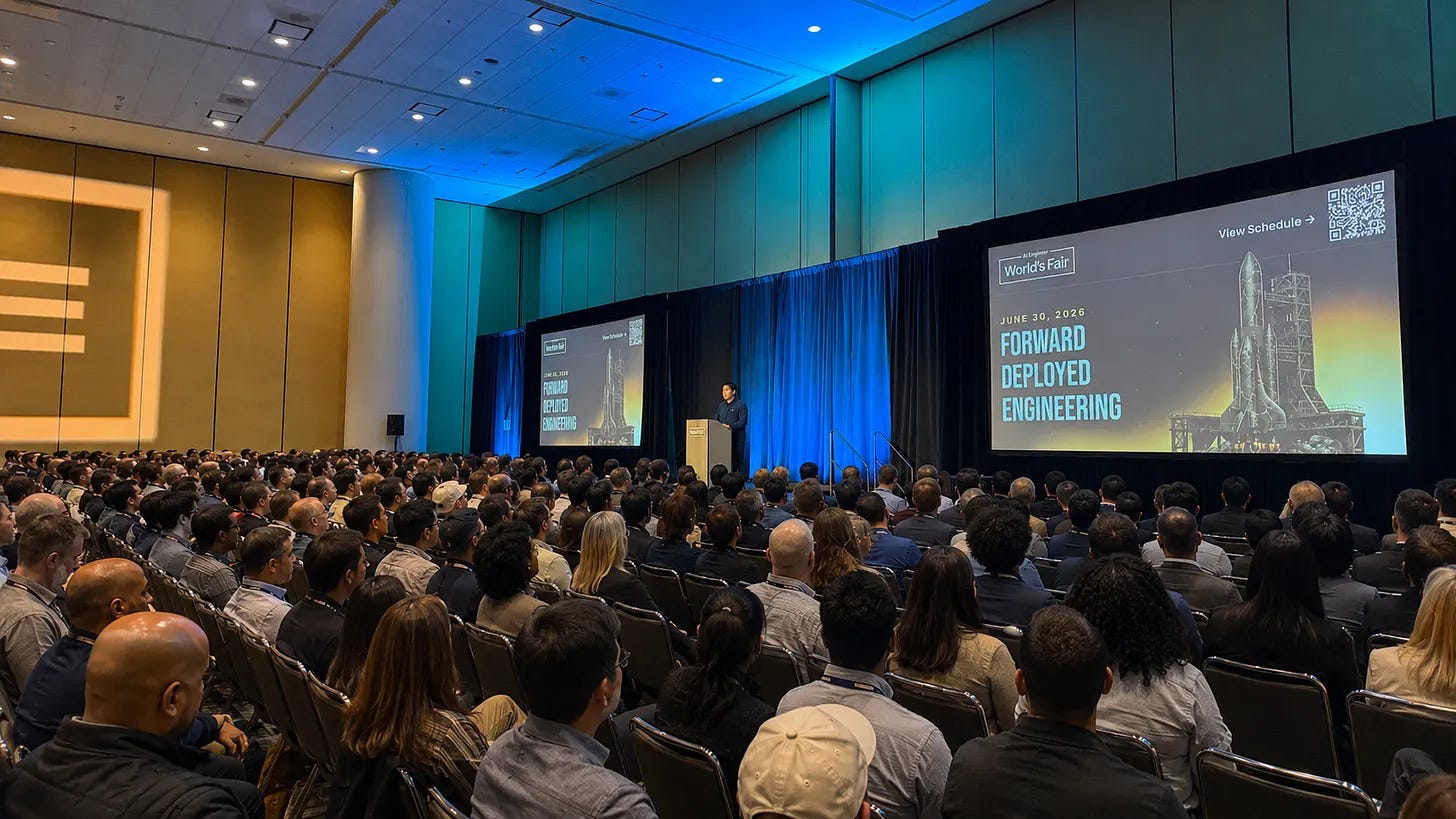
Last month I stood on a stage at the AI Engineer World’s Fair and gave a talk on forward deployed engineering to a thousand AI engineers.
Here’s the whole thing: where FDE came from, why Palantir bet its entire go-to-market on it, the two questions to ask before you build one, and why I think a lot more of you are about to need one whether you planned on it or not.
Look at public SaaS companies and measure them by average contract value, meaning how much a given customer spends with you in a year.
Palantir is first, at around $4 million. Next is ServiceNow at $1.2 million. Then Workday, around $800K. And then there is not a single public SaaS company that even cracks half a million
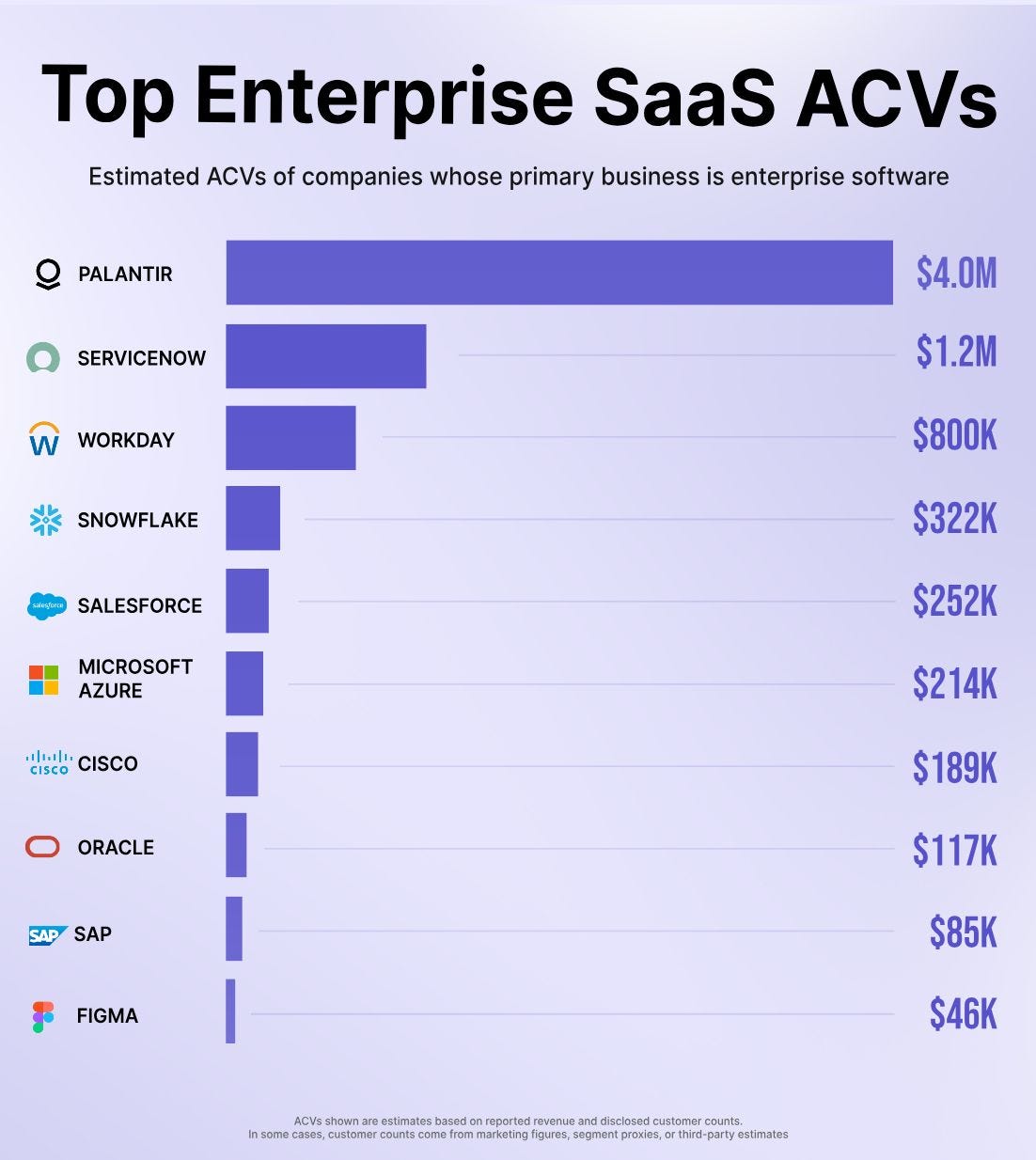
Look at where the cliff is. Snowflake is next at $322K, then Salesforce at $252K, Azure at $214K, and it keeps falling from there. Palantir isn’t leading this list. It’s playing a different game than everyone on it.
Palantir builds a platform called Foundry. It lets an organization of any size centralize its data and build an ontology on top of it. What that really means is turning your data into proper nouns. Instead of table one, table two, table three, you have a single source of truth called “warehouses.” Then you build applications on top.
Genuinely powerful. But say that to a leader in industry and you’ll get: cool, you’ve made my data organized. What does that do for my actual business?
And they’re right. That’s where selling pure technology falls short.
There’s a second problem, and it’s worse. If you sell an app-building platform, your success is determined by how well your customers can use your software. So they pay to buy the platform, then pay again to train their people up on it, and only then can they build anything.
That is a terrible way to do business.
What Palantir figured out is that you stop selling services, you stop selling products, and you sell both as one thing. The customer isn’t buying software. They aren’t buying somebody’s hours. They’re buying an outcome. You send really smart people who go understand the customer’s business, build them a solution on the platform, and deliver the result.
If you run CPG, you care about shelf placement and sales throughput. You don’t care how the data is organized, and you shouldn’t have to. That’s an implementation detail.
Here’s the thing I want to be clear about, because sending engineers to the front line is a genuinely strange idea. Software engineers, me included, are some of the last people who should be customer-facing.
So it comes down to two things: how technical is the thing you sell, and how technical is the person buying it.
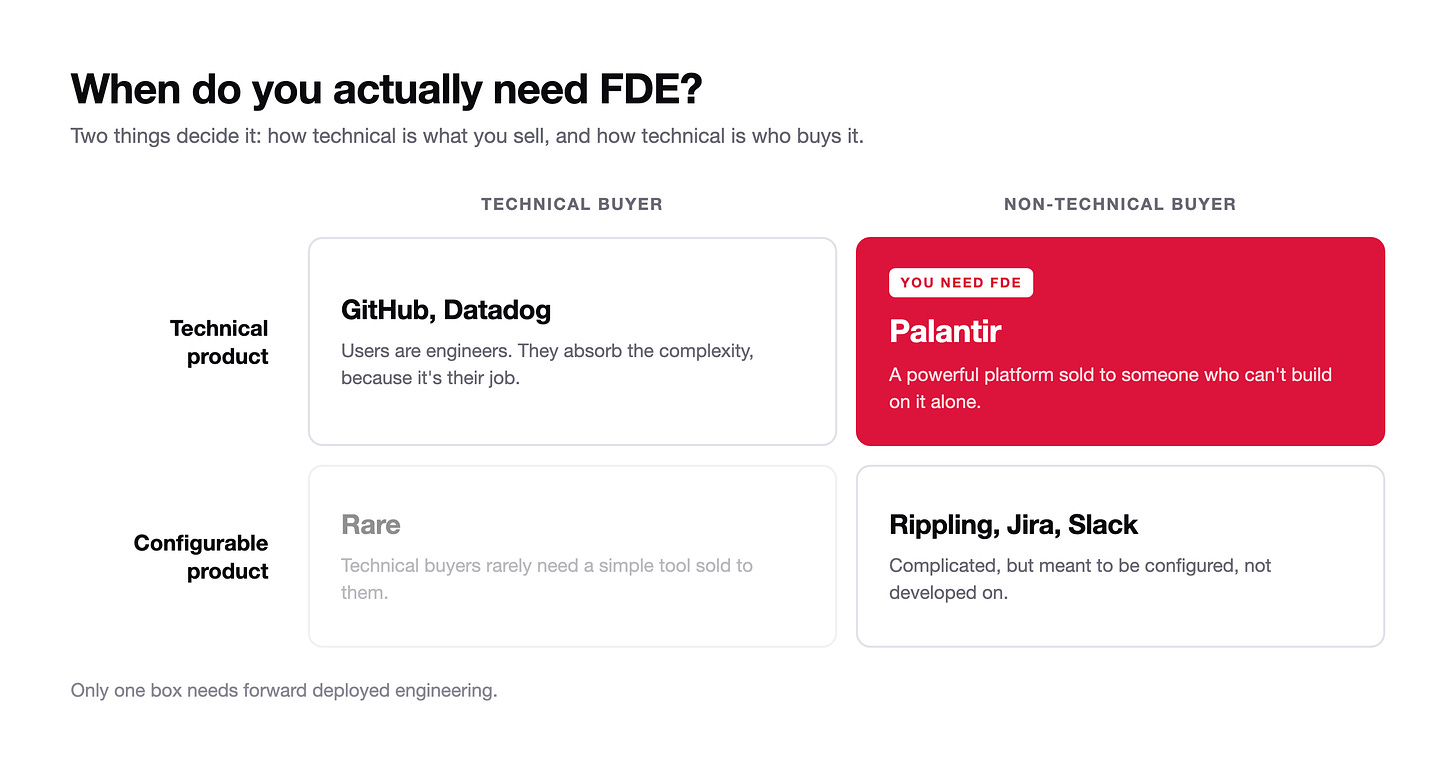
- Technical product, technical buyer. GitHub, Datadog. Your users are software engineers. They can absorb that complexity, because it’s their job. You don’t need FDE.
- Configurable product, non-technical buyer. Rippling, Jira, Slack. Those tools might be complicated, but they aren’t meant to be built on. You don’t need FDE.
- Technical product, non-technical buyer. This is the only box that needs FDE, and it is exactly the corner Palantir found itself in.
Why was that Palantir’s problem specifically? Because Foundry is an app-building platform, which makes it inherently less interesting to Google or Meta or the labs. They have great engineers. They’ll build whatever apps they need.
But sell to a Fortune 500 company in oil and gas and that engineering depth isn’t there. Their pipelines aren’t data pipelines.
So you have two options. Trust that they’ll invest the years to get good at your platform. Or say: here’s the setup, we’ll loan you excellent engineers you don’t have to hire, recruit, manage, or retain. They know this platform cold, and they’ll work with you the way a waiter at a fine dining restaurant works. Figure out what you actually need, then go build it.
That’s how Palantir went to market with the global Fortune 500. The numbers above are how it turned out.
If you’ve been at an early-stage startup, you already know this motion under a different name.
In the early days you don’t know what your product is and your customer doesn’t know what they’re buying. So you say: let me work with you closely, I’ll spend my time and my energy and my resources, you give me the context on your problem, and I’ll build you something good. That’s how most B2B startups find product-market fit.
FDE is that, scaled into the enterprise. That was Palantir’s core assertion. Who decided design partnerships were only for the first eighteen months of a company?
Now, the smart people in the audience always push back here, and they’re right to. You can’t do that in enterprise, because you can’t maintain it. Build something custom for every single customer and you’re herding cats across a pile of terrible code. No engineer will work for you. Nobody wants to learn 55 repos.
Correct, if every FDE is building from scratch.
And this is the part I want to say as plainly as I can. If you stand up an FDE function where each FDE builds from scratch, you do not have an FDE function. You have a dev shop.
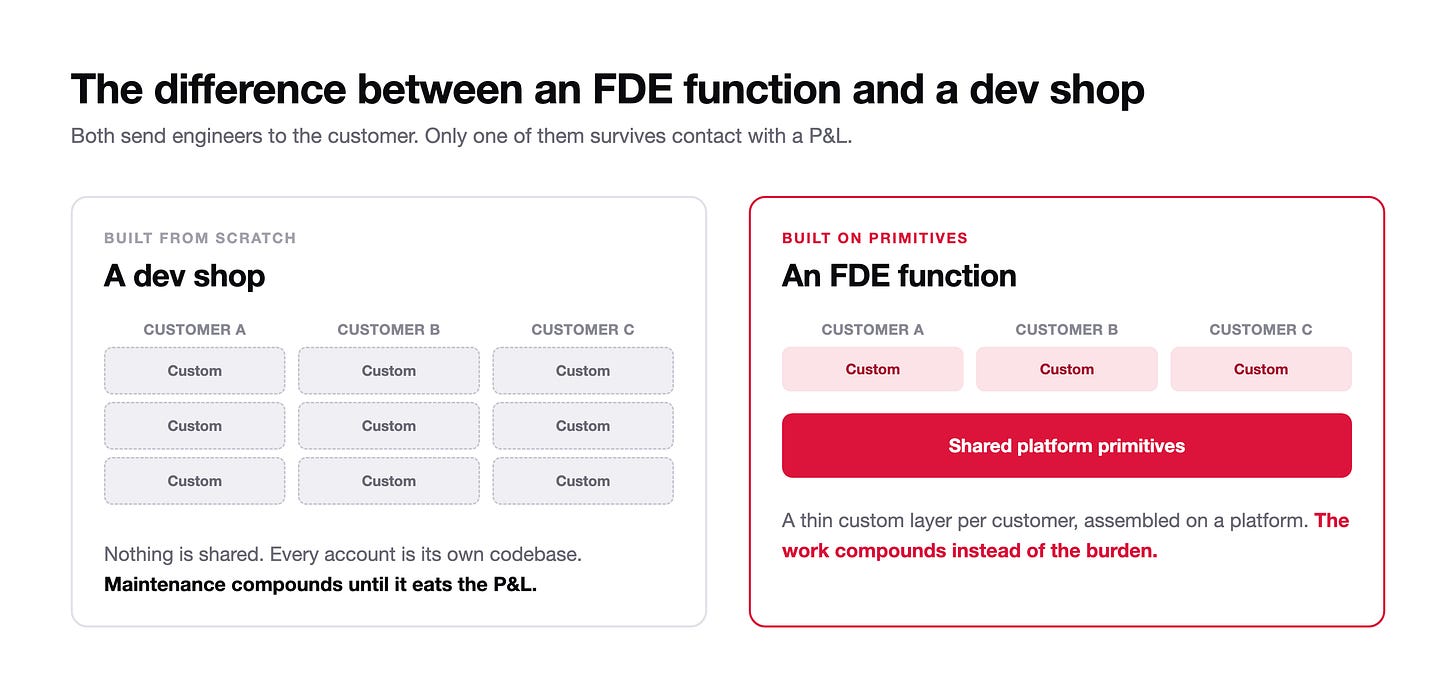
Nothing wrong with dev shops. They’re profitable businesses. But it’s a different company than the one you think you’re building.
What makes an FDE program different is that FDEs build on top of a platform. They never write software from scratch. There’s already a set of primitives, and the job is assembling them into an application, a workflow, a solution that’s arbitrarily valuable to that customer.
Miss this and you reinvent the wheel again and again until your P&L eats you alive on maintenance costs, assuming your engineers don’t all quit first.
When people ask me how to bring this back to their org, I give them two questions.
First: do I need an FDE function, not want one?
It’s easy to want things that are in vogue. The real test is whether you have some corner of your business where you must take a technically complicated thing to market with a non-technical buyer. If you don’t have that situation, FDE probably isn’t your answer. There’s great work to be done with DevRel and developer engagement if your motion is technical, and great work in a sales-led motion if you’re doing more traditional SaaS.
Second: do I have a platform, or am I willing to invest in building one?
However tempting it is to have engineers who directly generate revenue: if they aren’t building on shared primitives, you are in for a very bad time. I can’t overstate the maintenance burden this creates even when you do have a robust platform. Without one it’s fatal.
Palantir came to market around 2004. Obviously AI has since made it much easier to write code, and much easier to build sophisticated customizable software for customers. How many of you are building agents for insurance, for legal, for whatever vertical? I don’t even need to see the hands.
But that’s not the interesting change, and here’s my actual hypothesis.
The world did not suddenly wake up and recognize that Palantir’s FDE motion was a good idea. What changed is the nature of doing business in software itself. Nearly every platform is now agentic. Which means nearly every platform is now customizable. Which means nearly all of you are heading into a situation where your customers have no idea what your product actually does.
And if you leave the success or failure of your product in their hands, dependent on their ability to implement it, that is not going to be a comfortable motion when you try to move up-market, or expand horizontally, or expand vertically.
Put another way: AI is quietly pushing a lot more companies into that third box. Most of them haven’t noticed yet.
How atomic should the shared primitives be?
Very lawyerly answer: it depends on your user base. There are plenty of industries where you can get away with robust primitives, where the app is 60% built and customers customize the other 40%. There are others where that’s completely inappropriate and you need extremely granular tooling.
The example everyone knows is AWS. Most of you are good enough engineers that you could buy server racks and get them online and maintain them. But who’s done that since the 90s? AWS gives you shared primitives like DynamoDB, so you’re not inventing a database from scratch, precisely because they’re serving an enormously broad set of customers.
Should more than one FDE work an account?
Strongly encouraged. When you’re doing custom work for a customer, the last thing you want is a single point of failure where one person holds all the context, goes on vacation, and you’re screwed.
What goes on the platform versus the forward deployed side?
Anything bespoke and unique to one customer should stay with that customer. Anything generalizable should get generalized over time. Early on you won’t have many primitives, and that’s fine. FDE is also a fantastic way to scout ahead and find which product investments are actually worth making.
What’s the perfect FDE profile?
This is the tagline I left them with: an FDE is nothing more than a customer-facing software engineer. Someone you’d hire as an engineer on your team, who you’d also trust in front of a customer. The rest you figure out as you go.
That’s the 101. If you’re sitting on a platform that’s getting more agentic by the quarter and a customer base that can’t quite figure out how to use it, you already know which box you’re in.