SpaceXAI官方案例:工单增加175%,团队不增员:Grok Bot 如何接手客服全流程
SpaceXAI 把 Grok Bot 接入工单、研发和监控工具,从预先排查到退款处理,再把客户反馈送回产品团队。这套实践的关键,在于怎样分流任务、逐步放权和持续改进。
在 Cursor 并入 SpaceXAI 之后,两支客户支持团队面对显著扩充的产品组合进行整合。与此同时,团队筹备推出能够承担实际工作的 AI 协作伙伴 Grok Bot,并预期产品快速增长将带来新一轮用户与支持需求。
为了应对支持需求,团队决定直接让 Grok Bot 参与支持运营。SpaceXAI 表示,合并后的新团队支持工单总量增长了 175%,但在 Grok Bot 的协助下并未增聘任何新员工;若非如此,团队估计可能需要额外雇佣 200 人。
按 SpaceXAI 在原文中的比较,传统商业 AI 支持工具通常按每次解决收取 1 到 4 美元的固定费用。而 Grok Bot 仅按实际用量收费,且该用量已包含在既有计划中;通过小幅优化,团队单次工单解决成本可低至 0.20 至 0.30 美元。
Grok Bot 直接登录团队日常使用的工作工具,其角色从解决具体工单,延伸到帮助团队理解并改进整体支持运营流程。
一、 客服最费时间的,是回复之前的调查
SpaceXAI 团队把 Grok Bot 作为能够承担实际工作的协作伙伴,接入现有支持流程。
Grok Bot 直接登录并使用支持团队日常使用的同套工具,与工单系统(Plain)、问题跟踪系统(Linear)及后端监控(Datadog)等核心系统对接。
按团队对客服流程的观察,大部分处理时间花在问题发现、调查背景与排查根因(discovery, investigation, and troubleshooting)等跨系统操作上。
当 AI 能够直接使用相同工具在系统间调取日志、检索已知问题并完成前期调查,把初步结论和上下文整理就绪时,团队就能省去大量在不同系统间来回切换检索的重复耗时,加快工单的流转与处置。
二、 从旁观到执行,权限分三阶段放开
团队采用“爬行、行走、奔跑(Crawl, Walk, Run)”三个阶段,让 Grok Bot 从跟随分析逐步走向自主执行。

我们可以把这三个阶段拆解为六个具体动作:
阶段一:爬行(Crawl)——影子运行与建立基线
- 步骤 1:连接核心系统。将 Grok Bot 接入工单工具 Plain 和问题跟踪工具 Linear 等核心系统。
- 步骤 2:影子跟踪单一工作流(只读模式)。让 Grok Bot 像接管工单一样分析并提出下一步建议,但严格限制它只能编写内部备注,且所有写入操作均须人工审批,确保在不影响客户体验的前提下检验其理解与建议是否准确。
随着输出结果变得更加可靠,团队随后为每一次运行加入了链路追踪与评估(Traces and Evaluations)。一旦出现偏差,团队能够看清 Grok Bot 在哪里偏离预期,做出调整后再次尝试,Grok Bot 自身也能对这些运行记录进行分析。
在打好上述基础后,团队开始在最简单的工单上逐步试点 Grok Bot。试点第一天,团队人工审核了它对问题的理解与拟定回复,重点核查准确性、语气以及是否遵循指令。到了当天结束时,团队积累了足够信心,开始允许它直接回复客户,随后逐步扩大处理工单的范围。
阶段二:行走(Walk)——例行化与人工介入写入
- 步骤 3:建立日常例行任务(Make it a Routine)。将经过验证的工作流转化为定时例行任务。
- 步骤 4:放开写入权限(保留人工审批,Human-in-the-loop)。允许 AI 执行写入操作,但每项写入操作必须获得人工审批。
阶段三:奔跑(Run)——成熟流程自主化与持续改进
- 步骤 5:成熟流程全自动化(Fully Autonomous)。对于已经充分验证的标准流程(如符合规则的退款请求),开放全自动闭环处理,无需人工介入。
- 步骤 6:主动查漏补缺(Self-improving Loop)。发现并填补知识库漏洞,通过反馈循环实现持续改进。
这种渐进式路径让团队在保持受控的前提下快速推进,逐步建立起对 AI 接管业务流程的信任。
三、 从接单到解决:AI 究竟在后台做了哪些具体动作?
当一名真实用户提交了一张工单,系统内部到底发生了什么?我们可以跟着一张工单的流转路径,看看 Grok Bot 的实战操作:
1. 进门第一步:自动预排查与控制 Token 消耗
当新工单进入系统时,Grok Bot 会在第一时间作为预排查(pre-investigation)步骤介入。由于对每张工单都进行全面排查会带来较高开销,团队分析了常见工单并对常见问题进行分类,以减少需要消耗的 Token(Token 是模型处理文本的基本计量单位)。
如果只需查阅帮助中心就能解决问题,系统就不会耗费大量排查资源;只有必要时才会调用更深度的排查能力。
2. 对接研发与监控系统:关联问题并附带复现视频
当 Grok Bot 排查出已知问题时,它会通过 Linear 连接在已有任务下追加信息或创建新任务;若遇到后端常见报错,则通过对接 Datadog 进行跟进。
同时,Grok Bot 还会附带一段问题复现视频,协助研发团队快速定位并解决问题。
3. 基于百万真实交互的语气训练与有效提问
为确保客户获得清晰且口吻自然的回复,团队使用超过 100 万次人类员工与客户的真实交互历史对 Grok Bot 进行了训练,使其直接向人类学习沟通风格与语气。
Grok Bot 不仅负责回复,更注重推进问题解决。它被训练为只提出相关问题,若答案已经记录在系统日志中,它就不会再向客户重复询问。
4. 按规则完成退款和退订
除了排查与沟通,Grok Bot 还能代表客户执行具体操作。团队为其配置了清晰的退款指引,SpaceXAI 称其 99% 的退款请求无需人工介入即可解决。

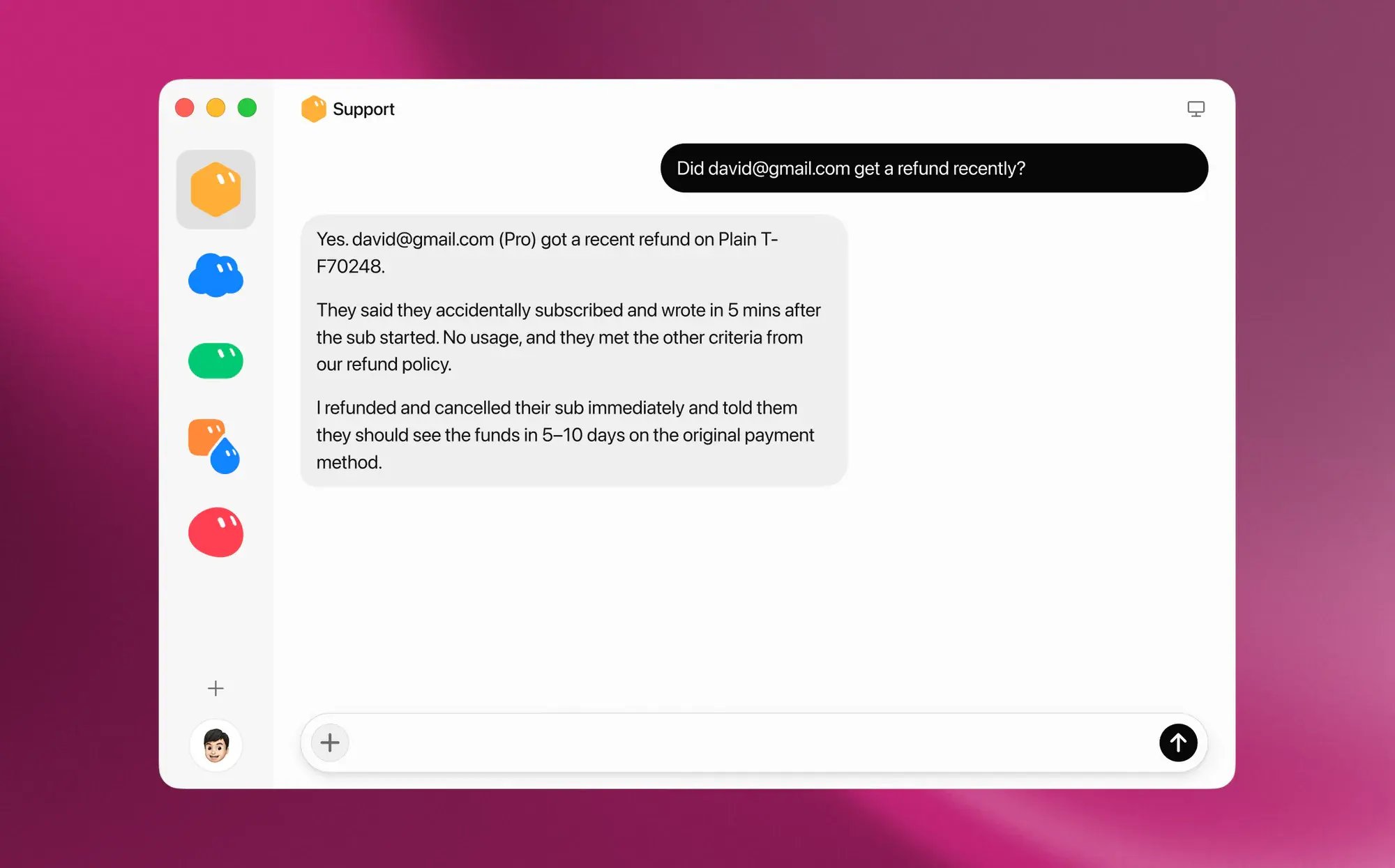
如图 2 所示,在内部查询用户是否退款的交互中,Grok Bot 呈现了具体的核查与处理结果:
- 核实身份与工单关联:确认用户账号信息及 Plain 对应的工单记录(工单号 T-F70248),识别其订阅状态。
- 规则校验:确认用户在误订 5 分钟后联系支持团队,期间未使用相关权益,并满足退款政策的其他条件。
- 执行与反馈:完成退款并取消订阅,同时告知款项预计 5 到 10 天退回原支付方式。
四、 实时队列管理与风险感知:从单单处理到全局监控
除了解决单张工单,支持运营还需要知道哪些问题最紧急、是否有一批客户正在遇到同一个故障。
1. 动态排队与 SLA 响应预警
Grok Bot 持续监控进线工单量,并根据事项轻重调整队列。它能够重新排定工单优先级、依据紧急程度重新分配责任人,并在工单接近承诺响应时限(response-time SLA)时向团队发出预警。
2. 识别工单规律与跨渠道感知风险
Grok Bot 还会跨工单分析共性规律。当围绕某一特定问题的工单量达到设定阈值时,它能够自动声明事件(declare an incident automatically)。
此外,Grok Bot 监控社交平台 X 上的情绪变化以及相同问题的重复反馈,为团队提供直接联系客服之外的用户动态。这些信号结合在一起,帮助团队及早发现正在显现的问题。在现有规模下,单纯的进线量激增告警会产生过多噪音,Grok Bot 会先评估激增是否反映了真实的支持问题,并在向团队发出警报前展开初步排查,为处置提供充分背景。
3. 分级权限与克制的告警机制
自动发现异常与获准采取行动可以分开配置。原文还展示了一个需要人工批准后才能通知值班人员或创建事件的例子。

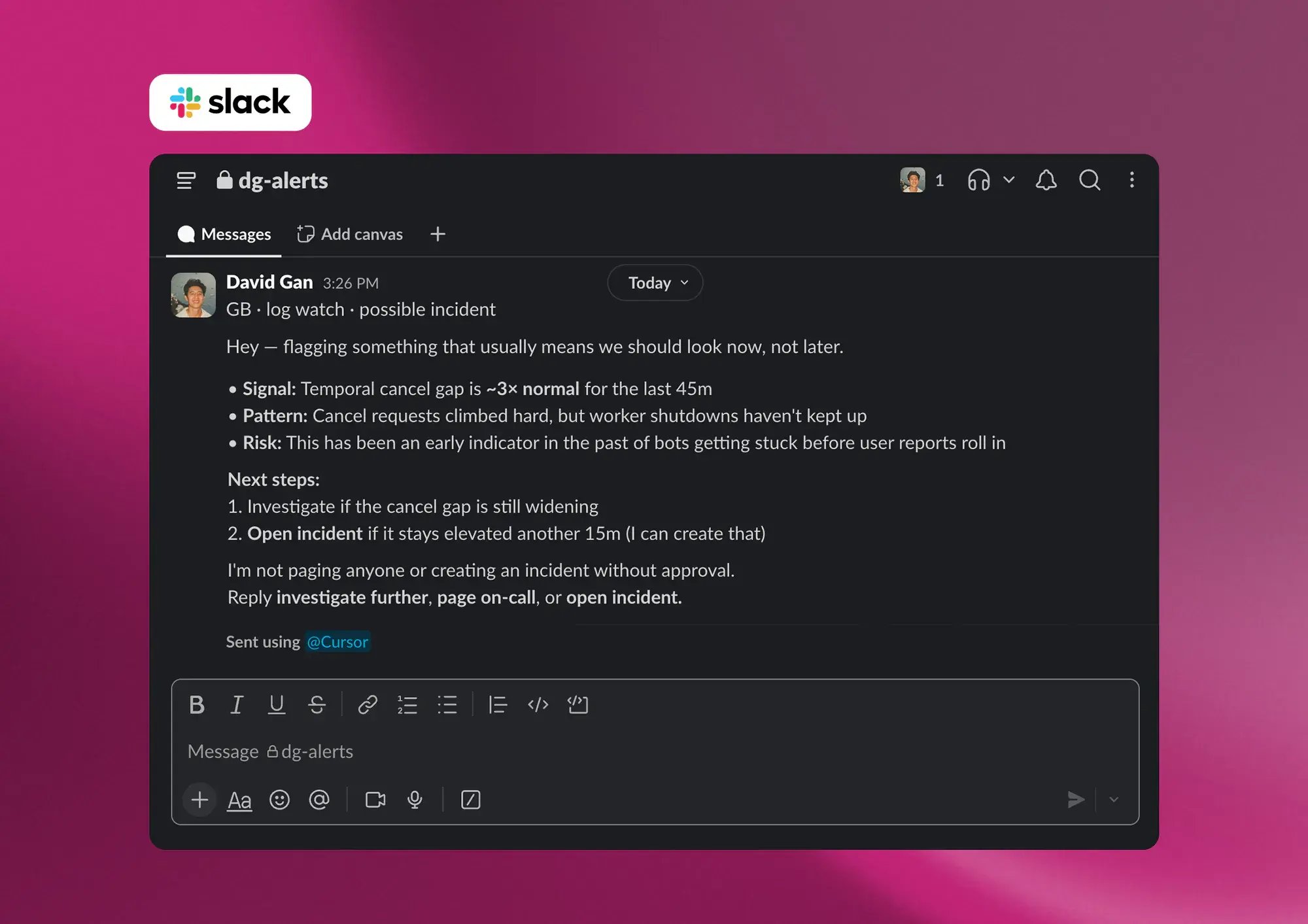
如图 3 所示,在内部 Slack 频道(#dg-alerts)中,Grok Bot 监控到潜在事件并进行汇报:
- 异常信号:在过去 45 分钟内,Temporal 取消差距(cancel gap)达到正常水平的约 3 倍。
- 模式分析:取消请求大幅上升,但负责执行任务的 worker 停止速度未能跟上。
- 风险提示:历史上这曾是 Bot 卡住的早期信号,且早于用户发起报告。
- 权限与建议步骤:此处策略是先排查取消差距是否仍在扩大;若该差距继续处于高位 15 分钟,再建议立项事件。在此场景下,Grok Bot 明确说明未经批准不会擅自呼叫值班人员或创建事件,并在消息末尾提供
investigate further(进一步调查)、page on-call(呼叫值班人员)和open incident(立项事件)三个指令供工程师审批选择。
五、 运营改进与反馈闭环:支持系统与团队的持续优化
Grok Bot 在承担支持工作的同时,也为改进运营本身提供了新途径。
1. 识别沟通卡点并标记管理层审查
Grok Bot 充当支持运营的数据分析角色,当检测到服务体验欠佳的早期迹象时,会标记出来以便团队在结果恶化前介入。
例如,当客户与团队成员(无论是人类还是 Bot)之间的工单来回拉扯超过 3 次时,Grok Bot 会将该互动标记出来供管理层审查,让管理层有机会介入并改善客户体验。这一过程也为 Grok Bot 提供了学习信号,使其汇报随着时间推移更贴合团队需求。
2. 审查代码变更与建议文档更新
随着越来越多用户向 Grok 寻求支持,帮助中心日益成为其生成回答的参考来源。为了保持回答的准确性,Grok Bot 会审查代码库的变更,并向团队提出针对帮助中心相应更新的建议,避免文档与实际代码脱节。
3. 质量评估与知识系统循环
在日常运营中,Grok Bot 审查人类员工与 Bot 处理的客户交互,针对可改进之处提供具体反馈,并为个别团队成员及 Bot 提供辅导机会。
每周,Grok Bot 会向管理团队发送一份质量摘要,指出 AI 回复存在不足的地方:有时需要增加训练或补充文档,有时则印证既有安全护栏正在有效发挥作用。此外,Grok Bot 之间也形成互助:识别知识系统中的漏洞并加以填补,将学到的内容反馈回系统中,使这套知识与流程闭环逐步覆盖到更多产品线。
4. 提炼产品反馈并转化为工程例行任务
在产品改进方面,Grok Bot 每天从客户支持工单中综合提炼超过 20,000 个产品反馈点,归纳为清晰的主题反馈给工程团队。

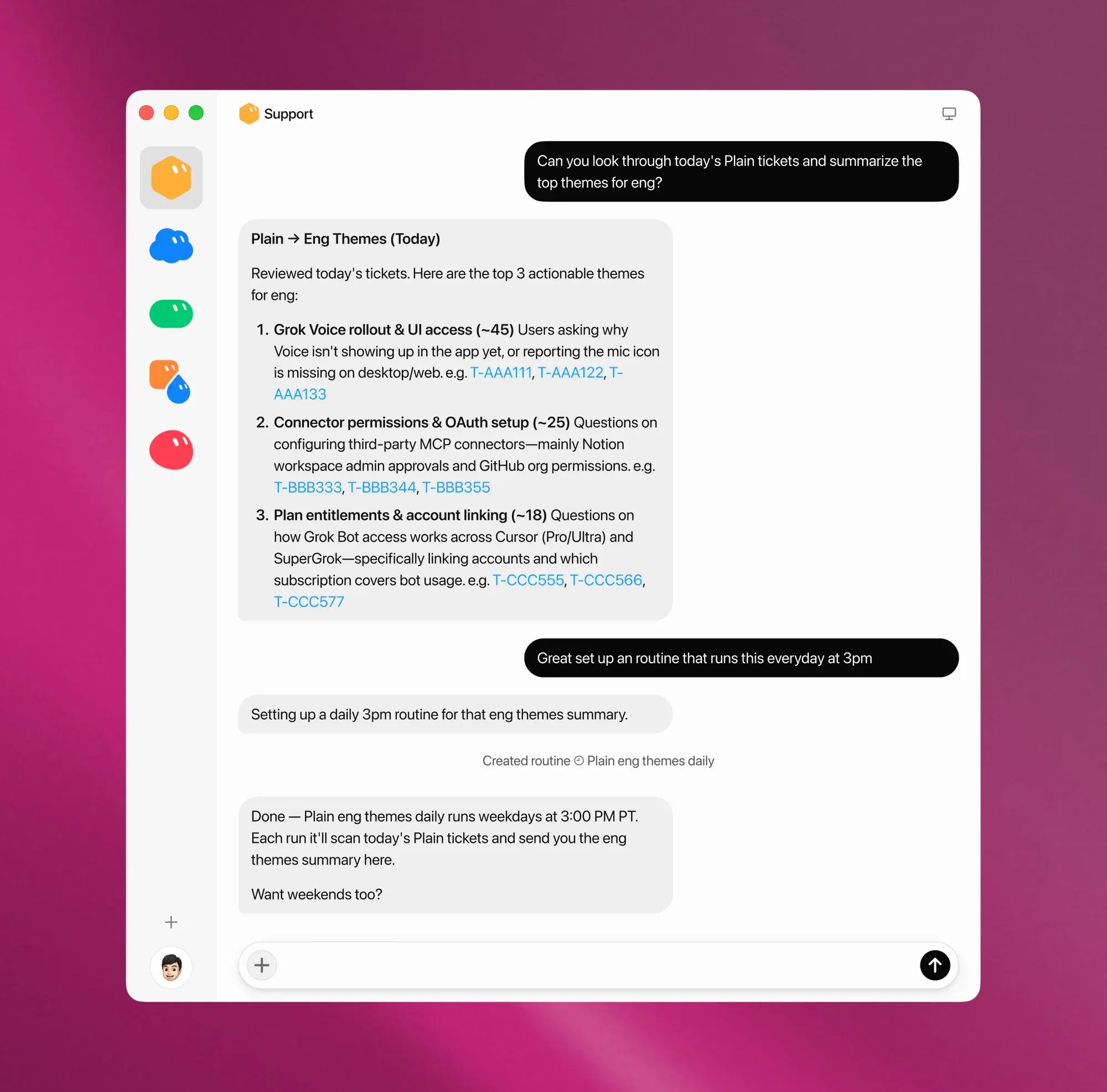
如图 4 所示,在响应汇总当天工单工程主题的指令时,Grok Bot 提炼了三类主要问题,并附带对应工单编号以供追溯:
- Grok Voice 发布与界面入口(约 45 例):应用内未出现 Voice 功能或桌面网页端麦克风图标缺失,直接关联具体工单(如 T-AAA111、T-AAA122、T-AAA133 等);
- 连接器权限与 OAuth 配置(约 25 例):第三方 MCP 连接器配置问题,主要集中在 Notion 工作区管理员批准与 GitHub 组织权限,附带对应工单;
- 套餐权益与账号关联(约 18 例):涉及 Cursor Pro/Ultra 与 SuperGrok 之间的 Bot 访问权限、账号关联及订阅支付归属问题,同样关联具体工单。
在分析转化为例行任务的流程中,用户发出指令要求将此类总结设为每天下午 3 点的例行任务;Grok Bot 确认创建定时任务 Plain eng themes daily,设定在每个工作日太平洋时间(PT)15:00 扫描当天 Plain 工单并发送总结,并主动追问用户周末是否也需要运行,展现了从单次交互到例行化流程的落地价值。
六、 人的工作转向规则、判断和流程改进
这套实践带来的变化,也体现在客服团队的分工上。
团队成员不再需要把大部分时间耗费在重复性的支持事务上,而是能够将精力集中在设定安全护栏(guardrails)、处理需要人工判断的复杂案例,以及决定如何改进整体运营机制上。这不仅让工作更具参与感,也让人类员工有更多空间将经验应用于更困难的问题。
结合其实践路径,团队向 AI 协同模式的过渡体现了几个明确的方法要点:
- 连接团队日常使用的核心系统:让 AI 接入工单工具与监控系统,承担前期排查与上下文梳理工作;
- 循序渐进控制权限:从只读模式与影子运行起步,检验理解与语气,随后逐步开放经人工审批的写入操作与成熟流程的自主闭环;
- 根据问题复杂度优化用量:通过工单分类与查阅帮助中心分流,避免在简单问题上过度消耗 Token 与排查资源;
- 建立跨系统反馈循环:将工单中的共性问题整理为工程主题,推动帮助中心文档同步更新,并将支持数据转化为改进产品与流程的持续依据。
实操带走包
滚动查看原始 Markdown,复制后可按团队实际系统与政策修改。
正在载入 Markdown…
Grok Bot 如何让客服规模化:三阶段权限放开与系统级协同
一、 175% 工单激增与零增员:支持运营的经济学重构
在 Cursor 并入 SpaceXAI 之后,两支客户支持团队面对显著扩充的产品组合进行整合。与此同时,团队筹备推出能够承担实际工作的 AI 协作伙伴 Grok Bot,并预期产品快速增长将带来新一轮用户与支持需求。
支持团队保持 0 增员
预估需新增雇佣规模
传统工具需 $1-4
为了应对支持需求,团队决定直接让 Grok Bot 参与支持运营。SpaceXAI 表示,合并后的新团队支持工单总量增长了 175%,但在 Grok Bot 的协助下并未增聘任何新员工;若非如此,团队估计可能需要额外雇佣 200 人。
按 SpaceXAI 在原文中的比较,传统商业 AI 支持工具通常按每次解决收取 1 到 4 美元的固定费用。而 Grok Bot 仅按实际用量收费,且该用量已包含在既有计划中;通过小幅优化,团队单次工单解决成本可低至 0.20 至 0.30 美元。
破局关键:客服最费时间的不是写回复,而是回复前的跨系统调查。 按团队对客服流程的观察,大部分处理时间花在问题发现、调查背景与排查根因(discovery, investigation, and troubleshooting)等跨系统操作上。当 AI 能够直接使用相同工具在系统间调取日志、检索已知问题并完成前期调查,把初步结论和上下文整理就绪时,团队就能省去大量在不同系统间来回切换检索的重复耗时,加快工单的流转与处置。
二、 核心机制:权限分三阶段放开(Crawl, Walk, Run)
面对涉及资金结算与真实客户体验的高风险支持场景,团队采用“爬行、行走、奔跑(Crawl, Walk, Run)”三个阶段,让 Grok Bot 从跟随分析逐步走向自主执行。这种渐进式路径让团队在保持受控的前提下快速推进,逐步建立起对 AI 接管业务流程的信任。
三、 单张工单的后台处置流:自动化拆解与成本把控
当一名真实用户提交了一张工单,系统内部到底发生了什么?Grok Bot 建立了一套兼顾准确率与 Token 消耗的精细化处置路径:
四、 实时队列管理与风险感知:从单单处理到全局监控
除了解决单张工单,支持运营还需要知道哪些问题最紧急、是否有一批客户正在遇到同一个故障。Grok Bot 持续监控进线工单量,动态重排工单优先级并预警响应时限(SLA)。同时跨工单分析共性规律,当特定问题的工单量达到阈值时自动声明事件(declare an incident automatically),并结合 X 平台用户情绪感知潜在风险。
五、 闭环反哺与人类角色的根本升维
Grok Bot 在承担支持工作的同时,也为改进运营本身提供了新途径。在产品改进方面,Grok Bot 每天从客户支持工单中综合提炼超过 20,000 个产品反馈点,归纳为清晰的主题反馈给工程团队。例如将 Grok Voice 界面入口、第三方 MCP 连接器权限、套餐权益等问题提炼出来,并固化为每个工作日太平洋时间 15:00 运行的例行任务(Plain eng themes daily)。
同时,Grok Bot 审查代码库变更建议帮助中心更新文档,在客户与团队交互拉扯超 3 次时标记管理层介入,实现质量的持续监控。
团队成员不再需要把大部分时间耗费在重复性的支持事务上,而是能够将精力集中在设定安全护栏(guardrails)、处理需要人工判断的复杂案例,以及决定如何改进整体运营机制上。这不仅让工作更具参与感,也让人类员工有更多空间将经验应用于更困难的问题。
How SpaceXAI is using Grok Bot to scale customer support
We rebuilt the combined SpaceXAI and Cursor support operation around Grok Bot, expanding to a much broader product portfolio without adding headcount.
When Cursor became part of SpaceXAI on August 14, our two customer support teams began coming together around a much broader product portfolio.
At the same time, we were preparing to launch Grok Bot, an AI teammate you can give real work to. We expected the product to grow quickly, bringing another wave of users and support demand.
We decided to use Grok Bot itself to help meet that demand, putting it to work throughout the support operation. It signed into the same tools our team used and its role stretched from resolving individual tickets to helping us understand and improve the operation as a whole.
Our new combined team has seen a 175% increase in support tickets, but we have not had to hire any new people thanks to Grok Bot. We might have hired 200 additional people otherwise.
We are also doing it at a fraction of the usual cost. Traditional AI support tools charge a flat $1 to $4 per resolution. With Grok Bot, you only pay for your actual usage, which is already included in your plan. With minor optimizations, we've been able to resolve tickets for as low as $0.20 to $0.30.
Establishing the foundation
We took a crawl, walk, run approach to setting up Grok Bot. We started by connecting it to a few core systems, including Plain for ticketing and Linear for issue tracking. We then had it act as though it owned tickets, while limiting it to internal notes and requiring human approval for every write action. This let us check whether it understood each issue and proposed the right next step without affecting the customer experience.
As the results became more reliable, we added traces and evaluations to every run. When something went wrong, we could see where Grok Bot had gone off course, make an adjustment, and try again. Grok Bot could also analyze these runs itself. This feedback loop allowed us to move quickly while keeping the process controlled.
Once that foundation was in place, we began rolling Grok Bot out on the least complex tickets. During the first day, we manually reviewed its interpretation and proposed response for accuracy, tone, and whether it had followed our instructions. By the end of the day, we had enough confidence to let it begin responding directly to customers. From there, we gradually expanded the range of tickets it could handle.
From intake to resolution
If you consider the end-to-end time that it takes to resolve a ticket, the majority of the clock happens during discovery, investigation, and troubleshooting. We began applying Grok Bot to every ticket as a pre-investigation step the moment it entered into our system. This could get expensive, so we've looked at common tickets and classified common issues to reduce the amount of tokens we needed to spend. We also don't exhaust a significant amount of troubleshooting capacity when a simple help center check does the trick.
Whenever we run into a known issue (it connects to our Linear instance), or if we hit a common error in our backend (it's connected to Datadog), we've trained Grok Bot to either add to the existing issue or to create a new one. Grok Bot also reproduces the issue with a video, which helps the engineering team quickly resolve it.
Of course, we also need to ensure that our customers are getting a clear response from us. We've trained Grok Bot on over one million customer interactions so that it's learned our tone and voice directly from our humans. Grok Bot is trained to not only respond, but always push the ticket towards resolution. It does this by asking relevant questions (i.e., it won't ask a question where the answer is already found in our logs).
Grok Bot can also take action on behalf of our customers. For example, we've provided it with clear refund instructions where 99% of all refund requests are resolved without human intervention.
Managing the queue in real time
Resolving individual tickets is only part of the job. We also need to understand what is happening across the queue. Grok Bot watches inbound volume continuously and adjusts the queue based on what needs attention. It can reprioritize tickets, reassign ownership based on urgency, and alert the organization when we are getting close to breaching a response-time SLA.
Grok Bot also looks across tickets for patterns. When the volume around a particular issue reaches a set threshold, it can declare an incident automatically. It monitors X for changes in sentiment and recurring reports of the same problem, giving us a view beyond the customers who contact support directly. Together, these signals help us spot emerging problems early.
At our current scale, raw volume alerts would create a lot of noise. Grok Bot assesses whether a spike reflects a real support issue and begins investigating before it alerts the team. That gives us more context about what requires action while preserving the team's time and capacity.
Continually improving our customer support system
As Grok Bot took on more of our customer support work, it also gave us a new way to improve the operation itself. It reviews customer interactions handled by both people and Bots, provides specific feedback on what could be improved, and surfaces coaching opportunities for individual team members and Bots.
Every week, Grok Bot sends our leadership team a summary of where our AI responses are falling short. Sometimes the answer is more training or better documentation. Other times, the summary confirms that the guardrails we put in place are working. This gives us a regularly updated view of quality and helps us address patterns early.
As more users ask Grok for support, our help center increasingly serves as source material for its answers. To keep those answers accurate, Grok Bot reviews changes to our codebase and suggests corresponding updates to the help center.
We have now reached the point where Grok Bots can coach other Grok Bots. They identify gaps in the knowledge system, fill those gaps, and feed what they learn back into the system. We are scaling this loop across the portfolio so that it covers every product surface.
Turning customer support data into decisions
Grok Bot has become our default data analyst, turning what it sees across customer support into daily reports for our Slack channels. When it detects early signs of a poor customer experience, it flags the situation so the team can step in while there is still time to change the outcome.
An example of this is whenever a ticket goes back and forth more than three times between a customer and one of our team members (human or Bot). When that happens, Grok Bot flags the interaction for management review and gives leadership an opportunity to lean in and save the experience. This interaction helps train Grok Bot, and as Grok Bot learns which signals are useful to the team, the reporting becomes more relevant over time.
The same analysis helps us improve product quality. Grok Bot synthesizes more than 20,000 points of product feedback from customer support tickets each day and turns them into clear themes we can bring to engineering. This gives the product team a broader view of where customers are struggling and where the product needs work.
How Grok Bot changes a customer support team
Grok Bot is still a new way of working, but it has already changed how our team operates. Instead of spending most of the day on repetitive support work, we can focus on setting guardrails, handling cases that require judgment, and deciding how the operation should improve. That makes the work more engaging and gives people more room to apply their experience to harder problems.
We are still learning what this model makes possible. As the role of customer support continues to change, we will keep sharing what we find.