
从经验到销售:用 AI 做知识付费产品的 7 步方法
从已有模板和工作流程出发,把客户、承诺、课程、案例、销售页与获客接起来,并看清 AI 辅导的作用和每单交付成本。
一份模板、一套调色预设、一门图文课程,都可以是数字产品:制作完成后,通过网络把文件、内容或工具交给买家,而不必每次重新制作内容。把工作经验做成这样的产品,需要先确定谁会使用它、要帮对方完成什么,再决定怎样组织内容、展示方法的使用过程并提供购买入口。
独立创作者 Hussain Ibarra 在这篇分享中 将这个过程拆成 7 步:从已有工作方法起步,明确客户和承诺,规划课程,提供案例,制作销售页,再主动获客。
这条路径的重点是把自己会做的事,变成买家能理解、能照着使用的交付物。AI 可以辅助制作,也能在买家学习时提供解释与练习反馈;产品能否持续经营,还要看实际需求、成交情况和交付成本。
AI 降低了制作门槛,买家仍需要能用起来的方法

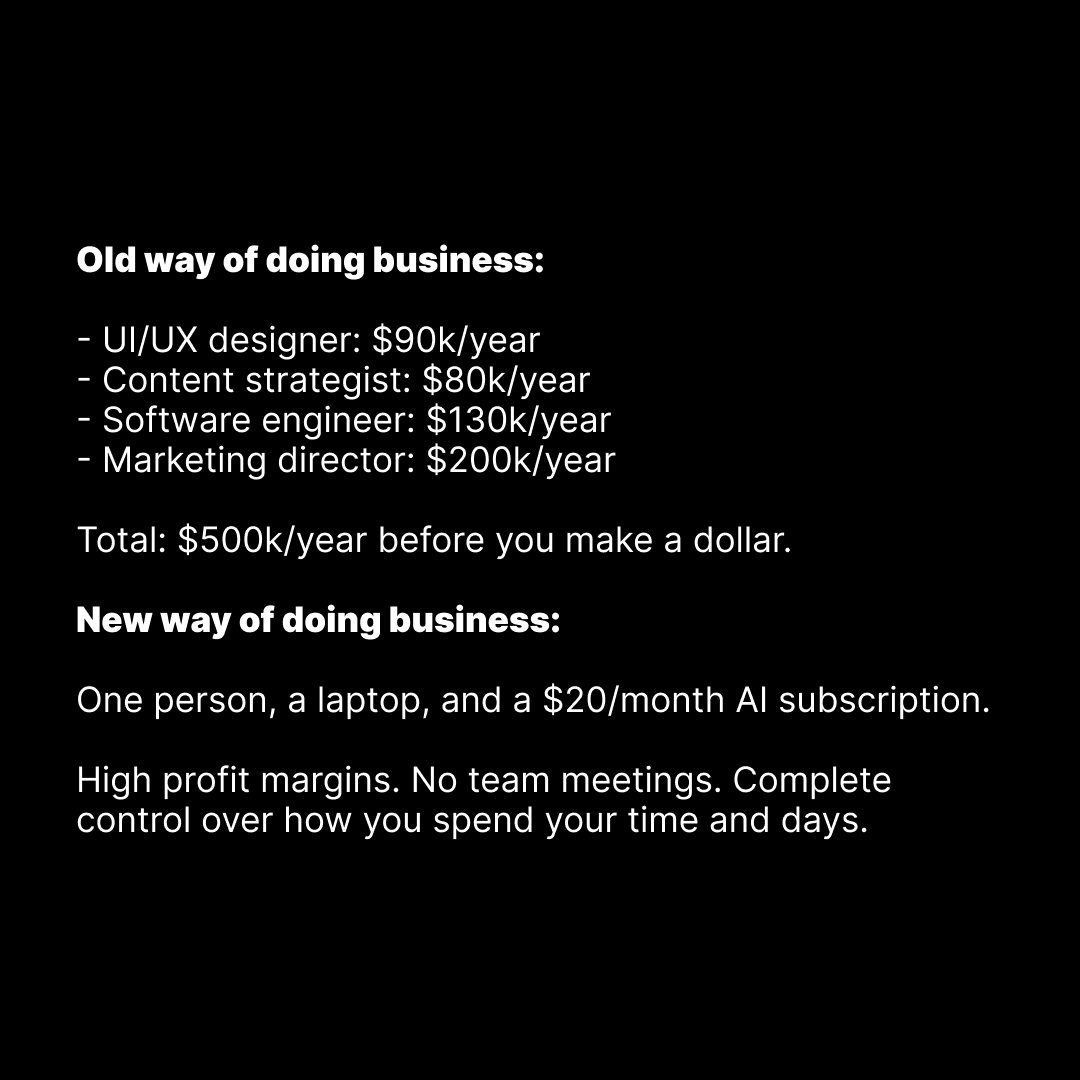
作者在开篇描绘了一种极端的反差:过去组建一个涵盖设计、开发、策略和营销的团队,产品还没卖出一块钱,账面开销就可能高达几十万美元;而如今借助笔记本电脑、无代码平台与月费仅需二十美元的 AI 工具,单人就能完成原型的搭建与分发。
这些是作者用来说明小团队机会的宣传算例:
-
一笔 AI 订阅费还不是全部成本:图里四个岗位的年薪合计 50 万美元,正文另举了一个 9 人团队。这些例子没有证明二十美元的 AI 就能等量替代整个团队。AI 能帮助完成草稿、排版与原型,产品判断、最终质量和客户支持仍要有人负责;平台订阅与交易费用也需另外计入。
-
小成本试验仍有代价:作者把创业风险描述为损失几百美元或重新找工作,但时间投入、生活开销与职业转换的代价不会消失。把试验做小,有助于控制投入,并不等于风险不存在。
那么,传统课程模式的问题究竟出在哪里?
对于缺少配套答疑的纯录播课程,买家看完步骤后,仍需自己判断怎样用到具体工作里。视频本身不会根据买家的操作检查大纲、解释错误或调整练习。课程内容可以被反复观看,应用过程中的卡点却未必因此解决。
这篇文章强调的 AI 辅导产品,尝试补上这一步:将创作者验证过的工作方法论作为知识库,结合智能问答能力,让买家在查阅步骤的同时,能获得针对自身情况的实时解答与作业检查。
把经验、客户和交付接起来,七步各自解决什么
要完成从“脑中有专业经验”到“线上自动交付”,作者拆解了 7 个环环相扣的推进步骤:
第一步:别从零憋大课,先盘点你每天自用的“边角料系统”
做产品时,一个容易绕进去的误区是以为“制作产品”等于“坐在电脑前重新写一本教材”。
作者建议先找自己反复使用的方法。这些现成资产已经有使用场景,适合拿来判断哪些部分能交给别人复用:
-
音乐制作人随手调配的专属鼓点采样包;
-
剪辑师在日常项目中调色必用的风格滤镜与光影参数;
-
写作者从实战中沉淀出的选题方法与文章结构;
-
财务或效率顾问日常自用的预算核算与日程管理表格。

这些沉淀之所以被称为“边角料”,是因为它们早就存在于你的硬盘、笔记软件或工作空间里,是你为了完成本职工作而顺手制造的副产物。
这些材料可以包装成定制 AI、普通课程或数字下载。选择哪种形式,要看买家需要的是指导、分步学习,还是拿来就用的文件。

第二步:把客户的处境说具体
产品要解决的是某类人的具体问题。“过去的自己”可以作为寻找客户的参考,但还需要说明是哪一个阶段,以及当时最想解决什么。
作者曾是手头拮据的大学生,后来做代笔时月入 4,000 美元,却不喜欢那份工作。这两个阶段面对的任务、已有技能和能承担的价格不同。即使都叫“想发展个人事业的人”,需要的产品也可能不同。

图中每天写作 2–4 小时、月收入 5,000–10,000 美元,描述的是客户想达到的状态,并非买家已经获得的结果。
明确这些差异之后,才能决定交付的起点:买家已经会什么,需要哪些指导,产品该重点解决哪一个问题。客户越具体,承诺和课程就越容易对应到实际任务。
第三步:把“帮你变好”写成具体的交付承诺
买家先要知道自己能得到什么,才能判断值不值得买。
作者用旅行作比喻:航班、住宿和行程都写清楚,买家才知道自己在买什么。数字产品同样需要把目标与交付范围说具体,让买家能判断它与自己的任务是否相符。
撰写产品承诺也是同样的逻辑。承诺的具体性应当用来清晰说明交付内容、解决的特定障碍与适用条件,而不是为了追求所谓的可量化而去编造销量、涨粉或高赞等确定性结果保证。
原文的承诺公式包含人群、当前困境、目标状态和收益。为了把它落到具体交付上,可以按这个思路整理成下面的填写句型:
帮助【特定人群】解决【具体困境】,通过【方法或工作流】完成【明确任务或交付物】,从而获得【实际收益】。
例如,“帮助职场写作者摆脱每次打开屏幕发呆半小时的灵感枯竭,用结构化大纲系统与排版清单在日常写作中建立稳定产出节奏”。越是把交付物包含什么、适合哪种操作场景交代清楚,买家就越能准确评估产品是否适合自己。
第四步:从结果倒推课程,让 AI 帮买家跨过卡点
课纲(Curriculum)不是理论知识的罗列,而是带领买家完成上述承诺的步骤路线图。
作者给出了一种便于起步的拆解方式:
-
提炼 3 到 5 个核心里程碑(对应产品的主要模块);
-
为每个里程碑设定 3 到 5 个具体行动动作(对应单节指引或配套工具)。

在这个环节,需要特别警惕过度交付(Overdelivering)与信息过载(Overwhelming)的界限:
-
真正的超预期交付:是精准兑现承诺,用最短的时间和最干净的路径帮买家拿到结果;
-
错误的过度堆砌:是塞入几十个小时无关痛痒的冗长录屏,让买家在浩瀚的材料中疲惫放弃。
AI 辅导可以接在这条练习路径上:买家读到某一课时,根据课程材料和预设指引提问、完成练习,并获得反馈。清楚的课程步骤给练习提供顺序,AI 可以围绕各课目标提供解释与反馈。
第五步:先拿自己的作品,说明这套方法如何用过
如果还没有客户案例,作者建议先展示自己用这套方法做出的作品,让潜在买家看到方法怎样被用过。
案例要让人看懂方法的使用过程:原先遇到什么问题,用了哪些步骤,最后形成了什么作品或变化。投入时间、已有技能和受众基础也应交代清楚。这些信息帮助买家判断自己是否具备相近的条件,以及需要补哪一步。
第六步:把承诺、证据与购买条件接成销售页
销售页把前几步的成果放在买家面前:客户的问题决定承诺,承诺决定交付范围,案例则展示方法怎样被使用。前面没说清的内容,很难只靠文案补出来。

图中列了 8 项要素,作者在正文中还补充了常见问题解答(FAQ)。这是他使用的一种销售页结构,可以按以下关系来理解,而不必照搬固定顺序。
先说明价值。 承诺(Promise)概括买家要完成什么;问题(Problem)说明它对应的具体处境。两者需要说的是同一件事,让目标客户看出这个产品与自己的工作有关。
再说明怎样交付。 过程(Process)解释方法怎样形成;功能与收益(Features + Benefits)把模块、模板和指引对应到实际用途;证明(Proof)展示作品与使用过程。比如,销售页承诺帮助买家建立写作流程,交付清单就要讲清选题表、大纲与修改步骤各自承担什么,案例也应让人看到这些步骤怎样被用过。
最后讲清购买条件与入口。 价格(Price)让买家知道要付多少;保障与退款(Guarantee & Refunds)说明具体条件;常见问题(FAQ)回答适用人群、使用预期和其他疑问;行动入口(Call to Action)把购买按钮与权益清单放在读者能找到的位置。买家需要同时看懂价值、证据和条件,才能判断是否购买。
作者自述,他在首次推出面向 Substack 的训练营时,展示自身案例,售出了全部 20 个席位。在退款部分,他还提到累计获得超过 10 万美元收入、拥有 200 余位客户,期间有两位客户提出退款请求。销售页的保障还应写清适用条件与退款方式,方便买家在付款前判断。
作者展示的通讯产品页面,把价值承诺与具体交付接在一起:销售页用他本人 8 个月新增 13,536 位订阅者的经历作背书;结账页则列出 15 个模块、1 份资源及 Eden 工作空间,让买家知道购买后拿到什么。图中的 25 美元是截图当时的促销价。


第七步:主动提供入口,再看内容是否带来合适的人
产品制作完毕后,最致命的幻想是“挂在主页链接里,等待别人自然发现”。

针对引流转化,作者提出了两条实用原则:
-
主动呼吁行动(Call to Action):必须在内容中明确告诉受众你有什么产品、如何购买、何时购买,不要只假设读者会自行点开主页链接并理解你的产品;
-
权衡发布频次与营销占比:作者用发帖比例举例:若每周发 7 条动态,其中 1 条推广帖约占总内容的 14%;若一个月发布 90 条内容穿插 4 条推广帖,推广占比准确约为 4.4%。但需要指出,单纯降低推广占比并不自动意味着受众反感度更低,因为单个读者在信息流中未必会看到全部 90 条帖子;此外,发帖频次必须严格服从内容价值与受众的实际反馈,不能一概建议所有人每天发布三条。
点击量能放大销售额,转化率和成本也能改变结果
七步说明了产品怎样被做出来并找到客户。要判断这门生意能否持续,还需要把点击、成交与成本放在同一张账上。
原图的销售额怎么算,2.5% 从哪里来
作者在推文配图中列出了三档阶梯算例:
-
每周 100 次点击 × 2.5% 转化率 = 2–3 单;
-
每周 1,000 次点击 × 2.5% 转化率 = 25 单;
-
每周 10,000 次点击 × 2.5% 转化率 = 250 单。
理解这组数据需厘清其数学性质与实际变量:
-
期望值与现实波动的差异:100 次点击乘以 2.5% 得到的 2.5 单是数学期望,原图写成了“2–3 单”;在真实的商业观察期内,受周期与样本量影响,完全可能出现零成交的阶段。
-
转化率并非固定常数:在真实的商业环境中,转化率会随着目标人群的精准度、客单价高低以及产品承诺的具体程度而发生显著变化,配图中固定的 2.5% 仅是一种用于演示的简化教学假设。
Eden 把知识、课程和结账接在一起,哪些费用要另算
作者在文末推荐了全流程工具 Eden。原文带有个人推广参数,所以应把工具推荐与七步方法分别判断。查阅 Eden 官方课程指南 与 Eden 官方开店指南,可以核实到以下关键事实:
-
草稿免费,上线必须付费:在 Eden 中搭建工作空间、整理草稿与配置 AI 是免费的,但一旦要正式上线发布(Publish)并接收付款,工作空间必须升级为 Starter、Pro 或 Max 等付费订阅计划。
-
分清默认体验点数与创作者赠送费用:官方列出的买家默认 50 点免费体验额度,与创作者另外赠送的点数是两件事;若创作者在配置产品时主动选择向买家附赠 AI 点数(官方提供 100、250、500 或 1,000 点四档可选),则属于有条件赠送费用,平台将按每点 0.04 美元的单价,在结算时先从销售额中扣除。
-
交易扣点与支付损耗:
- Eden 平台抽成:Starter 与 Pro 套餐每笔成交抽取 5%(Max 与 Agency 套餐为 2%,公开市场分发为 10%);
- 第三方支付手续费:支付处理费另计,创作者需根据实际收款地区及具体支付方式自行核对,不能套用单一国家费率;
- 使用 Eden 内置收费结账需要连接 Stripe,收费产品最低 1 美元;平台也提供使用自有结账渠道的路径。
-
AI 依靠配置的知识指导练习:创作者加入课程材料,在 Instructions 中写清指导要求;买家打开某一课提问时,AI 知道当前是哪一课,可以解释概念、引导练习和检查作业。创作者仍需检查关键答案与练习反馈,确保它们与课程方法相符。
-
版本发布为静态快照:点击发布后买家端呈现的是冻结版本。后续在工作区内的更新,必须由创作者明确点击“发布更新(Publish update)”后才会对买家生效。
销售额扣掉哪些项目,才接近经营结果
为了对微型产品的收益建立独立且客观的理解,可参考以下核算公式:
-
期望订单 = 周点击量 × 自设转化率
-
周销售额 = 期望订单 × 单价
-
扣已填成本后的余额 = 周销售额 − 创作者赠点费用 − 平台示例费用 − 自填支付费 − 周固定成本
以原图的典型参数为例:
-
基准销售额测算:每周 1,000 次点击 × 2.5% 假设转化率 = 25 单期望订单;25 单 × 100 美元单价 = 2,500 美元周销售额。
-
单位成本测算:若创作者在 100 美元产品中选择赠送 100 点 AI 点数,每单先扣除 4 美元(100 点 × $0.04),剩余基数为 96 美元;再按 Starter/Pro 套餐示例的 5% 费率扣除平台费用($96 × 5% = $4.80),单笔在扣除这两项后余额为 91.20 美元。第三方支付费则按各地区实际费率另行扣除。
这里得到的是“期望订单”、“周销售额”以及“扣已填成本后的余额”,当周固定成本或扣除项较高时余额允许出现负值;由于该测算并未纳入退款率、税收、买家答疑与客户支持的时间成本,所以余额还不是净利润,也不能直接乘全年周数当作年收入预测。
改变转化率或赠送点数,看同样点击量下的销售额和余额怎样变化:
点击多了,销售额和余额会怎样变?
教学算例:左侧保留原图固定 2.5% 的参照,右侧使用你设定的转化率与成本。两边采用同样的点击量和单价。
买家默认 50 点免费体验额度不计为创作者赠点。支付费和其他周成本默认填 0 表示尚未纳入,并不表示实际免费。平台与赠点条件来自 Eden 官方指南;其他输入均是假设。
点击量 × 2.5% × 单价,未扣任何成本。
- 创作者赠点成本
- $0.00
- 平台费
- $125.00
- 已填支付处理费
- $0.00
- 已填其他周成本
- $0.00
转化率相同,所以两边销售额相同;已填成本使右侧余额下降。 尚未完整计入退款、税、订阅和支持时间;余额不是净利润。
怎么算,以及算例能说明什么
期望订单 = 点击量 × 转化率。订单是长期重复条件下的期望,小数不代表真的卖出半份产品;某一周的实际整数订单会波动。
销售额 = 期望订单 × 单价。赠点成本 = 期望订单 × 每单赠点 × $0.04。此算例先扣赠点,再对剩余销售额按所选示例费率算平台费;再减已填支付费和其他周成本。具体结算仍需按实际产品条件核对。
负余额表示所填成本超过了本算例销售额;它不会被隐藏或截成零。条形只比较两侧销售额,使用同一比例尺;这个工具不预测需求,也不预测全年收入。
第一版先交付一套能独立使用的方法
先从最近真正用过的一份模板或流程开始,写清它适合谁、需要输入什么、怎样使用、完成后得到什么,再配上一份自己的实际作品。这样的第一版,才方便对应客户、承诺、课程与案例,也能让潜在买家判断自己拿到以后该怎么用。
接下来,让对应人群看到它,并观察他们在哪一步卡住。制作和课内答疑可以借助 AI,内容质量、使用反馈和成本核算仍由创作者负责。依据真实交付逐步改进,比一开始堆出庞大内容更符合这套七步方法的起点。
从经验到销售:用 AI 做知识付费产品的 7 步方法
一份模板、一套调色预设、一门图文课程,都可以是数字产品:制作完成后,通过网络把文件、内容或工具交给买家,而不必每次重新制作内容。把工作经验做成这样的产品,需要先确定谁会使用它、要帮对方完成什么,再决定怎样组织内容、展示方法的使用过程并提供购买入口。
作者用数十万美元团队与二十美元 AI 订阅作宣传对照,说明单人制作原型的机会。但这并不意味着二十美元的 AI 能直接等量替代整个团队——AI 能快速完成草稿、排版与原型,但产品判断、交付质量与客户支持依然要由人负责。更重要的是,这条路径的重点是把自己会做的事,变成买家能理解、能照着使用的交付物。
别从零憋大课,把零散自用方法整理成别人能照着使用的交付物:
作者提醒:超预期交付(Overdelivering)与信息过载(Overwhelming)需要区分。堆入几十小时无关录屏容易让买家疲惫。真正的超预期交付,是用最短的时间和最干净的路径帮买家拿到结果,而不是用冗长录屏让买家疲惫放弃。
新型 AI 辅导产品尝试改变这一单向结构:创作者加入验证过的课程材料,并在 Instructions 中写清指导要求。买家打开某一课提问时,AI 知道当前是哪一课,可以解释概念、引导练习和检查作业。创作者仍需检查关键答案与练习反馈是否符合课程方法。
买家先要知道自己能得到什么,才能判断值不值得买。
承诺的具体性应当用来清晰说明交付内容、解决的特定障碍与适用条件,而不是为了追求量化而去编造涨粉或爆单保证。原作者的句型包含人群、当前问题、目标状态与收益。下面是本文为明确交付物作的改写:
越是把交付物包含什么、适合哪种操作场景交代清楚,买家就越能准确评估产品是否匹配自身需求,也更容易理解销售页上的承诺与交付清单。
七步打通了产品制作与获客链路,但要判断一门微型数字业务能否持续运转,还必须把点击、成交与成本放在同一张账上。原作者推特中列举的三档阶梯算例(100 / 1,000 / 10,000 点击量),建立在固定 2.5% 转化率的教学简化假设之上;在真实商业环境中,转化率会随目标人群、定价与承诺具体程度变化;期望订单也不等于某周必然成交的单数,可能出现零成交。
核算经营结果时,必须看清各项平台成本与扣费流向:以 Eden 全流程工具为例,草稿搭建免费,但正式上线必须升级付费套餐;买家默认的 50 点免费体验,与创作者主动附赠的点数是两件事。若创作者选择附赠,平台按每点 $0.04 扣除;下列采用 Starter/Pro 的 5% 示例费率,支付手续费按实际地区和方式另核对。
核算公式:扣已填成本后的余额 = 周销售额 − 创作者赠点费用 − 平台示例费用 − 自填支付费 − 周固定成本。注意:该余额尚未扣除退款、税费及个人客户支持的时间成本,不能等同于纯净利润,更不可简单乘以全年周数推导年收入。
第一版数字产品不必追求宏大叙事。先从你最近真正用过的一份模板、一张表格或一套流程开始,明确它适合谁、需要输入什么、怎样使用以及最终能交付什么,再配上你自己真实的实战作品作为证据。
把这套最小可行资产推向对应人群,观察他们在哪个环节卡住。AI 可以辅助文案润色与课内答疑,但内容的实用厚度、真实的交付质量与理性的成本核算,始终取决于创作者自身的专业投入。
How to build a profitable digital product (in 7 steps)

“In my little group chat with my tech CEO friends, there’s this betting pool for the first year that there is a one-person billion-dollar company. Which would have been unimaginable without AI and now will happen.” – Sam Altman
The future of entrepreneurship is micro-entrepreneurship.
One founder, with a laptop, an audience, an army of robots at their disposal, and a high-value skill stack to help them solve meaningful problems in society, making $100k-$1M/year.
No boss. No calls. No employees.
Ultimate freedom, fulfillment, and meaning.
“There are almost 7B people on this planet. Someday, I hope, there will be almost 7B companies.” - Naval
It took humans centuries to get here, but we’re now living in the most leveraged time and the opportunities are infinite.
We now live in the most interesting time of all of history.
You no longer need to spend 4 years and go into hundreds of dollars in student debt to get a degree to learn a new skill.
AI leveled the playing field.
You have the world’s smartest, most talented, most hard-working employee.
Average people are now vibe coding multi-million dollar startups with no coding or programming experience.
With the combination of the internet, AI, and digital products, anyone can now build a profitable one-person business.
I’ve seen many people pull this off. Justin Welsh and Dan Koe are some of the most prominent creators who are making $3M-$5M per year as one-person businesses.
I am someone who has scaled my own one-person business to making 6 figures every year.
How is this possible now?
1) Real risk does not exist
Humans have done a tremendous job at eliminating any real physical threats.
You don’t go walking around scared if a tiger jumps at you.
We either subjugated, domesticated, or killed every other species on this planet.
The riskiest thing you can do is that you lose $500.
Or you leave your job to start a business and your business fails. But if it comes to that, you can always just get another job and you’ve solved your problem.
If you’re not going to die, then it’s not that risky.
2) Abundance of opportunity
I don’t want to make this entire newsletter about AI, but you need to understand that the world we live in is completely different.
We never had such an abundance of opportunities in our hands.
Every unfulfilled human desire we have is a problem that can be solved with a new business or product.
And the cool thing is human desires are infinite. Every person has their own unique quirks and interests which means the number of products we can build is infinite.
Every problem that exists in society is an opportunity to start a business.
Businesses solve society’s problems. It’s how you create, contribute, and distribute your value to the world.
3) Leverage
Humans are now the most leveraged they’ve ever been in human history.
One person can do the same work that took a team of 2 senior engineers, 1 product designer, 5 marketers, and 1 manager all by himself using nothing but a laptop, AI, and no-code tools.
You are now leveraged out of your mind.
You have AI that can code any app you want. You have no-code tools that help you automate your work. Digital products that have no marginal cost and instant delivery (which means high profit margins). You go to social media to attract an audience, get your work seen by others, and get customers for your business.
All of these 3 factors (and more) have helped us reach a point where you can build a profitable one-person business using nothing but a laptop, your unique set of interests and skills, and an audience of like-minded people.
Here’s how you can make your first digital product (as a beginner):
I - How to create a simple (yet hyper-profitable) digital product
“Smart people get paid to be themselves” - Alan Watts
There is a big stigma when it comes to courses.
When most people hear the word “course” they immediately think of a business guru who’s trying to scam you.
But that’s not my experience with them.
I bought courses that genuinely changed my life.
Spending $150 on a course to learn a high-value skill is much more affordable than a normal university course.
Most people can’t see their value because they’re still operating with society’s programming.
In universities, you have professors who have no real-world experience, teaching you theory, and you are tested on your memory.
But with courses, it’s different.
It’s taught by creators who have skin in the game. You learn practical skills (fast), you build real-world projects, launch them, and let free markets decide.
As a result, you gain high-value skills, real-world experience, and make a living while doing so.
The only problem with courses?
Courses are static.
You’re left to figure out how to implement the steps to your unique situation yourself. You can’t speak to the creator directly and ask for feedback.
But with AI, this is now different.
As a creator, you can now have AI-guided courses to help your customers implement your lessons.
The AI is trained on your knowledge, has your frameworks, and your voice. This increases the value of your product and helps people extract more value from your product.
Here’s how you can create your own digital product and make your first $10,000 (I made $150,000 in the past 1.5 years using this process):
1) Sell your sawdust
You have a $100,000 digital product stuck in your head.
Or in your hard drive.
Or in your workspace.
The easiest product you can sell is the one you’re already using (but aren’t aware of).
The creator economy is simply a system’s economy.
Everyone has their own unique systems and processes to achieve a certain outcome.
- If you’re a music producer, you have your own drum kit.
- If you’re an editor, you have your own set of light presets that you use.
- If you’re an email marketer, you have your own unique way of writing an email.
- If you’re a writer, you have your own way of finding ideas and introducing novel perspectives.
- If you’re an athlete, you have your own pre-game routine that helps you get in the zone.
- If you’re into finance, you might have your own way of budgeting, investing, and keeping track of all your expenses.
All of these are examples of products that you can now create and sell.
The cool part?
They already exist.
For me at least, because I write so many actionable newsletters, run cohorts, and create lessons for my clients, I already have them exist in my Eden Workspace.
This is an example of some lessons about branding that I created when delivering my cohort.

Then all you need to do is click on that board and turn it into a product that has AI built into it to help your customers implement your lessons.
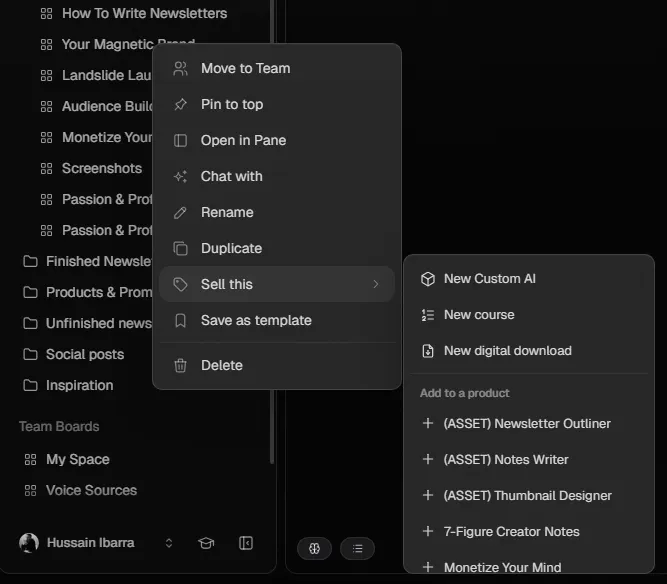
And if you’ve got other lessons in other boards, you can easily add them to your product.
2) Create your Dream Customer
To sell your product, you need to know who you’ll sell it to.
Spoiler: Your product isn’t for everyone.
If you’re selling to everyone, you’re selling to no one.
You need to be comfortable with the fact that not everyone will buy your product.
You need a Customer Avatar.
Even when you try to “sell to your previous self”, as many people tell you to do, you still need a Dream Customer Avatar.
Because there are multiple different versions of you.
I’ll use myself as an example here.
- 4 years ago I was a broke college student.
- 3 years ago I struggled to build an audience.
- 2 years ago I was a ghostwriter making $4,000/month, but I hated it.
- Last year, I had an offer, but sales were inconsistent.
Each of those versions of myself had a different problem, a different skill set, and a different level of what kind of products they were able to buy.

3) Write your promise
Specificity sells.
I see far too many creators try to hide behind vague promises because they’re too scared to deliver on their promise.
But the truth is, if your promise is vague, fewer people will buy it.
At first, you’d think it’s counterintuitive, but it’s not.
Think about this for a second.
Let’s say you’re trying to plan a trip and you have 2 options.
Option 1) A $1,000 mystery trip.
It could be the best trip of your life, or it could be the worst trip where you go to an underdeveloped country, a 1-star hotel, with the worst airlines possible, the food is horrible, and there are no hot showers.
Every bad outcome you can think of is there.
There is nothing good about it.
Or...
Option 2) a $10,000 trip.
You’re going to your favorite country. The best airlines possible. A 5-star hotel. The best restaurants. Transportation is handled.
You don’t need to think while you’re on that trip because everything has been taken care of for you before you even step out of the door and you know exactly what’s happening at every hour.
Which ticket do you think will sell more?
The second one.
The reason is simple. It’s specific and it reduces uncertainty.
That’s what your promise should do.
It gives people certainty of what they’ll buy.
Don’t write “Grow an audience”. It’s too vague.
A better promise is something like this: “Grow by 1,000 followers per month using the MAGNET framework”.
I’m awful when it comes to coming up with names for frameworks. But you get the idea.
Here’s a formula you can use:
The Promise Formula: “Helping [WHO] go from [HELL] to [HEAVEN] so they can [BENEFIT(s)]”
This is an example of a promise from a cohort I bought last year:
Example: “Turn your knowledge into a quality product to unlock more freedom & impact in your business”
4) Create your curriculum
Your curriculum is the steps your customers are going to take to achieve the transformation.
The problem with courses is that they’re static.
If the person who bought gets stuck on a concept, or tries to apply what is being taught, they can’t get feedback.
It’s not like you can ask the creator and they’ll respond.
But with Eden, you can add your knowledge to it and have an AI version of yourself teaching people the course.
This does 2 things:
- It increases the perceived value of your products. Because now you have an AI component to it.
- It helps your buyers to apply what is being taught properly. So they get better results. Which means better testimonials for you. Which means you can get more buyers (because your product works).
So how do you create your curriculum?
Go back to your promise and ask yourself:
- What are the 3-5 major milestones your customer needs to reach to achieve the transformation? These will be your course modules.
- For each major milestone, what are the 3-5 action steps they need to take to achieve it? These will be your module lessons.
Here’s an example of myself:

Important note:
There is a fine line between overdelivering and overwhelming your customers.
You overdeliver when you deliver on your promise and nothing more.
You overwhelm when you do too much.
5) Become your own case study
Contrary to popular belief:
You can skip the free client work if you can get yourself great results.
When I started ghostwriting, I didn’t have any prior experience.
I didn’t have a wall of testimonials of people going viral.
I just had my posts. But because I was able to make myself go viral, I can promise people that I’ll write them similar posts.
This is harder?
Not really.
Because the idea of doing free client work is to show competence. That you can actually deliver on the promise.
So if you can deliver great results for yourself consistently, then people will pay to learn from you.
Be so good at what you do that people can't help but pay to learn from you.
6) Write your sales page
Writing a sales page is relatively easy once you have done the previous steps.
And no, you don’t need to be a professional copywriter to write a good sales page.
You just need the right structure and AI by your side.
I’m still learning about copywriting. Everything I learned when it comes to sales copy, I learned directly from writers who made $10M-$50M writing copy.
Now, there are many different structures you can use, but here’s how I structure my pages and offers:

In Eden, it’s very simple to create a sales page.
Most of this is already taken care of for you and you just need to write and fill in the different sections.
1) The Promise
The promise is the transformation that your customers will get after buying your product.
The most common place you’ll see it is in the headline and subheadline. They both condense the value of your product and the transformation.
I’d go so far as to say that your headline and subheadline are the two most important pieces of your sales copy.
This is what I had for my newsletter course:
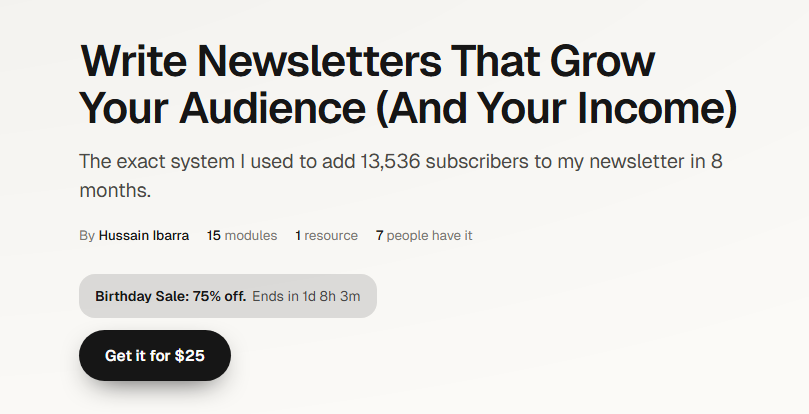
Good headlines sell the outcome. Not the product itself.
In the subheadline, that’s where you add the other parts.
- The timeframe
- The unique mechanism
- Numbers & social proof
Since I didn’t have a name for the method I use to write my newsletter, I just didn’t mention the unique mechanism.
2) The Problem
Traditional copywriters call this section “The Lead”.
I won’t act like I’m a copywriter, so I’ll just take their word for it.
But a problem I see most people make when it comes to this section is they state the problem, then they write “Keep reading if you’re...” then throw a ton of bullet points hoping that something will stick.
Don’t do this.
It just screams that you don’t know who your Customer Avatar is and you’re hoping that someone buys your product.
Be specific. Call out your Customer Avatar’s problem and make them a promise.
That’s all what you need to do.
Don’t overcomplicate it.
3) The Process
Here, your goal is to show people why your way of doing things is different from everyone else and why your way of doing things is better.
You can lead with your story and show people how you came to your solution.
Let’s say you’re selling a LUT pack for the average Instagram user who just wants to upload high-quality images to their feed.
You can write about how you wanted to upload high-quality images to your Instagram feed but every course or tutorial you watched just made the process more complicated.
Then you learned how to use editing apps (like Photoshop and Adobe Lightroom), but you hated how you always had to start from scratch.
So you created your LUT pack presets to help you quickly edit photos and make them look cinematic without going through the hassle of learning editing apps and using nothing but your iPhone.
If you can add an illustration to breakdown the process is even better.
4) Features + Benefits
This is very straightforward.
You will tell people what’s inside your product.
The easiest way to do this is to write bullet points for each module.
To write effective bullet points, say what they’ll learn + the benefit.
It helps to think of it as the opposite of pain points.
5) Proof
This depends on where you are.
If you have social proof, use it. If not, you can use yourself as a case study.
That’s what I did with my last cohort. It was the first time that I launched a product that was focused on Substack
But because I used myself as a case study, I sold all 20 spots.
If you don’t have proof, go generate some.
Either for yourself or for others.
6) Price
Pretty straightforward.
Mention the price of your product.
7) Guarantee & Refunds
If you’ve got a guarantee, write it.
A guarantee helps make your offer easy to buy. It’s extremely rare to have someone come to you asking for a refund.
I have 200+ customers and made $100,000+ in revenue, and during that time I only had 2 people asking for a refund.
A guarantee just shows you’re confident about your product.
8) Call To Action
At this point you’ve walked people through the entire sales page.
The only thing you need to do is write a quick recap.
- Restate the promise
- Show proof
- Mention the price
- Cost of not taking action (hell)
- Cost of taking action (heaven??)
Lastly, you can have a price card where you again mention everything that’s included with the price.
Price card looks something like this:
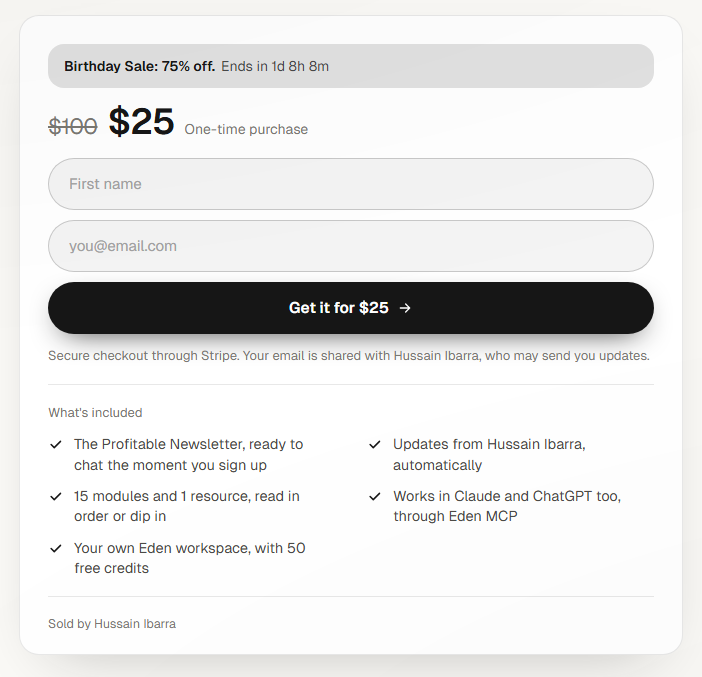
Again, with Eden, this is pretty simple. You don’t need to code. You just write what you want to be included and it’ll do the work for you.
9) FAQ
Most people skim your sales page and immediately go to your FAQ to get the gist of it.
Some questions to answer:
- What is the product? → Sum up the offer one more time
- Who is this for? → Describe your Customer Avatar
- When can they expect results? → Set expectations
- Objection 1 → Answer the objection
- Objection 2 → Answer the objection
- Objection 3 → Answer the objection
- What if they don’t get results? → Refund policy
Then finish off with one more buy button.
7) Send traffic

If you’re not making the monthly revenue you want, then you need more traffic.
The biggest mistake I see creators make is that they create a product and think that people will magically find their products.
Spoiler: They won’t.
You need to deliberately send traffic to your product.
More traffic = more sales.
So how do you increase traffic?
2 ways:
1) Increasing the frequency of your promotions
The cool thing about this is you don’t need to change anything.
You don’t need to change your offer, your content strategy, your funnel, or anything.
All you’re going to do is increase the frequency of your promotions.
You need to always remind people that you’re selling something.
Drill this in your head:Sales don’t come out of thin air
You need to be intentional with how you direct people.
You need to be clear on what products you have, what they need to do, how they can buy them, and when to buy them.
The chances of someone clicking on the link in your bio and buying from is astronomically small.
2) Creating more content
Creating more content gives you more in-between moments where you can promote your products.
This sounds obvious, but the more content you create, the more opportunities you’ll have for CTAs.
If you only post 7x a week, a weekly promotion post becomes 14% of your content.
People will get sick if you promote a product every time you post.
But if you’re posting 90x a month (which is 3 posts a day), and 4 of your posts are promotional posts, that’s only 4% of your monthly content as promotions.
More content = more opportunity to sell (without being annoying)
You can still provide value, create content you love, and build an audience, but you also get to make more sales because you simply have more CTAs in your content.
Promote your products like you’d promote a sponsorship.
That’s all for today.
Thank you for reading.
Enjoy the rest of your day.
Hussain
P.S.
The tool I was showing you is called Eden.
It’s the software I’ve been using for all of my writing, content creation, digital products, and coaching.
If you’re serious about starting and building a one-person business, you need to get Eden.