每天用 AI 的人,更需要学会二阶思考
回答只展示眼前的收益;技能、判断、习惯与数据,会在反复使用中慢慢改变。一个三字问题,帮你把这些后果提前看见。
- 二阶思考不只看 AI 有没有交付,还看这种使用方式重复以后,会让什么能力变强、什么能力变弱。
- 研究没有给出“少用 AI”的单一答案;直接接收成品与利用 AI 搭建学习脚手架,可能产生相反结果。
- 把任务分成只求交付与需要沉淀能力两类;后一类至少保留一次独立作答、核查、复述或反驳。
你向 AI 提问,答案在咖啡还没端到嘴边时就出现了。它通顺、完整,大多数时候也足够有用。几周以后,这种速度会变得像键盘和搜索框一样自然。
屏幕只显示最先发生的事:任务完成了。更慢的变化落在别处——你还会不会从空白页开始写,会不会核查一个听起来很确定的答案,会不会在不知不觉中把敏感信息留在公开链接里,也会不会借助 AI 学会原本不会的东西。
AI Guides 在一篇 X 长文里,用“二阶思考”把这些变化串了起来。这个模型来自投资领域,却很适合判断每天都在重复的 AI 使用习惯。
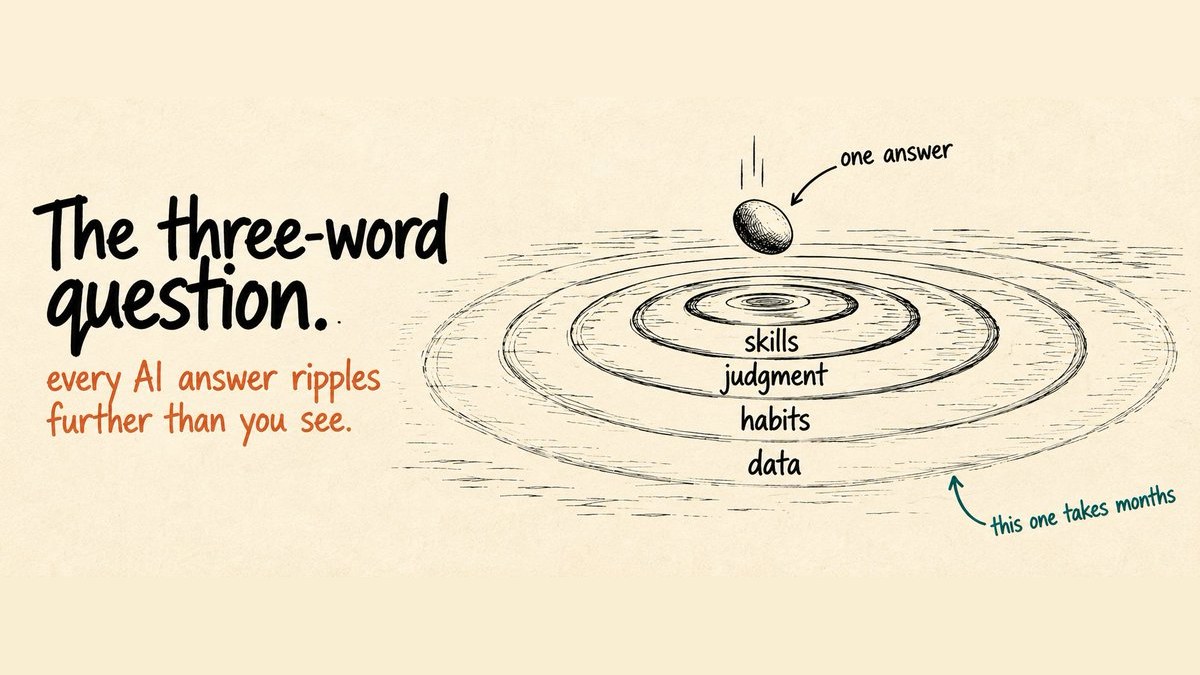
一个答案落下后,水波还在向外走
一阶思考问:发生了什么?
二阶思考继续问:因为这件事发生,接下来还会发生什么?
Howard Marks 在投资中用“第一层思考”和“第二层思考”区分快速、表面的判断与考虑更多后续变量的判断。Farnam Street 的 Shane Parrish 把它压缩成一句更容易使用的话:然后呢?
一个答案,只是第一圈水波
把它放到 AI 场景里,一阶结果往往很好看:邮件写完了,报告缩短了,代码跑起来了,难题也有了解释。二阶结果不会同时出现在屏幕上。它要经过反复使用才显现,而且改变的对象通常是使用者。
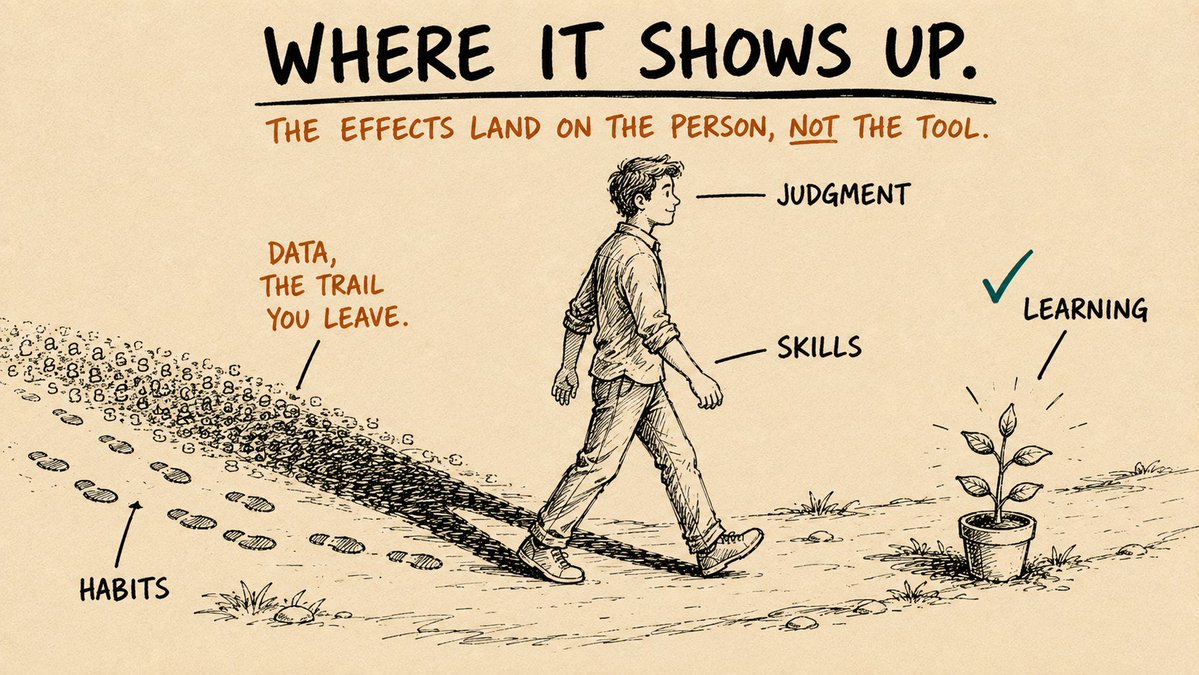
五条变化,最后都落在人身上
技能:交付完成了,能力有没有留下
MIT Media Lab 团队让 54 名参与者分别借助大语言模型、搜索引擎或只靠自己完成写作。使用大语言模型的一组对文章的自我所有感最低,一些人完成后难以准确引用自己刚写过的内容。脑电结果也显示,不同工具条件下的神经连接模式存在差异。
这项研究是小样本预印本,研究任务也只覆盖短期论文写作,不能推出“AI 写作会让人永久失去能力”。它提供了一个很具体的提醒:文字已经交付,不等于组织观点、记住内容和再次独立完成的能力也一起形成了。
判断:信任放在哪里,会改变核查力度
Microsoft Research 与卡内基梅隆大学的研究收集了 319 名知识工作者的 936 个真实任务例子。参与者对 AI 越有信心,自报投入的批判性思考越少;对自己的任务能力越有信心,自报投入的批判性思考越多。
这里测量的是自报的思考活动与努力程度,不能直接等同于客观能力下降。它揭示的机制依然有用:连续十次都得到正确答案后,第十一次最容易消失的动作,是核查。
习惯:外包从一次决定变成默认动作
Michael Gerlich 对 666 份有效样本的研究发现,频繁使用 AI 与较低的批判性思考得分相关,认知卸载在其中起到中介作用。认知卸载本身很常见:记笔记、用计算器、查地图都在把一部分脑力工作交给外部工具。
差别出现在使用方式上。你可以明确决定“这件事不值得我亲自做”,也可能在任何问题出现时都先让 AI 代答。前者释放注意力,后者会把判断过程一起省掉。这项研究是相关性证据,不能证明 AI 使用造成了得分下降,但它准确描述了习惯怎样形成:重复的捷径会逐渐变成默认入口。
数据:更好的回答,通常要求更多上下文
2025 年,ChatGPT 曾提供一个可选功能,让用户把共享对话设为可被搜索引擎发现。部分公开对话随后出现在 Google 等搜索结果中,OpenAI 很快撤下了这项功能。
当前官方说明写得很清楚:共享链接并不等于私密链接,拿到链接的人可以继续转发;接收者保存的副本也可能脱离原链接继续存在。一次分享只要几秒,信息的传播范围和寿命却可能远远超过这几秒。
学习:同一技术也能让能力复利
Harvard 的 Greg Kestin、Kelly Miller 等人为本科物理课设计了一套有教学脚手架的 AI tutor(AI 导师)。194 名符合条件的学生参加随机对照交叉实验。在两节特定课程中,AI tutor 组用更少时间取得了显著更高的学习增益,中位学习增益超过课堂主动学习条件的两倍。
这套 tutor 远不止一张“请直接给答案”的空白聊天框。它使用针对课程内容的提示、分步引导、练习和反馈,让学生持续参与推理。研究范围只覆盖一门课的两节内容,无法代表所有学科,却证明了一种可能:AI 可以提供成品,也可以提供脚手架;后者把思考留给学习者。
你每天都会遇到的六个选择
二阶影响很少以“大事”的形式出现。它藏在一天里反复发生的小选择中。
| 当下的选择 | 多问一句“然后呢?” |
|---|---|
| 90 秒写完邮件 | 几个月后,面对空白页会不会更难起笔? |
| 接受过去十次都正确的答案 | 这次是在省核查时间,还是取消核查习惯? |
| 用摘要代替原文 | 我能复述,也还能质疑原论证吗? |
| 粘贴私人信息换取个性化建议 | 信息存在哪里、谁能访问、能否继续转发? |
| 要求 AI 分步解释 | 对话结束后,我能独立重做吗? |
| 先写目标、约束和判断标准 | 这两分钟能否让我继续拥有问题、判断答案? |
这些选择没有统一的正确答案。一封例行通知可能只需要快速交付;一项以后要独立承担的专业判断,就不能只留下交付物。
研究看到的是两条相反的路径
几组研究放在一起,会出现一条清楚的分叉。
AI 交付成品的速度既是它的价值,也是人最容易跳过参与的原因。
直接接收成品:人的参与被压缩
一条路径是直接接收成品。MIT 写作研究中的低所有感、Microsoft/CMU 调查中“更信 AI、较少自报思考”的关系,以及 Gerlich 研究里的认知卸载,都出现在人的参与被压缩之后。
结构化参与:AI 变成思考脚手架
另一条路径是让 AI 组织练习、提供反馈并暴露推理步骤。Harvard AI tutor 属于这条路径。Gerlich 后续一项 150 人实验也比较了无 AI、无引导的人机协作、结构化人机协作和 AI 单独作答。结构化组先独立反思,再定向研究、构造论点、批判审查和最终复盘;他们在这项政治论证任务中写出了更强的论证,并报告了更高的认知参与。
这个实验只测试了一种任务,而且在单次 60—75 分钟的受控活动里完成。它仍然给出了一套可以迁移的动作:先形成自己的问题和初步判断,再让 AI 进入。
安静的偏移:变化需要主动测量
有些变化安静到个人很难察觉。一项发表于《柳叶刀·胃肠病学与肝病学》的观察研究比较了四家波兰内镜中心引入 AI 辅助前后三个月的无 AI 结肠镜检查。无辅助状态下的腺瘤检出率——检查中至少发现一处可能癌前病变的比例——从 28.4% 降到 22.4%,绝对下降 6.0 个百分点。
这项研究只能说明 AI 暴露与无辅助检出率下降同时出现;工作量、病例结构和时间变化仍可能影响结果。它没有证明 AI 已经使医生“退化”。它展示的是二阶效应为什么需要主动测量:工具工作正常,使用者也未必感觉到变化,长期能力却可能已经偏移。
把“然后呢?”放到接受答案之前
二阶思考不要求每次都把任务做慢。它要求你在交出思考之前,做一次明确选择。
接受答案前,先把问题补完整:如果我不参与就直接采用,什么能力会变强,什么能力会变弱?
接受答案前,走完四步
- 01判断任务
只求交付,还是需要沉淀能力?
- 02指定责任
哪项取舍、标准或结论必须由你承担?
- 03保留动作
独立作答、核查、复述或反驳,至少留一个。
- 04处理数据
删去敏感信息,把分享链接按公开信息处理。
1. 判断这次任务只求交付,还是需要沉淀能力
整理格式、改写固定通知、生成会议标题,通常只求交付。写出你要长期负责的观点、判断证据、学习一项技能,任务结束后还需要在你身上留下东西。
2. 指定一项不能外包的责任
可以让 AI 搜集选项,但最终取舍由你解释;可以让 AI 起草代码,但测试标准由你制定;可以让 AI 总结文章,但核心论证要能由你复述。人的责任越明确,工具越容易成为放大器。
3. 保留一个认知动作
先写三行自己的答案,再看 AI;让 AI 给证据,不直接给结论;收到结果后找一个反例;关掉对话,用自己的话重做一遍。一个动作就足以阻止“默认外包”悄悄接管全部过程。
4. 在发送前处理数据边界
删除身份信息,用角色和区间代替具体姓名、账号与金额;涉及公司、客户、医疗或财务资料时,先确认产品的数据保留、训练和共享设置。分享链接按公开信息处理,不把“没人知道链接”当成权限控制。
AI 答案是一阶结果。反复使用之后,你保留下来的技能、判断和习惯,才是二阶结果。
每次接受答案前,多问一句:然后呢? 这几秒会迫使你决定,哪些工作可以交出去,哪些能力仍要留在自己手里。
Second-order thinking for people who use AI every day

You ask a question. The answer arrives before you finish reaching for your coffee. It sounds sure of itself, and it's probably right. A few weeks of this and the speed starts to feel normal, the way a good tool disappears into the hand that uses it.
The screen shows you the first effect. The slower ones land elsewhere, in your skills, your judgment, your habits, and your data, over weeks and months.
There's a mental model built for seeing effects like these coming, and it comes from outside the AI world entirely. Second-order thinking.
Investor Howard Marks of Oaktree Capital built a career on it. Shane Parrish of Farnam Street wrote it down as a model anyone can practice. Neither of them was talking about chatbots. Both were describing the pattern that keeps surfacing in research on AI use.
The easy way to judge AI is by the first result. Was the answer good? Was it fast? The second question is the one worth learning to ask, and this guide teaches the habit. No panic nor hype.
Save it. You'll want it around.
So what even is second-order thinking
1. The definition

The simplest version fits in two lines.
→ First-order thinking asks what happens.
→ Second-order thinking asks what happens because that happened.
Shane Parrish and the Farnam Street team define it as considering not just your actions and their immediate results, but the subsequent effects of those results as well. Howard Marks calls the quick kind "first-level thinking," which he describes as simplistic, fast, and available to everyone. The second level is where the important stuff hides.
Every consequence has consequences. The first one is just the loudest.
2. The analogy
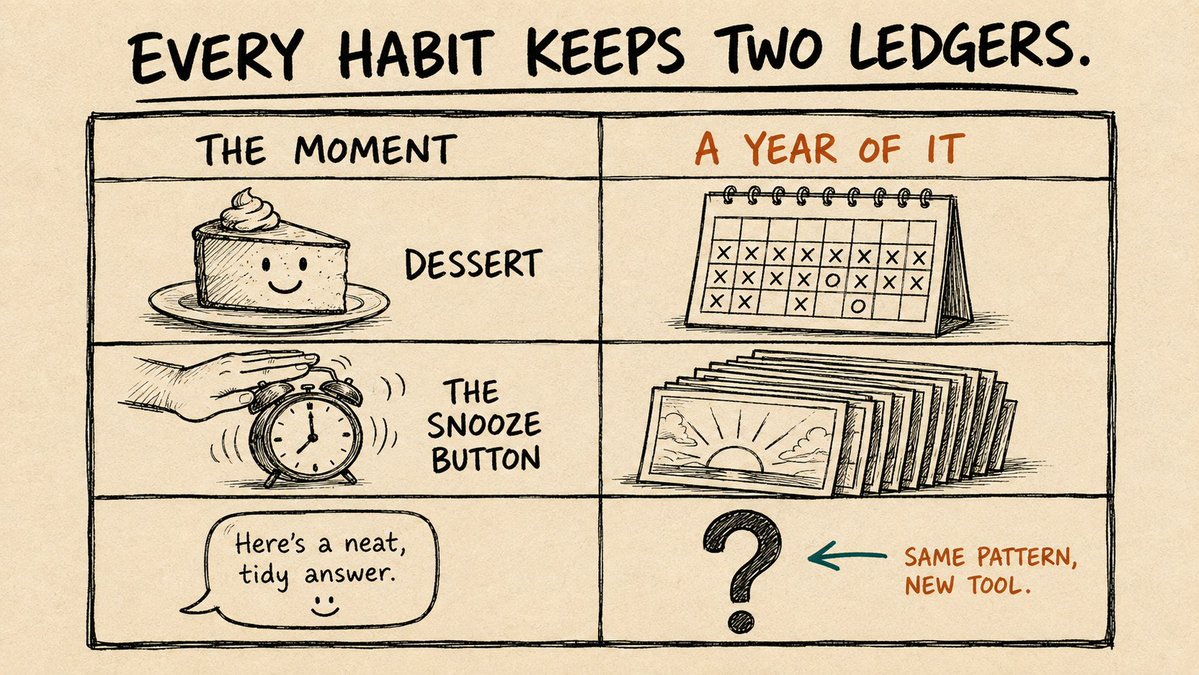
Think of dessert after dinner. The first-order effect is that it tastes wonderful, every time. The second-order effect is what a nightly habit does over a year.
Nobody needs to feel guilty about dessert. The point is smaller and kinder. The first effect is always the pleasant one, because the pleasant part is the thing doing its job. The second effect arrives later, on its own schedule.
AI answers work the same way. The first effect is designed to feel great.
3. Why it keeps showing up around AI
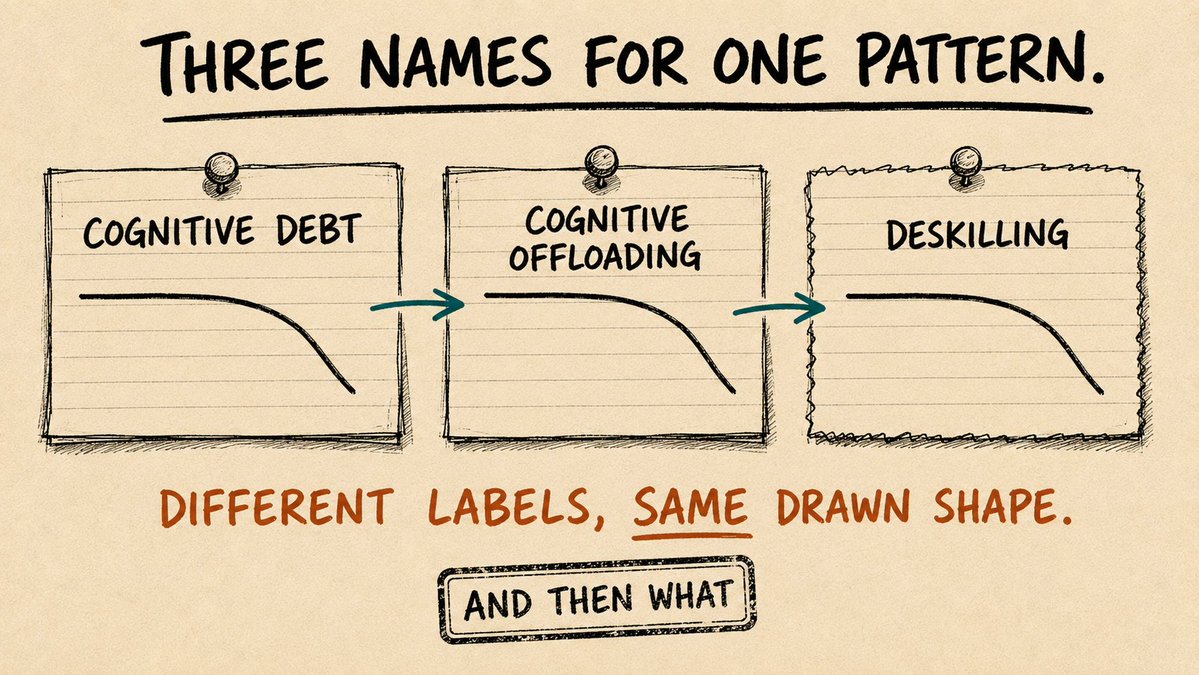
This old investing idea attached itself to AI for a reason. When researchers started measuring what repeated AI use does to people, a cluster of new terms entered the vocabulary almost at once. Cognitive debt. Cognitive offloading. Deskilling.
Different labs, different methods, and the same shape of finding. The effects that mattered were never in the first answer. They lived in what repeated answers did to skills, judgment, habits, and data over time.
You don't need to read the studies. You need the question all of them share. And then what?
The five places second-order effects show up
1. Your skills. A team at the MIT Media Lab led by Nataliya Kosmyna had 54 people write essays, some with an AI assistant, some with a search engine, some with nothing but their own head. The AI group reported the lowest sense of ownership over their essays, and many struggled to quote their own writing minutes after finishing it. One study, a small group, and not yet peer-reviewed, so hold it lightly. But the direction is worth remembering. The words came out fine. The connection to them didn't come out at all.
2. Your judgment. Researchers at Microsoft Research and Carnegie Mellon University surveyed 319 knowledge workers about 936 real AI tasks. The more confidence people placed in the AI, the less critical thinking they reported doing. The more confidence they had in their own abilities, the more they engaged. Where people parked their confidence mattered more than which tool they used.
3. Your habits. Michael Gerlich at SBS Swiss Business School surveyed and interviewed 666 people and found that frequent AI use was associated with lower critical thinking scores, connected through a habit researchers call cognitive offloading, which means handing mental work to the tool by default rather than by decision. This is a correlation, not proof of cause. But offloading by default is a habit, and habits are built by repetition, which is what daily AI use is.
4. Your data. In August 2025, OpenAI removed a ChatGPT feature that let shared conversations be made discoverable by search engines, after thousands of personal chats surfaced in Google results. Deleting a conversation did not delete the public share link. The first-order effect was that sharing a useful chat took one click. The second-order effect was a trail that outlived the conversation. Whatever tool you use, the lesson holds. What you paste in has a longer life than the moment you paste it.
5. Your learning, in the good direction. Second-order effects are not a one-way street. At Harvard, Gregory Kestin and Kelly Miller built an AI tutor for a 194-student physics course, and learning gains in the AI-tutored group were about double those of students in the regular class. The design detail matters. The tutor revealed one step at a time and made students try before showing answers. Same technology, opposite second-order effect. Deliberate use compounded skill instead of borrowing against it.
Six specific moments you'll recognize
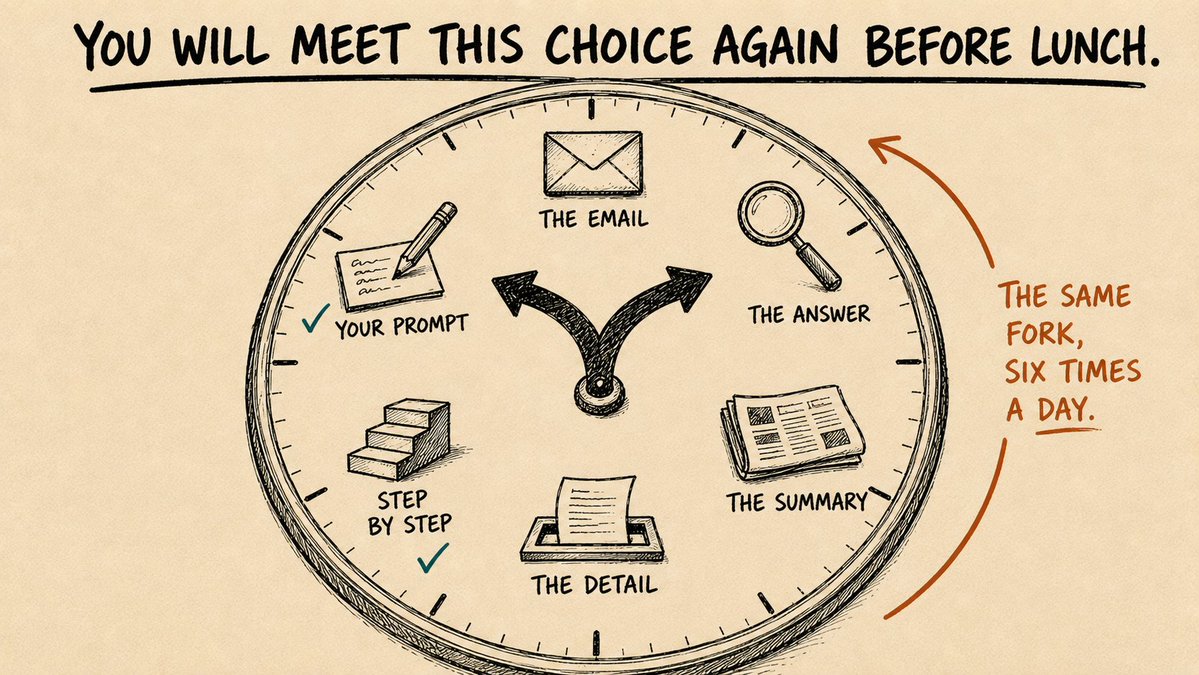
1. The email you didn't write. It went out in ninety seconds and sounded professional. And then what? Months of this, and a blank page starts to feel heavier than it used to. The MIT group's low ownership finding lives here.
2. The answer you didn't check. It was right, and it was right the last ten times too. And then what? The Microsoft and Carnegie Mellon survey suggests checking is what fades as confidence in the tool grows. The checking muscle is the one deciding the quality of your judgment.
3. The article you didn't read. The summary saved you twenty minutes. And then what? What you remember is the summary's shape, not the ideas. You can retell it. You can't argue with it.
4. The personal detail you pasted. The chat gave better advice because it knew more about you. And then what? Ask where that detail lives, who can see it, and for how long. The share-link episode answered that question for thousands of people after the fact. Asking before is cheaper.
5. The concept you made it explain step by step. Slower, because you had to work through each step instead of copying the conclusion. And then what? You can do it without the tool. The Harvard tutor doubled learning by refusing to hand over finished answers.
6. The prompt you structured yourself. You spent two minutes deciding what you actually wanted before asking. And then what? Gerlich's follow-up experiment found that unguided AI use weakened people's reasoning, while structured, deliberate prompting kept them cognitively engaged and produced stronger answers. Thinking before asking keeps you in the driver's seat. This is the compounding direction.
What the research keeps agreeing on

1. The effect follows the use, not the tool. Gerlich found a decline with unguided use and engagement with structured use, inside the same experiment. The Harvard team found doubled learning by wrapping the same technology in guardrails. Different researchers, different fields, same discovery. The tool sets the possibilities. Your way of using it picks the outcome.
2. Where you park your confidence decides how much you think. In the Microsoft and Carnegie Mellon survey, confidence in the AI predicted less thinking. Confidence in yourself predicted more. Trusting the tool feels efficient. Trusting yourself, and using the tool anyway, is what keeps the thinking on.
3. Second-order effects are quiet. A study in The Lancet Gastroenterology & Hepatology followed experienced doctors who screen for bowel cancer. After three months of working with an AI tool that helps spot precancerous growths, their solo detection rate had dropped by 6 percentage points.
Nothing was wrong with the AI. It performed exactly as promised. The change happened in the doctors, and they didn't feel it happening. It took a formal study comparing three-month windows to see it. Second-order effects don't announce themselves. They accumulate below the level where you'd notice, which is why the question has to be a habit rather than a reaction.
The paradox

The tool that makes you faster can make you slower to learn, and both effects come from the same feature. The speed is not a flaw waiting for a fix. Getting finished answers instantly is the entire product. And a finished answer, accepted without engagement, is the condition the studies keep describing, the one where groups showed less ownership, less checking, and less durable skill.
None of this argues for using AI less. The doctors' AI caught more growths. The Harvard tutor doubled learning. The tool is good at what it does.
The fix is timing. Ask "and then what?" earlier, before relying on the output, not after the effects have had months to accumulate.
The habit is one beat long. Before you accept an answer, ask yourself what gets stronger and what gets weaker if you take this without engaging.
→ Sometimes the honest answer is that the task doesn't matter. Take it. That's a decision.
→ Sometimes the answer is to make the tool show its steps. Slower in the moment, yours for good.
→ Offloading by decision instead of by default is the entire skill.
Used deliberately, the same tool compounds what you know instead of borrowing against it. How to set up that compounding loop on purpose is its own guide, and it's the next one in this series.
Everything you just learned
What second-order thinking is
→ First-order asks what happens. Second-order asks what happens because that happened.
→ The first effect is always the pleasant one. It's the thing doing its job.
→ The idea attached itself to AI because the research findings all share its shape.
The five lanes
→ Skills, judgment, habits, data, and learning. Four can drift. One can compound.
The six moments
→ The unwritten email, the unchecked answer, the unread article, the pasted detail, the step-by-step explanation, the structured prompt.
The three agreements in the research
→ The effect follows the use. Confidence placement decides thinking. Second-order effects are quiet.
The paradox
→ Speed and skill-borrowing are the same feature. The fix is asking "and then what?" before relying on the output.
AI answers are the first-order effect.
You are the second-order effect.
Ask "and then what?" while the answer is still cheap.
Follow @free_ai_guides for more write-ups like this one.
Further reading:
- Howard Marks, The Most Important Thing (Columbia University Press). https://cupola.columbia.edu/978-0-231-16284-5
- Shane Parrish and the Farnam Street team, The Great Mental Models, Volume 1, second-order thinking chapter. [FS blog URL to verify at publish]
- Budzyń et al., endoscopist deskilling study, The Lancet Gastroenterology & Hepatology (2025). https://www.thelancet.com/journals/langas/article/PIIS2468-1253(25)00133-5/abstract
- Kosmyna et al., "Your Brain on ChatGPT," MIT Media Lab, arXiv preprint (2025). https://arxiv.org/abs/2506.08872
- Lee et al., "The Impact of Generative AI on Critical Thinking," Microsoft Research and Carnegie Mellon University, CHI 2025. https://dl.acm.org/doi/10.1145/3706598.3713778
- Gerlich, "AI Tools in Society," Societies (2025). https://papers.ssrn.com/sol3/papers.cfm?abstract_id=5082524
- Gerlich, "From Offloading to Engagement," DATA (2025), via SBS Swiss Business School. https://www.sbs.edu/news/pioneering-ai-research-at-sbs-swiss-business-school-prof-dr-michael-gerlich-3-3-2/
- Kestin and Miller, AI tutor study, Harvard University, published in Scientific Reports (2025), via Harvard Gazette. https://news.harvard.edu/gazette/story/2024/09/professor-tailored-ai-tutor-to-physics-course-engagement-doubled/
- OpenAI shared-link discoverability removal (August 2025). https://searchengineland.com/chatgpt-kills-google-indexable-chats-459874
If you found this useful, check out my newsletter below
I share one AI superpower every week
Subscribe, it's free