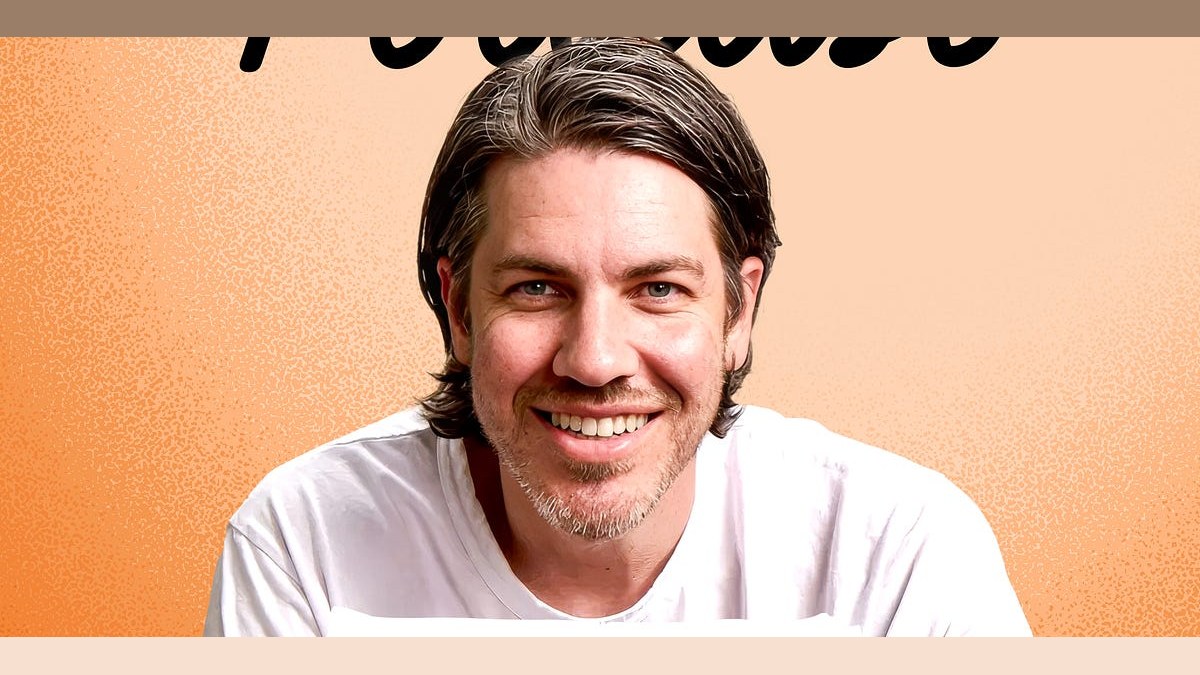
OpenAI's head of product design: Why this is the best time in history to be a designer
From IGTV's failure and ChatGPT's empty text box to the very different design rhythms of Groupon, Instagram, and OpenAI, Ian Silber clarifies a harder question: when anyone can ship a product quickly, what exactly should a designer be evaluating?
- Designers' anxiety comes from an out-of-sync acceleration: engineering output improves first, while design feedback loops, team alignment, and role expectations haven't yet formed a similarly clear new cycle.
- Roles are blurring, but the three hats—focusing resources, understanding users, and ensuring system reliability—aren't going away. One person can wear multiple hats, but accountability can't be left unclaimed.
- OpenAI's 'do less' isn't a quality sacrifice. It means reusing existing systems, rejecting features that lack real value, and reserving high craft for parts with stable technical foundations and long-term relevance.
- ChatGPT's direction isn't piling more buttons into the chat box. It's about helping users articulate intent, generating editable artifacts, adapting to context, adding proactivity, and building persistent workflows.
- The arc from IGTV to Reels, and from Groupon to Instagram to OpenAI, shows the same lesson: the real scarcity is revising judgments when evidence arrives, and fitting working methods to both product stage and company DNA.
In Lenny Rachitsky's 2026 tech worker survey, designers are front and center in nearly every piece of bad news: 63% say they're overwhelmed by the pace of change, 61% report feeling burned out, and 61% believe their companies expect them to do more work for the same pay. Designers and user researchers also rank as the most pessimistic about job security and the least likely to recommend their own roles to newcomers.
Right on the heels of those numbers, Ian Silber, OpenAI's head of product design, offered a take that's easy to find infuriating: this is the best time in history to be a designer.
Ian isn't a bystander. Lenny's show page describes him as the person who has led design for ChatGPT, Codex, and the broader OpenAI product experience over the past three years. Before OpenAI, he worked on Artifact, the AI news app from Instagram's co-founders, and spent eight years at Instagram, including work on Reels. The 72-minute conversation is worth your time not because he can predict the job market for the whole industry, but because he's hitting problems early that everyone else will eventually run into.
The usual conversation compresses this shift into a single sentence: AI builds interfaces, so designers should learn AI. Ian is talking about something else. As implementation gets cheaper, the slowest, hardest, and most valuable parts of design work come into focus: figuring out what users actually need, deciding what's worth building, keeping a product coherent as the technology under it keeps shifting, and having the guts to change course after a wrong direction has already been built.
The anxiety is real, and so is the 'best time' claim
Designer anxiety starts with an acceleration that isn't happening evenly.
Engineers have a straightforward path to AI augmentation: hand a well-defined task to a coding agent, get code, run tests, iterate. Ian says OpenAI runs its own internal employee surveys, and the design team sees engineers reporting tenfold or even hundredfold productivity gains — without an equally visible leap in their own work.
The reason isn't that designers refuse to use the tools. It's that design feedback isn't so binary. An idea can look great on paper and fall apart when built. A team can ship something and only then realize it misunderstood the problem. Even when a solution works, a large company still needs alignment across many people on direction, risk, and trade-offs. AI lets a team generate more ideas faster, but it doesn't automatically remove trial and error, user feedback, or organizational alignment.
Organizations see engineering output rise and quickly raise delivery expectations. Designers, meanwhile, don't yet have an equally clear new feedback loop. So the question isn't just whether you can use the new tools — it's what the company now actually wants designers to do. Write code every day? Own research, product, visual, and front-end simultaneously? Is your professional training suddenly obsolete?
That's why "amplified abilities" and "more exhausting work" can both be true at once. The "best time" claim describes how much leverage a skilled designer can now have. The survey describes how design roles currently distribute responsibility, time, and reward. These have never been the same metric.
In the section on designer anxiety, Ian also flags an organizational condition that often gets overlooked. OpenAI treats itself as a research lab. It doesn't require new designers to have an AI background, but it does require curiosity, and it gives teams room to explore. Designers share new working methods with each other; senior and junior members alike can try bad ideas, drop them quickly, and move on to the next round. What makes people do better isn't just individual positivity — it's an organization that allows exploration, peers who share, and a culture where failure doesn't instantly become a verdict on your ability.
So "be willing to change" isn't just personal motivation. A team with no time for experimentation, no peer support, and only rising output requirements won't get the same result from asking designers to stay optimistic.
AI speeds up implementation, but it doesn't make the calls
Ian worked on some personal projects during paternity leave. He tried the coding agents available at the time — they worked, but kept getting stuck on small issues. A month later, Codex shipped. He tried the same kind of thing again, and the feeling suddenly shifted to "this actually works."
That story matters more than any tool ranking. AI product capability doesn't rise steadily, version by version. It can cross a usability threshold in a matter of weeks. A workflow you abandoned yesterday because it failed might be obsolete today. Designers can't just learn one fixed operating procedure. They need a feedback loop that makes retrying cheap.
Traditional digital product teams tend to treat the Figma file as a boundary. The designer draws the ideal state on the left; the engineer turns it into real performance, real data, model responses, and edge cases on the right. Many mistakes only surface after development is already underway.
What generative AI actually compresses is the distance between an assumption and real behavior. A vague idea can become a running version connected to a model or data much faster. Teams also spot problems earlier: can users complete the task, which inputs break the model, does real content blow up the information hierarchy, and does the so-called smart feature actually change behavior?
- Assumption
- Draft
- Handoff
- Build
- Real failure
- Assumption
- Run
- Observe
- Revise
But the feedback loop hasn't disappeared — it just starts sooner. Running versions still need to be used by people. Mistakes still need to be observed. Multiple approaches still need trade-offs. Cross-team alignment still has to happen. Ian's description of the design process is, frankly, not glamorous: sometimes an idea fails once, fails again, and only after internal or user feedback do you realize the whole path was wrong. AI increases how many attempts you can fit into each round. It doesn't tell the team which round is worth keeping.
A working prototype is also not a shippable system. Reliability, security, performance, data governance, maintenance, and edge states still require deep engineering. Using AI to clear the expression bar is a completely different thing from using AI to clear the production bar.
Three roles are converging, but the hats still need wearing
The host brought up Marc Andreessen's three-Spider-Man metaphor: product managers, engineers, and designers each point at the other two, each believing AI will eventually make the others redundant and leave them standing.
Ian's answer isn't "everyone ends up being a builder." He frames roles as hats that someone has to wear to build software.
Coordinate teams, allocate resources, drive decisions
Define experience, form viewpoints, validate direction
Handle constraints, maintain systems, own launch
People and hats no longer map one-to-one. Designers can write code and build running prototypes. Engineers can make interaction decisions directly. Product managers can turn requirements into testable versions. But the work of focusing a cross-team effort, securing resources, and driving collaboration hasn't gone away. Neither has the work of understanding users, defining experience, and forming a product point of view. And the engineering responsibility for making sure output is reliable and can enter a larger system still exists.
At a startup, a strong generalist might wear all three hats at once. Ian even mentioned that some friends thinking about founding companies have discussed inverting the usual ratio — instead of one designer to fifteen engineers, two designers with one excellent engineer. The engineer keeps the system reliable; the two creative builders explore the product end to end. This is just a friend's startup idea, not OpenAI headcount or an industry hiring projection.
At a large company, the hats are actually harder to eliminate. One person doing design, coordinating multiple teams, allocating resources, and also personally engineering the system usually runs into a wall. The question isn't whether it's theoretically possible — it's whether anyone's attention and ability structure can actually absorb it. Ian has seen highly capable designers who need a strong product manager to help them focus on problems and improve organizational operation, and who also need engineers to make sure their local output fits into the whole system.
This also explains why OpenAI emphasizes teams with complementary abilities rather than hunting for a single super-designer who's best at everything. Visual, brand, prototype, strategic product thinking, and frontier exploration can all come from different people. A current OpenAI product design job posting still requires user research, design systems, high-fidelity prototyping, complex interaction, and clarifying ambiguous problems. That only tells you what one public job description asks for — it doesn't represent the whole market — but it's enough to show that "role convergence" doesn't mean deep craft has lost its value.
Of course, softer boundaries can also be interpreted by a company as "one person doing three jobs." If responsibility expands while decision-making authority, time, and reward stay flat, capability blending degrades into role compression. To judge whether a job is actually being upgraded, don't just count how much extra tool access you got. Look at whether the person has the power to define the problem, reject low-value tasks, and allocate for quality.
AI is great at yesterday's answers; people have to invent tomorrow's paradigms
When the host asked whether AI could become an excellent product designer, Ian didn't defend professional turf. He said AI is already a very strong product design tool — and that anyone can use it.
But "very strong" isn't "best at every dimension." He pointed to visual design, information hierarchy, typography, user experience, and interaction design as specific weak spots. More importantly, models mainly learn from work that already exists, and the best products tend to exploit a new capability that doesn't yet have mature precedents.
| New capability | What was missing | Paradigm invented by people |
|---|---|---|
| iPhone multi-touch | No mature touchscreen convention | Gestures and direct manipulation |
| Pocket cameras and mobile networks | No mobile photo-sharing paradigm | Instagram-style instant sharing |
| Intimate mobile communication | Permanent storage isn't the only need | Snapchat-style ephemeral expression |
| AI agents that can act | No established patterns for initiative, pausing, undoing, or accountability | Still being invented |
When the iPhone appeared, designers faced multitouch with no established playbook. Instagram turned a pocket camera into a new kind of visual network. Snapchat took an interaction style that seemed odd at the time and flipped digital communication from permanent records to something more ephemeral and casual. These aren't cases of making an existing website prettier. They identified a new capability and an unmet need, then invented a paradigm that only later became training material.
AI agents are at a similar stage. When should they act proactively, when should they stay quiet, how do they let users know what they're doing, how do they pause, undo, and take responsibility after mistakes — none of this has a stable, copyable answer yet. A model can remix a huge volume of yesterday's interfaces, but it won't automatically invent the most fitting social conventions of tomorrow.
Ian says people still have three critical jobs.
First, understand specific people. A user who doesn't click might not understand, might not trust, might be afraid of making a mistake, or might simply not need the feature. Only by watching behavior, listening to feedback, and being willing to change direction because of it does "user understanding" become something more than a slogan about human empathy.
Second, invent new paradigms that have no training samples. When a new capability first appears, someone has to work out the first reliable interaction by testing it with real users and real failures.
Third, form a point of view among multiple viable approaches. Taste isn't liking a particular color. It's being able to explain who you're designing for, why you're doing it this way, what has to stand out, what should be cut, and staying consistent across many projects.
What AI devalues first isn't judgment — it's the work of someone who only draws out other people's conclusions without ever forming their own.
'Do less' means deciding what deserves to be designed
As output gets faster, OpenAI's bottleneck isn't pages — it's systems.
Ian uses Notion's early composable blocks to explain systems thinking: don't build an isolated feature for every new need. Build foundational primitives that can be combined with each other. AI products add another layer — these primitives have to be understandable not just to designers and engineers, but also to models that need to reason about how they combine. The result is that lots of capability still looks like one coherent product to the user.
This is the context for Ian telling his team to "do less." He's not asking for a general lowering of quality. He's asking three more fundamental questions first: can an existing system or component solve this? Can an existing feature be extended? Does this new feature need to exist at all?
- 01Can an existing system or feature solve this?Yes → reuse or extend
- 02Is it truly worth existing?Can't prove it → don't build
- 03Will technology and needs keep changing quickly?Yes → run disposable experiments
- 04Will it persist with stable assumptions?Yes → invest deeply in research, dogfooding, and craft
Once you've decided something is worth doing, the level of craft depends on the product stage and how durable the underlying technology is.
Some core ChatGPT experiences get relentless iteration. The team might try a hundred approaches and discard ninety-nine. The input area changes daily, with user research, A/B tests, and internal dogfooding all feeding decisions. Other new directions get a build in public approach: put the big change into the real world and learn fast from internal and external feedback. Ian says some ideas go from proposal to launch in about four hours.
These two speeds aren't contradictory. When model capabilities, latency, and interaction conventions are still changing quickly, a carefully refined setting might be unnecessary next month. Something that was previously impossible might suddenly become a default capability. Being precious about those parts wastes craft on premises that are about to disappear.
In contrast, when the team is designing how ChatGPT enters people's lives over the long term — how it builds stable relationships and trust — it doesn't ship overnight. That work needs whiteboards, Figma, running prototypes, prolonged dogfooding, and many abandoned approaches. The real dividing line isn't a single axis like "is this feature risky?" It's whether this thing will survive for a long time, whether the technical premises are stable, how costly mistakes would be, and whether the team is trying to learn something or commit to it.
"Do less" ends up having two layers: make fewer unnecessary new things, and don't spread the same level of craft evenly across everything.
A billion users isn't one user
ChatGPT's design difficulty doesn't just come from its range of capabilities. It comes from the sheer range of people using it.
Ian served a billion users at Instagram, but that product's core behavior was relatively focused. At one end of ChatGPT, someone might just want help deciding what to eat tonight or which haircut to get. At the other end, it might be used to automate the operations of a Japanese farm. In between are free users who drop in occasionally, people who use it as their primary work tool every day, and heavy users paying hundreds of dollars a month.
This isn't just a simple "beginner mode versus expert mode" split. Behind that single empty input box, users' expectations are shifting across intent expression, output format, degree of control, and reliability.
Click a usage context to compare how intent assistance, output, and control requirements change.
- Intent assistance
- Give examples and use follow-up questions to lower the barrier of a blank box
- Output format
- Direct answers or lightweight content
- Control requirements
- Keep defaults simple; don't expose models or modes
- Intent assistance
- Clarify goals, inputs, and success criteria
- Output format
- Editable documents, images, code, and work products
- Control requirements
- Preserve context, state, review, and revision
- Intent assistance
- Judge when to suggest or act based on context
- Output format
- Continuously updated tasks and workflows
- Control requirements
- Must be visible, pausable, resumable, and overridable
- High-intent users try first
- Learn from real behavior
- Mature capabilities get distilled
- Main experience stays simple
OpenAI uses the term capability overhang to describe one of the problems: most people have only touched a small fraction of what the model can actually do. That doesn't mean they're not getting value — a recipe might be all they need. The question is how the product makes deeper capabilities progressively accessible without overwhelming the average user.
Ian's strategy isn't about cramming every frontier feature into the main interface. Teams can start by testing new capabilities with people who actually care about them—like desktop users or those in more specialized entry points such as Codex. Once the interaction and capability mature, it can be distilled into the main experience. Ultimately, a billion users shouldn't have to understand a mode toggle or a model list to get the right result.
The real design challenge here isn't turning everyone into an expert. It's keeping the product simple while leaving the ceiling open for power users.
The next step after the chat box isn't just more buttons
The empty input box is often dismissed as a 'beautified terminal': capable of anything, yet offering almost no clue to a first-time user about what to do.
But there's a strong argument for why chat isn't going away. Kevin Weil pointed out in another interview that we use language to communicate with people across wildly different levels of understanding; language naturally scales with intelligence as it grows and evolves. In other words, the blank box is both a discoverability problem and currently the most universal interface we have.
So the real product evolution isn't just tacking more buttons onto chat. It's about addressing five distinct layers.
First, helping users express intent. They shouldn't have to become prompt engineers. Ian mentioned that ChatGPT already follows up after open-ended questions and turns some of that clarification into clickable answers. The interface isn't choosing an answer for the model—it's helping the model understand what the user actually wants to accomplish.
Second, turning output into working artifacts. An email doesn't need to sit buried in a long chat thread. It can move into a dedicated writing block where users can revise, edit in place, and copy. Image generation similarly deserves its own set of task-specific tools. Chat starts the intent; the artifact interface carries the work forward.
Third, adapting affordances to context. A designer, a data scientist, and someone managing their personal life may all start at the same entry point, but they need different tools, information density, and actionable outputs. A general product doesn't mean everyone sees the identical interface forever.
Fourth, moving from reactive answers to proactive collaboration. Ian talked about external context—calendars, Slack, and a more natural voice experience—that allows the system to make suggestions at the right moment, rather than always waiting for a fully formed instruction.
Fifth, building persistent workflows. Today, many chats feel like starting from zero each time. The future direction is letting users establish reusable ways of working, with the system deciding on its own whether to answer quickly, continue the conversation, or step out of the current turn to complete a task. The average user shouldn't have to understand model names or speed settings.
These are the product directions Ian outlined, not a claim that every capability is fully rolled out. Together, they suggest that the core of AI product design isn't just what appears on screen. It's how intent gets understood, how artifacts stay editable, how the system leverages context, and how users stay in control as the system becomes more proactive.
Nobody is actually ahead—don't be fooled by AI's confident performance
'Everyone is still early' is easy to dismiss as a soothing platitude. Ian's own experience gives it a bit more weight.
When he joined OpenAI, GPT-4 had barely been out. He was already using these tools, but he admits he didn't truly understand them—the interviews and onboarding scared him. Then the company and the team grew at breakneck speed, and for a long stretch he felt like he was bad at this new management job, as though every day he was doing something he'd never learned.
What actually helped wasn't reading another motivational post. It was reaching out to friends who had led large design teams or were going through similar transitions. He discovered his struggles weren't unique. Mentors, peers, and a community where difficulties could be discussed honestly turned 'am I just incompetent?' into 'this is a new problem a lot of people are learning together.'
The interview then touched on a phrase that hits the mark: AI confidence theater. Social media is full of beautiful AI creations, impressive automation, and shiny new workflows—but it rarely shows the failed attempts in between or how fragile the final results are. Watching that, you start to believe everyone else has it figured out, and your own stumbles prove you're falling behind.
That's also why simply buying the tools isn't enough for an organization. Designers who are in a better position usually have time to explore, people to talk with, and a safe space to show half-finished work. Individuals need to stay curious and keep experimenting; teams need to make the process visible rather than rewarding only a polished final screenshot.
Ian says that even starting from zero today, you're still likely to develop new working methods earlier than most people. The point isn't memorizing the current state-of-the-art tricks, because what's advanced this month can look ancient just a month later. What matters is whether you keep retrying, comparing results, and letting new evidence overturn yesterday's conclusions.
After IGTV failed, why did Reels still succeed?
Across the entire interview, the best example of 'don't get too attached to your solution' comes not from OpenAI but from Ian's failure at Instagram.
He called IGTV a big failure, plain and simple. The team brought some wrong assumptions into the product and held onto constraints that later turned out to be bad bets. Launching didn't automatically prove the direction right—criticism and real usage exposed the problems.
Later, the team treated that first launch not as a conclusion to defend but as a set of constraints to change, and they rebuilt the product—eventually shipping Reels. Of course, Reels' success can't be boiled down to 'the design team tweaked a few assumptions.' Ian uses the story to make a different point: a failed launch doesn't have to be a career verdict. It can become material for the next call.
A real feedback loop includes some unglamorous moves: admitting you misread the problem, figuring out which constraints were self-imposed, accepting outside criticism, stopping the polish on a wrong direction, and then moving forward with a new judgment. Ian calls it 'fix forward'—what matters isn't whether a launch looks perfect, but how the team responds once they get evidence.
That also explains why, even as AI speeds up generation, judgment doesn't automatically get cheaper. If a team can't discard what it's already produced, lower production costs just mean bad directions pile up faster.
No single design process fits every company
Ian's career has spanned Groupon, Instagram, and OpenAI. The most telling common thread across these three companies? They had no shared best practice for how to work.
| Company | DNA | Effective rhythm | Design task |
|---|---|---|---|
| Groupon | Humor-driven writing and brand personality | Bold expression, fast attraction | Give discounted products a sense of character |
| Design and creativity | Stable, minimal change, start simple | Keep a few core behaviors consistent over the long run | |
| OpenAI | Research lab culture | Fast experimentation, continuously adapt to model changes | Find durable product primitives amid constant change |
Early Groupon's products carried a strong brand personality. The company had a writing team made up of comedians; the emails were funny and had character—people didn't open them just for the discount. Design value wasn't just about interface order; it lived in whether a company's voice had a distinct identity.
Instagram's DNA, by contrast, leaned more toward design and creativity. For most of its growth phases, being slower and steadier, and not changing the product too often, was the effective play. The team often used the constraint 'do the simplest thing first,' and founder Kevin Systrom was deeply involved in the product as a designer.
OpenAI comes out of a research lab, where model capabilities and product assumptions are shifting constantly. If you applied Instagram's slow-and-steady approach here, many opportunities would expire before they could be validated. But if you took OpenAI's fast prototyping and applied it to a mature, highly regulated product, you'd be courting disaster.
Ian's conclusion isn't that you should join a new company and try to change its culture—especially in founder-led organizations, a design leader can't uproot the company's DNA. A more realistic approach is to understand what behaviors get rewarded in this environment, bring along the principles that have worked for you, and use them to fill in the blind spots of the existing culture.
'Do the simplest thing first' can travel from Instagram to OpenAI, but it's not universally right. Sometimes the experiment phase just needs to allow for temporarily messy complexity. A workflow isn't a professional creed; it's a choice that emerges from organizational stage, changing technology, and product accountability.
The thing to optimize isn't tool usage—it's the outcome
When the host asked Ian for advice for anxious designers, he didn't end with a tool recommendation. He said to redirect your focus back to the outcome: designers aren't here to build the most elaborate tool pipeline, or to maximize token consumption. They're here to make products people love.
AI can slip into very specific—even mundane—moments of work. Ian mentioned having an idea at night, handing it to a cloud-based system to generate a prototype the team can discuss; using AI to summarize Slack messages that need replies; filling in context before an important meeting; helping with recruiting and operations; and even assigning tasks while away from the computer and reviewing the generated artifact later.
The common thread across these scenarios isn't 'they used a lot of AI.' It's that AI shortens the distance between an idea, the context, and the next action. The designer still decides which problems to pick, evaluates the results, and decides whether to continue.
If you want to focus on just five things in your next project cycle, here's a place to start:
- Pick a real problem and write down the user, the context, what's at stake if it fails, and the outcome you're ultimately trying to change.
- Skip the pursuit of a beautiful interface; build a working version that exposes real data, model responses, or critical failures.
- Put it in front of actual users or colleagues, and record which assumptions get overturned by behavior—don't just collect preference feedback.
- Write down the reasons for what you're keeping, removing, and shelving, especially noting when an existing system can already solve something and when a technical prerequisite isn't durable yet.
- Share part of the process openly—including failures, retries, and places where the tools broke down—so the team and the industry can learn new ways of working.
At the same time, hold onto one genuinely deep craft. It could be visual craft, complex interaction, user research, content design, prototyping engineering, or product strategy. Role fusion doesn't mean depth disappears; when everyone can quickly make something 'good enough,' reliable depth becomes even more recognizable.
Also, keep three boundaries in mind.
First, more leverage for designers doesn't automatically mean more design jobs. Ian himself didn't offer hiring-market evidence. In the short term, it's entirely possible that a smaller number of people get broader, end-to-end ownership while roles centered on deliverable production shrink.
Second, the 'tenfold or hundredfold engineer' figure is Ian's observation of frontier teams, not an industry-wide fact. In early 2025, METR ran a randomized controlled study with 16 senior developers familiar with their own open-source project: across 246 tasks, the group allowed to use contemporary AI tools took, on average, 19% longer. METR's 2026 update suggested the newer tools are likely to bring bigger speedups, but participant drop-offs and the timing of parallel agents made the overall effect harder to measure reliably. The direction is changing fast, but a uniform multiplier still doesn't exist.
Third, OpenAI's models, talent, data, and testing environment aren't something a typical company can just replicate. What's really worth taking away isn't their headcount ratio tomorrow—it's a set of questions: how stable are our technical assumptions, how wide is our user base, which responsibilities still require a human, and what deserves long-term design?
This might genuinely be the best time to become a designer, but it's not necessarily the best time to keep the old version of the design job. The former rewards people who understand humans, produce real evidence, invent new paradigms, adapt to organizations, and revise their thinking after a failure. The latter depends on stable divisions of labor, fixed processes, and clear deliverable boundaries.
AI lets more people turn ideas into products. The designer's real value isn't proving they still hold a monopoly on some tool. It's the ability, in a world where 'anything is possible,' to decide what deserves to exist, what should be changed, and what shouldn't be built at all.
Faster building, harder judgment
AI speeds the path from idea to running prototype—not user understanding or tradeoffs. Design value moves from screens to earlier evidence.
Start with the contradiction
More power does not make a career safer. Output expectations rise first; user understanding and alignment do not automate as quickly.
BoundaryMore leverage does not mean more jobs
It moves failure earlier. It does not erase it.
Traditional workflows meet reality after handoff and development. Running prototypes expose users and failures sooner, so assumptions can change. Production responsibility remains.
Roles may merge. The three hats do not disappear.
Pass four disposition gates first
Do not spread craft evenly. Ask whether the system already solves it, whether it has value, whether its premise is stable, and whether it will endure.
Optimize outcomes, not tool usage
When anyone can build something that works, scarce work means finding the real need, inventing interaction, and changing judgment after failure. More leverage does not make old roles safer.
Once building gets faster, the hard part finally appears
DesignerA week of prototyping now takes an hour.
The implementation barrier drops. Output expectations rise with it.
UserI don't need more screens. I need to know how to finish this.
AI expands how many rounds you can try. It does not declare which round should survive.
DesignerDon't draw the next version yet. What did we misunderstand?
A running prototype is valuable because it brings failure back sooner.
TeamPeople can cross boundaries. Focus, experience, and reliability still need owners.
Softer role boundaries do not erase responsibility.
DesignerReuse what fits. Skip what has no value. Test shifting premises. Craft the durable core.
The cheaper generation gets, the more you must decide what never enters production.
DesignerThe best time is not about making the most screens. It is about judging what deserves to exist.
More design leverage does not make old design roles safer.
Members can copy or download the full Markdown, and let their AI subscribe and ask.
Found this useful? Leave your email — every new explainer, the moment it's out. Unsubscribe anytime.