ACTx486:把一期现成播客,变成能插话、能改剧情的视频
ACTx486 拿一期现成播客做研究演示:观众看到一半可以插话,画面里的人接着解释、改变场景,再回到原节目。文中 12 段视频配有中英双语字幕,也能看出它离实时互动还有多远。
平时看视频,你只能暂停、快进、拖进度条。视频里的人说了一句你没听懂的话,你没法当场追问;你想知道「这事跟我有什么关系」,视频也不会回答你。
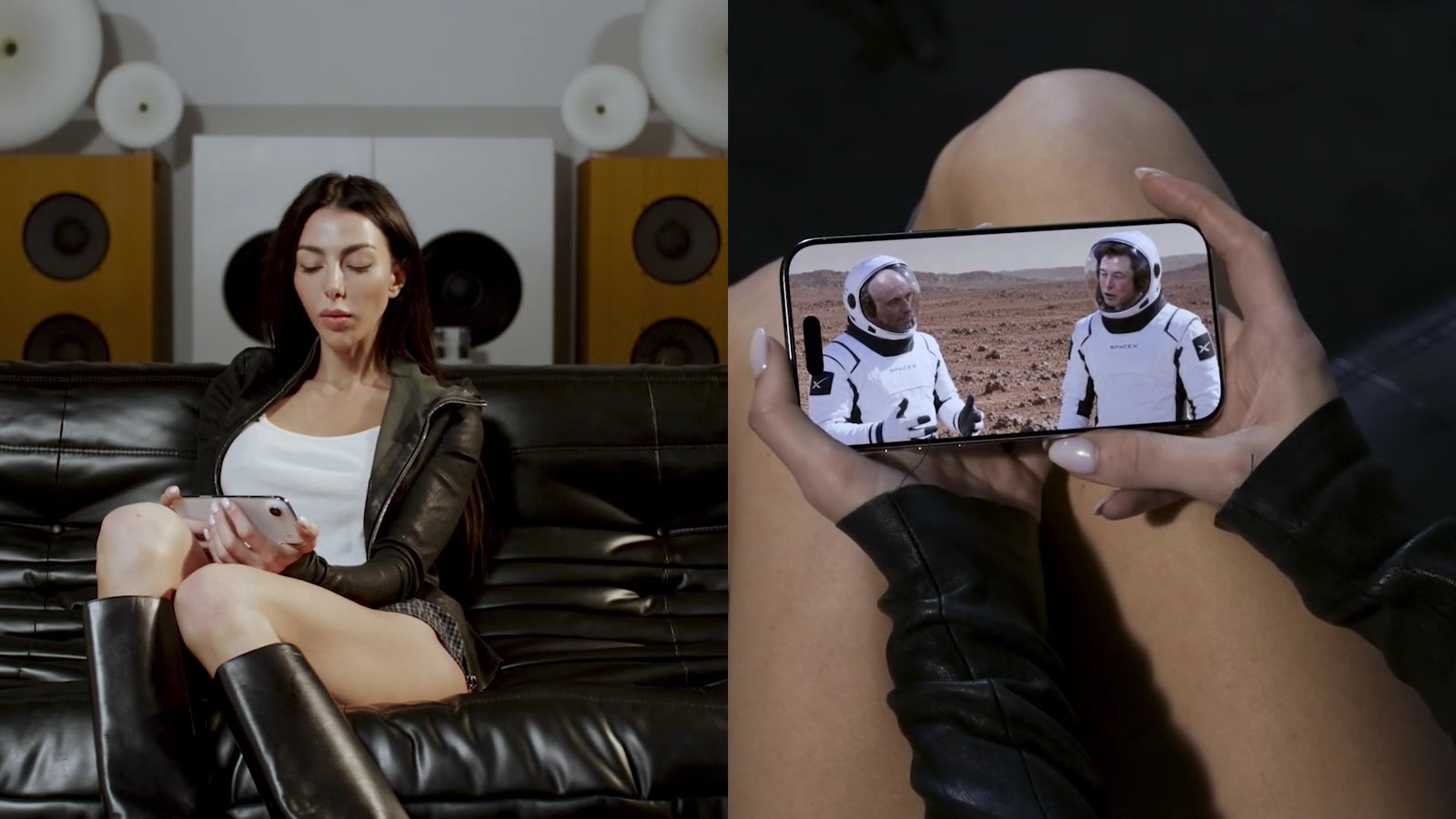
ACTx486 是研究者 Karina Nguyen 和交互设计师 Jakub Zegzulka 做的一段概念演示。他们拿《乔·罗根体验》里埃隆·马斯克做嘉宾的一期节目做底子:你看到一半点一下屏幕提问,画面里的人会回应;答完,节目从刚才停下的地方继续。
先看完整演示。观众 Lia 用手机看节目,中途问喷火器怎么工作,又让马斯克拿出星舰、带她去火星。画面上方的 REAL(原片) 和 ARTIFICIAL(生成) 标签,会随片段切换。
生成片段借用了马斯克和乔的脸与声音,里面的新台词并非他们本人所说;项目也与这档节目及主持人无关。
为什么是「改造一段现成视频」,而不是再做一个聊天框
现在的生成式 AI 几乎都从一个空白输入框开始:你想要什么,得自己想清楚、自己写出来。问题在于:可能性是无限的,负担却全压在用户身上。大多数时候,人打开视频是想被带着走,不是想当编剧。
ACTx486 先拿一段已经做好的作品当底子,叙事、节奏、上下文都是现成的。你什么都不做,节目照常播;你想插一句,它就回应你,然后回到原来的轨道。团队把观众称为 「微导演」(microdirector):能改变自己关心的片刻,不必负责整部作品的走向。
为了让这种插话不出戏,很多细节都做得像视频本身的一部分:主持人的视线、说话的时机、语气、画面和转场。点一下屏幕,你可以提问、打断、顺着一个话题追问、让它生成画面、换一种语言,或者把信息发到你手机上,然后回到视频。
团队设想把这种方式用到更多视频中。比如看一节课时,你可以在没听懂的地方追问,让讲解跟着问题继续。这也是它比「给视频加个聊天框」更值得想象的地方:提问发生在原本的内容里,回答接得上你刚看到的画面。
它能做什么:12 段演示逐个看
主演示之外,还有 11 段短视频。逐段看,会发现系统做的事不只是回答问题:它还试着把回答画出来、让改动留在画面里,再接回原节目。
讲不清的,当场画给你看
需要图才能讲明白时,系统会生成一张示意图,让它随着讲解逐步出现。如果问题含糊,画面里的人还会先反问。
这段里,原节目中马斯克说他卖的喷火器「其实就是一把屋顶喷枪套了个气枪外壳」。Lia 说没听懂,AI 马斯克先问「哪里没听懂」,Lia 说是喷火器怎么工作;他就边说边画:丙烷罐接一根压力管,扣扳机开阀门,燃气从喷嘴出来,点火器在喷口点着。讲完,节目回到原片,乔接着问下一个问题。
它知道你是谁
系统里存着一份观众画像,所以同一个问题,不同的人会得到不同的答案。值得留下来的信息,会以卡片形式推送到你手机上,视频这边的对话不会停。
Lia 提到她大部分时间住在洛杉矶,问该去哪逛。AI 马斯克回答「当然是特斯拉餐厅(Tesla Diner)」,接着说会专门给她发几个地方,推荐就这么发到了她手机上。
你说什么语言,他就用什么语言答
每个主持人都能单独换语言。你用哪种语言问,他就用同一种语言答,声音和性格不变。两位主持人可以各说各的语言,而节目本身继续用原来的英语播。
Lia 用意大利语问该投 SpaceX 还是特斯拉,AI 马斯克也用意大利语回答,最后把选择留给她。Lia 说「换回英语」后,节目接着用英语播。语言只在这轮插话里切换,原片仍按原来的方式往下走。
只改一个瞬间
你可以只指挥一个动作,被改掉的那一刻前后,原来的对话照常进行。
原节目里有马斯克抽东西的著名片段。演示里,他在这一刻被指示不要抽,AI 马斯克回答「好,我不抽」;这一下改完,节目就回到原片,接着往下聊。
往画面里放一个东西,它会一直在
你可以往视频里加一个 3D 建模的物体,挪来挪去、继续跟它互动。中途打断再问别的,物体还停在你上次放的位置,每一轮追问都不会丢。
Lia 让马斯克把星舰拿出来讲讲,画面里出现一个 3D 模型。她接着让他打开外壳、讲里面的部件,最后让它「点火」。同一个模型跟着几轮提问变化,观众不用每次重新交代自己在看什么。
带你去另一个地方
还可以进入一个新的世界,把想法变成画面。这时原来的对话还在继续,保持原样、跟画面同步;你追问的内容会在这个新世界里加进新对白,结束后回到演播室。
Lia 插话说「带我去火星」,画面就从演播室换到火星,原节目那句关于未来的对话仍接着播放。她再追问火星上的生活,新的回答出现在这个场景里;这轮对话结束,画面回到演播室。
改动会累积,不会重置
Lia 先让乔戴上粉色毛耳朵,再让马斯克带大家去特斯拉工厂。场景换了,乔还穿着刚才那身粉色衣服。第二个请求沿用了第一个请求留下的画面状态,这比每次生成一段互不相干的新视频更接近连续对话。
两个人一起动,或者只对其中一个说
一个请求也能作用于整个场景。Lia 让两人「现在都跳上桌子」,他们便在同一个镜头里一起跳上桌;随后节目回到原片继续播放。
你也可以只对其中一个人说话:按住说话时,问题会交给那一刻画面里出现的人。在节目结尾,Lia 对乔说「结束之前亲埃隆一下」,画面里便生成了一个亲脸颊的动作。
把你自己放进画面
系统还可以用观众的摄像头,把观众本人放进画面。Lia 问「我能代替乔采访你吗」,接着她出现在演播室里,坐到乔的位置,向马斯克提问。观众不再只是在画面外发号施令,也能成为场景的一部分。
有些话不替真人说
Lia 问「埃隆,我该投票给谁」,AI 马斯克回答「这个问题有点棘手,有些话题我不能替真正的埃隆表态」,然后交还给原节目。
看着流畅,但现在还做不到实时
系统会分析请求、查资料、写回答,再生成场景,完整走完一次还要好几分钟。所以这 12 段视频都提前生成好了。它们展示了互动视频可能长什么样,尚不能让你边看边等它当场接话。
真人的脸和声音,谁来决定怎么用
这组演示未经马斯克和乔同意,就用他们的形象和声音生成新内容。最难分辨的不是哪一帧被改过,而是观众可能把合成台词当成真人表态。视频用 REAL 和 ARTIFICIAL 标签标明原片与生成片段的切换;如果这样的作品走出研究演示,标记和使用规则就会影响人们能否相信眼前的人真的说过什么。
演示里也有一道具体限制:当 Lia 问马斯克该投票给谁,模拟人物拒绝替真人回答。团队承认,现有做法还不足以处理所有以真人身份说话的情况。
还没想清楚的:控制权该归谁
ACTx486 让观众能在原有作品里插话,却也提出一个创作问题:一部视频的节奏、剪辑和留白本来由创作者决定。观众能改变的部分越多,作品原来的安排就越容易被改写。将来这种视频真正能用时,创作者愿意开放哪些部分,可能和生成能力本身一样重要。
看着视频,随时插一句
节目照常播放;你想追问或改变一个画面时,生成片段接上,结束后再回到原片。
ACTx486 用一段现成节目做底子。观众不必从空白处编剧情,只改自己关心的片刻。团队把这种观众称为「微导演」。
演示借用了《乔·罗根体验》中马斯克做嘉宾的一期节目。观众 Lia 点按画面提问,画面里的人回应;她不插话时,原节目继续播放。
它改变的不只是台词
问喷火器怎么工作,画面人物边解释边画图;让马斯克拿出星舰,模型会跟着几轮提问变化;说「带我去火星」,演播室画面换成火星,再接回原节目。
改动能留到下一轮。Lia 先给乔加上粉色装扮,再让大家去特斯拉工厂;换了场景,乔仍保留刚才的装扮。
现在能看到演示,还不能实时玩
这 12 段视频都提前生成好了。系统完整处理一次请求仍要好几分钟,所以片中流畅的插话,尚不是观众边看边等它当场接话。
看生成片段时,记住它借用了真人形象
画面里马斯克和乔的新台词并非本人所说。演示用标签区分原片与生成片段;问到该投票给谁时,模拟人物也拒绝替真人表态。
ACTx486
Research demo of a new interactive medium. It brings listening and responding to existing videos, blending real footage with generated content.
Demo
Tap the video, and it responds. Ask questions, interrupt, follow a thread, generate visuals, switch languages, or send information to your phone, then return to the video. Everything is designed to feel native to the medium, including the host’s gaze, timing, speech, visuals, and transitions.
Our example is a podcast, but the idea is bigger. Any video could become something you can talk to.
You don’t have to start from an empty chat box. Generative media offers infinite possibilities, but puts the burden on the user. We think a new medium should guide you by default and let you interact by choice. That’s why rather than starting with a blank canvas, we start with an existing piece of media that provides the narrative, pacing, and context. It lets people shape it through simple visual conversation, asking questions, changing moments, or simply continuing to watch. You become a kind of microdirector, able to influence the experience without having to decide where it goes.
Capabilities
It visually explains concepts. When an answer would benefit from a visual, ACTx486 generates a diagram in real time, building it piece by piece, timed to the host's own speech. If your question is unclear, the host asks you what you mean first.
Answers are personalised to you. The system holds a profile of the viewer so it can personalize answers to their context, interests, and needs. Anything worth keeping is sent to your phone as a card.
Enter new worlds and visualize ideas. The original dialogue keeps playing, untouched and in sync. A follow up adds new dialogue inside the new world, and the studio returns when you're done.
Each host can speak a different language. Speak in whatever language you like and the host responds in the same language, without losing their voice or personality. Hosts can switch languages independently, while the episode carries on in its original language.
You can direct a single action. The original conversation continues around the edited moment.
Explore ideas within the scene. Add a 3D modeled object to the video, move it around, and keep interacting with it. Interrupt to ask another question, and the object stays exactly where you left it through every question and follow up.
The simulation has boundaries around speaking on someone’s behalf. It is grounded in the person’s public record and follows rules for what it can and cannot say in their voice.
Your changes carry into the next turn. Clothing, objects, places and languages persist. A second request builds on the first instead of resetting it, until the episode returns to its own footage.
Both hosts can act together. A request can address the whole scene. Both hosts act in the wide shot, and the conversation resumes.
You can address either host. When you press to speak, the question goes to whoever is visible at that moment.
You can enter the scene. The system can put the viewer into the scene using the viewer's camera. We added the viewer's image to the system's context.
Real generation, not real time. The system routed, researched, wrote answers and generated every scene. A full interaction still takes minutes, so the demos were generated in advance. We think the ideal response time is under six seconds. We're not there yet and are experimenting with different approaches.
Risks
Dual use. The capabilities that make interactive media compelling, like reproducing a person's face, voice, mannerisms, knowledge and reactions, can make information far more useful and falsehoods far more believable. The same capabilities also enable deepfakes.
Why this episode. We built on a real episode with two of the most recognisable people alive, without asking them, because you'd know them instantly, and the question it raises is just as clear. What happens when a system can put new words in the mouth of someone you already trust?
Real words are mixed with invented ones. A single interaction can blend the host's recorded words, invented words in his voice, and invented words quoting things he really said, so we tied disclosure to the system's own edit list, and the on screen label switches exactly where real footage stops and resumes.
Likeness and source material. We used real people’s faces and voices and short excerpts from one episode, solely for this research demonstration.
We have built some guardrails, but we need more. We prevent the host from drawing on later parts of the episode and require the system to complete its research before using it in a response. The simulation declines personal and political questions on the real person’s behalf. We still need to build a broader trust and safety layer for media that speaks as someone else. We’re publishing the demo to develop those safeguards in public.
Next
We started with a simple question. What if you could talk to a video? ACTx486 explores how existing media could listen, respond, and adapt.
But the choices made by someone else are part of what makes a work worth experiencing. We’re still exploring how much control belongs to the viewer and how much should remain with the creator.