
Tavus 发布面对面交互模型 Griffin 称其为首个通过实时视频图灵测试的模型
一分钟视频通话,54 人中有 26 人认为对面是真人。Griffin 怎样把声音、表情、手势和接话时机连起来?从原始演示到测试方法,讲清这次发布。
聊一分钟近半数人以为是真人:Tavus 推出面对面交互模型 Griffin
Tavus 推出了面对面 AI 交互系统 Griffin,并称其为首个通过实时视频图灵测试的模型。在官方测试中,54 名参与者进行了一分钟的一对一视频通话,有 26 人(48%)认为对方是真人;而在相同测试条件下,41 名参与者中只有 1 人(2.4%)把 Tavus 上一代串联系统认作真人。这项技术想解决的,正是以往与数字人或语音助手交流时常见的尴尬:你刚说了一半,稍微停顿两秒琢磨用词,AI 以为你说完了,立刻抢话;或者你分享了一件极度令人兴奋的事,屏幕里的虚拟形象依然面无表情,直到两三秒后才机械地蹦出一句“那太棒了”。
许多轮流对话方案采用串联系统(Cascade System):先把你的话转成文字,再生成回答,最后合成声音和人物画面。处理过程像一场接力:
- 第一棒(语音识别 ASR):将声音转成文本,系统判断你说完后再进入回答阶段;
- 第二棒(大语言模型 LLM):根据文字生成回答;
- 第三棒(语音合成 TTS):把大模型的文字转成合成音频;
- 第四棒(数字人驱动 Avatar):根据生成的音频驱动人脸和口型。
每次交接都可能增加等待,下一步也可能收不到原始信息。声音只转成文字,语气里的迟疑就容易丢失;摄像头画面没有传给回答模型,眼神和动作也无法参与判断。依赖已生成音频来驱动的头像,则很难在你还在说话时,及时给出点头或附和。
Tavus 将 Griffin 称为“人类交互模型”(Human Interaction Model,HIM)。它持续处理输入的音频和视频,并同时生成回应,这种双向通道同时工作的方式叫全双工。在你说话时它仍在听、仍在看;它自己出声时也继续接收你的动作和插话。对话引擎以亚秒级间隔重新判断:此刻该等待、点头、附和,还是开始回答。
一边听看,一边回应,是怎样做到的?
要让机器像真人一样流畅接话,需要同时协调对话判断、发言时机和音视频生成节奏。Griffin 整体由两大核心引擎协同工作:连续对话建模引擎与音视频流式生成引擎。
连续对话建模:持续判断的“小回合”(Mini-turns)
轮流式系统通常先等你说完,再开始回答。
而在 Griffin 中,对话引擎在整个交谈过程中从未停止运转。它把交流拆解为极短的“微轮次(Mini-turns)”。在每一个微轮次内,它都在同步做几件事:
-
实时倾听与注视:不管对方正在说话,还是自己正在出声,输入通道永远保持常开;
-
发言权管理(Turn-taking):当你说话中途停顿、同时眼神向上看时,系统能结合视觉判断出你“还在思考”,从而主动保持安静等待;而不是听到静音就强行抢话;
-
伴随反馈(Backchanneling):在对方长篇大论时,机器不需要等发言权交接,就能在微轮次中适时发出“嗯哼”或者轻轻点头,向对方传递“我在认真听”的积极信号;
-
回应打断(Barge-in):一旦用户突然插话,系统重新决定继续、暂停还是停止发言。
声音一小块一小块生成,先播出来再继续算
Griffin 的语音系统采用连续的潜在表示:先用一小组数表示声音,再由解码器还原成可播放的波形。它的主要环节是:
-
Tavec 连续编解码器:这是一个卷积自编码器,它将 48 kHz 的高保真音频映射为连续潜在向量——每秒处理 100 帧,每帧仅包含 40 个连续数值,彻底去掉了离散代码本查找。1 分钟的原始音频对应多达 288 万个采样点,但在 Tavec 下被压缩为 6,000 个潜在帧,大幅缩减了序列长度。
-
自回归扩散 Transformer(VDiT):只需一段大约 10 秒的人声前缀即可完成声音克隆。它不再等整句话文本生成完毕,而是随着对话引擎每送来一小段控制信号,就逐步生成对应音频。
-
最小 10 毫秒的音频包:搭配完全因果(Causal)的解码器,生成的音频包可以小到 10 毫秒。第一小包声音甚至在后续语音还没算完时就已经推送到扬声器开始播放。
一张参考图,生成整个人和周围画面
Tavus 过去的视频模型较依赖 3D 先验,也就是预先引入的三维结构知识;按照团队的说明,这限制了复杂手势、大幅度身体动作和动态背景的表达。
Griffin 转向了基于扩散模型的流式画面生成:用一张参考图,就能实时生成包含人物、手势、衣物褶皱、座椅晃动乃至身后环境投影在内的全像素 720p 画面。
其工程突破的核心在于三阶段蒸馏工艺,将原本需要多步推理的双向扩散模型转成能流式运行的生成器:
- 分布匹配蒸馏(DMD):把需要几十步推理的庞大教师模型,蒸馏成只需极少步数的高速学生模型,但此时它仍只能一次性生成整段长视频;
- 教师强制自回归化(Teacher Forcing):将其改造为以历史帧为条件的自回归架构,实现单块潜在特征(Latent)的逐次推导;
- 自身驱动防漂移训练(Self-Forcing):让模型在长序列生成中基于自己生成的历史帧继续推演,同时把较早的历史帧保留为更低分辨率,以减少长时间生成时积累的误差,并控制历史信息带来的计算负担。
最终,每个潜在块只需 3 次扩散步骤;在 25 fps 帧率下,Griffin 能够以每块 8 帧(对应 320 毫秒)的节奏实时输出 720p 视频,接受对话引擎发来的眼神、表情与动作控制信号。
“Simon Says”游戏要求先听到“Simon says”前缀,才照着对方做动作;对方省略前缀,就应该拒绝。视频里,系统要同时听辨口令、观察手势、判断该不该行动,再生成抬手、摸脸或摸头发的画面。听懂规则、看懂动作和做出回应在一场实时互动中连起来,展示了它如何把视觉信息用进对话,也展示了全场景生成能带来的肢体表达。
评测看什么:能理解场面,也能作出合适回应
NVIDIA 的 VideoFDB 专门评估全双工音视频对话:模型能否用视觉和声音理解对方,以及自己的声音、表情和动作是否配合得当。
该基准提取了 237 段来自真实双人视频通话的片段,覆盖了人际沟通学中 11 种关键非言语动态(包括停顿中的视线转移、情感表露、手势、打断与即时笑声响应),并由大模型作为裁判,在 0 到 5 分的区间内对“感知(Perception)”与“生成(Generation)”两条轨道进行独立裁判。
| 生成评分 / 5 | 对比对象 |
|---|---|
| 3.92 | 人类参考 |
| 3.83 | Griffin-Lite |
| 2.80 | Gemini 2.5 + Anam |
| 2.39 | Gemini 2.5 + Keyframe |
| 感知评分 / 5 | 对比对象 |
|---|---|
| 4.20 | 人类参考 |
| 3.73 | Griffin-Lite(视听) |
| 3.44 | MiniCPM-o 4.5(纯音频) |
| 3.17 | Gemini 2.5 Flash Native(视听) |
| 2.75 | OpenAI gpt-realtime(视听) |
两条轨道分别评分,不能把其中一项当作模型通用智力的排名。
官方还用“比次优系统高约 37%”和“与人类表现的距离拉近超过 12 倍”概括进展。若按公开的生成总分计算,3.83 相比 2.80 高约 36.8%;与人类参考 3.92 的差距,则由次优系统的 1.12 分缩小到 Griffin 的 0.09 分,前者约为后者的 12.4 倍。这里能复算的是评测分数和分数差距,不能据此说响应快了 37% 或整体能力强了 12 倍。
从 NVIDIA 公布的榜单数据中,可以看出两组对比:
-
生成轨道(评价 AI 自身言行举止的自然度与情绪协调性):
- 传统采用“Gemini 2.5 + Anam”等语音驱动数字人的串联管线仅拿到了 2.80 分;
- 而 Griffin Lite 取得了 3.83 分,与人类真人的基准录像(3.92 分)仅差 0.09 分,远超同类对比方案。
- 在表征发言时机契合度的 TOR-Alignment(发言接管时机对齐率)指标上,Griffin Lite 达到 62.8%,而串联数字人仅有 31%~44%。
-
感知轨道(评价 AI 理解用户视听语境并适时作答的能力):
- 在感知轨道的 15 个参测配置中,Griffin Lite 拿下 3.73 分,位居榜首;
- 超过了以纯音频运行的 MiniCPM-o 4.5(3.44 分)、Google Gemini 2.5 Flash Native(3.17 分)以及以视听配置运行的 OpenAI gpt-realtime(2.75 分)。
在响应速度与时序表现上,NVIDIA 榜单显示 Griffin 生成中位响应为 1892 毫秒、感知为 2232 毫秒,发言接管对齐率分别为 62.8% 与 73.8%;作为对比,人类基准分别为 900 毫秒(78%)与 1400 毫秒(90%)。其中 MiniCPM-o 4.5 视听感知响应达 720 毫秒,说明总分最高并不代表响应最快。此外,Tavus 报告在 H100 上的平均 0.43 秒仅为音频到视频生成器延迟,10 毫秒是一个音频包可承载的声音时长,320 毫秒是一块视频覆盖的播放时长;这两项是输出块的粒度,都不等于整套对话的响应延迟。
摄像头接上了,画面却不一定参与对话
在对主流模型的横向测试中,NVIDIA 团队指出了目前大多数标榜“具备视觉能力”的对话模型普遍存在的两大系统性失效:
-
第一种病:解说式坍缩(Captioning Collapse) 模型拿到视频画面后,下意识地把画面当成了“图片标注”任务来做。比如 Mini-Omni2 在高达 87% 的多模态测试片段中,不会像一个正常对话者那样跟你聊天,而是脱口而出:“我看到你正在穿一件深色衣服……”、“你看起来坐在椅子上……”,硬生生把聊天变成了看图写话。
-
第二种病:视觉盲视(Visual-Stream Ignorance) 有的模型虽然在后台吃进了视频帧的 Token,但其生成的回复无论在时序上还是文字内容上,与纯音频输入模式下的回复近乎同义改写(如 gpt-realtime-mini)。视觉输入很少改变回复内容或时机。
在纯画面渲染层面上,Tavus 将 Griffin-Lite 的视频生成器与 4 种主流流式扩散模型(共 5 个模型)进行了音频驱动视频的对比:
- 在 H100 硬件环境下,从音频输入到屏幕画面产生相应视觉变化的平均延迟为 0.43 秒,约为对比中最快基线延迟的一半。
- 在画面质量指标 DOVER(感知画质)、FID(帧分布保真度)与 THEval(数字人说话综合基准)三项上均拿下 第 1 名。
- 在唇形同步置信度(LSE-C)上,Griffin-Lite 以 7.27 位列第 2。Tavus 对此解释:LSE-C 会奖励明显的嘴部运动,甚至超过自然程度,但在日常交流中,过度的嘴唇动作反而会破坏真实感,而兼顾自然度的综合评估框架 THEval 则把 Griffin 列在首位。
升职分享演示把这种协调展示得很直观:用户还在说话,虚拟形象就笑起来、抬手庆祝,声音也变得兴奋。前面的连续对话引擎会把语气、表情和手势控制同时交给生成端,因此庆祝能在声音和画面上一起出现。对面对面交流而言,何时回应、如何回应,也影响着对方是否觉得自己被认真听见。
放到日常交流里,它能怎样配合你?
在脱离静态评分的动态交互中,Griffin 展现出了哪些具体能力?Tavus 公布的演示展示了几种具体配合方式:
场景 1:情感共鸣与倾听反馈
在倾诉社交烦恼的演示中,用户诉说自己在约会后不知该如何体面拒绝对方。虚拟形象在用户说话时始终保持眼神聚焦、微微点头,并在用户自嘲时报以轻笑。随后给出了既直截了当又不至于拖泥带水的沟通建议。整个互动展现出连贯的社交节奏,而无需用户每讲一句话就停下来等待系统响应。
场景 2:根据视觉道具即兴接梗
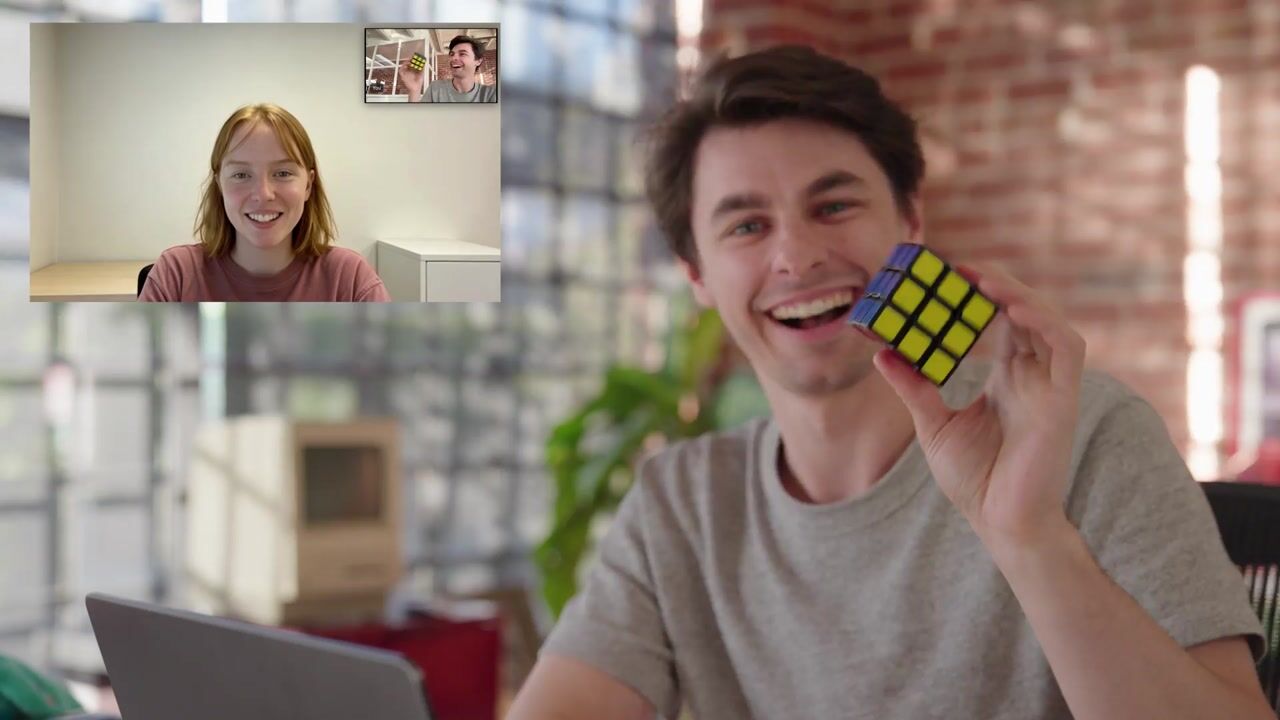
在互动故事接龙演示中,用户表示想跟学生玩“根据随机道具编故事”的游戏,并在摄像头前先后举起两个物件:
- 先拿出一只绿色的毛绒小玩具:AI 没有机械报出“我看到一个玩具”,而是立刻把故事里的角色调整为“伪装成普通小鱼的绿色毛茸茸海底小怪兽”,并指定这个绿色小家伙为特工队长;
- 随后又举起一个三阶魔方:AI 顺势接梗,将魔方改写为“必须把颜色转对才能解开隐藏宝藏坐标的高科技水下导航仪”。
这一交互说明,当环境中的视觉元素发生改变时,系统能将其直接内化到对话语境中,而非生硬打断当前心流。
场景 3:陪伴型分步动手辅导
在魔方还原教学演示中,用户表示底两层已经拼好,顶层只有一个蓝色条状块。AI 采取了“小步慢跑”的指导策略,一次只发出三到四个顺时针或逆时针旋转的明确指令,随后主动要求:“做完这几步后把顶面举稳让我看一眼”。在确认对齐情况后,再下发下一组公式。 发布视频包含标为 2 倍速的片段,不适合据此计算响应速度。这里值得留意的是它把指令分批给出,并等待用户完成动作和展示结果。
场景 4:时序追踪与提示辅助
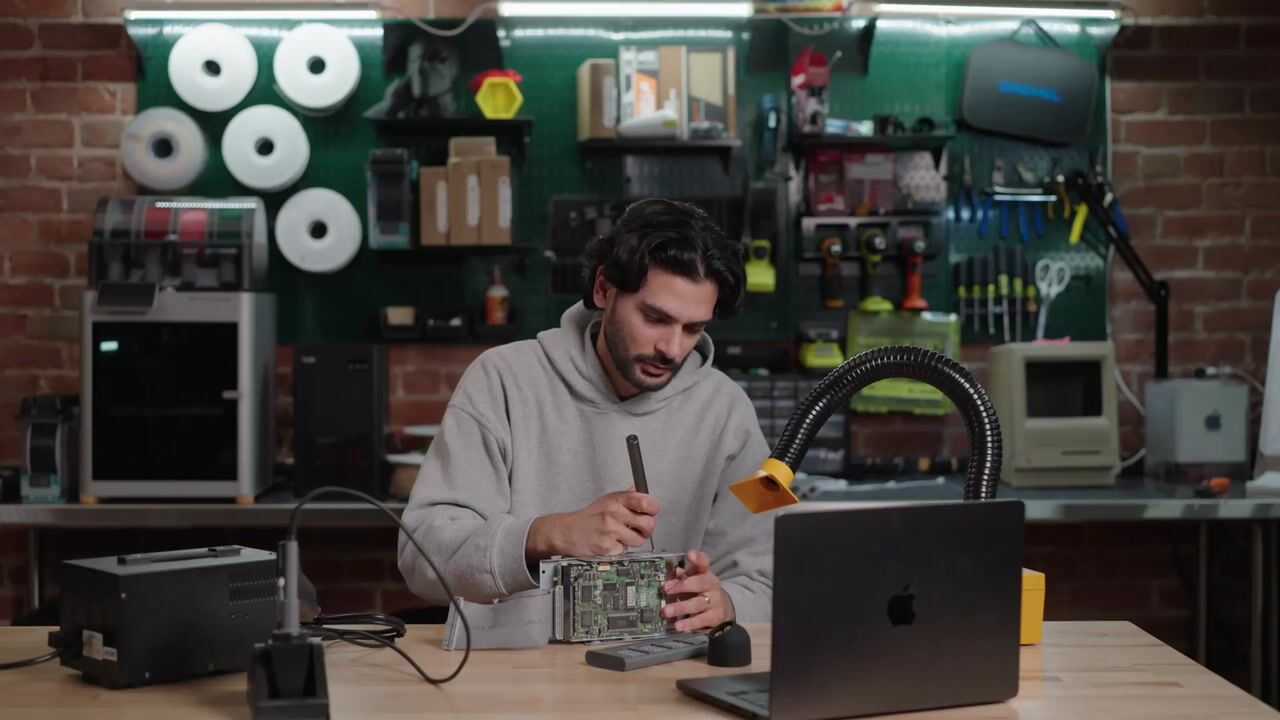
在电路板手工焊接的演示中,用户拧好螺丝后准备去取工具,并明确对 AI 说:“我已经把电烙铁打开了,热起来大概需要 12 秒,到时间麻烦提醒我一下。”AI 答应后保持倾听,随后开口提醒“12 秒到了”。随后在用户焊接元器件时,AI 辅助数出“One Mississippi, Two Mississippi, Three Mississippi”帮助把控按压时长。
聊一分钟,26 人认作真人:这个测试说明什么?
在这次发布中,Tavus 最受关注的一项主张,是宣称 Griffin 成为“首个通过实时视频图灵测试的模型”。
这组数据的具体实验设计与统计分母如下:
-
测试方法:通过第三方独立平台招募参与者,告诉他们将与“另一位参与者”进行一场时长仅有 1 分钟 的视频通话,两人共同聊聊“今年最期待的事情”。而屏幕对面的搭档实际上是由 Griffin-Lite 驱动的虚拟人 PAL;
-
统计结果:在 54 名 参与者中,有 26 人(占比 48%) 在通话结束后认为自己是在和真人交谈;
-
历史对比:在相同的测试协议下,Tavus 自家上一代基于 Phoenix-4.5 + Sparrow-2 + Raven-1 级联架构的系统,在 41 名 参与者中仅有 1 人(占比 2.4%) 误以为是真人;
-
置信度与疑点:认为对面是真人的组别,平均判断置信度为 79%;而察觉出异样的受访者平均置信度为 81%,并且多数在前 20 秒内就产生了怀疑;
-
维度打分(7 分满分):在自然度上获得 5.4 分,可信赖度 5.6 分,再次交谈意愿 5.8 分,感知其认真倾听程度 5.5 分;而“谈话流动自然度”得分相对最低,为 4.9 分。
问卷最后才询问参与者是否怀疑对面不是真人,之后向所有人告知 AI 身份。官方还报告,超过一半参与者在通话期间没有想到对面可能是 AI,这一组中几乎所有人最后都判断对方是真人。认为对面是 AI 的参与者,再次交谈意愿仍有 5.4/7 分:认出 AI,也未必就不愿意继续交流。
这项主张到底意味着什么?
视频图灵测试问的是:交谈者能否分辨屏幕对面的对象是真人还是机器?视频通话让这个判断涉及更多线索:回答是否贴切,语调与表情是否搭配,手势是否自然,点头、笑声和接话是否出现在合适的时刻。Griffin-Lite 在这次研究中被 26/54 人认作真人,相比旧串联系统的 1/41,说明整套面对面交互带来的真人感明显提高。Tavus 据此将它称为首个通过实时视频图灵测试的模型。
这次通话只有一分钟,参与者预先被告知要与“另一位参与者”交谈,仍有 28 人认为对面是 AI。报告也没有给出统一的行业通过门槛,因此这项结果不能直接推广到长期交谈,更不能证明机器有主观感受。它展示的进展是具体的:声音、表情和接话节奏一起改善后,一段短视频对话已经能让相当一部分人觉得是在与真人交流。
目前谁能用,下一步要解决什么?
当一种技术能够在这次短通话研究中让接近一半参与者误认成真人时,清晰告知 AI 身份就更有必要。
Tavus 在报告中明确指出了这种双刃剑效应:让交互变得极其自然的同一种机制,也可能让使用者误认对方是真人。正因如此,Griffin-Lite 目前并未全面开放商业接口,而是仅以“研究预览(Research Preview)”的形式向少数受信任的测试者开放。Tavus 正在研发安全披露功能并推进进一步对齐和安全评测,计划解决相关问题后扩大发布。
针对未来的落地场景,Tavus 提出了几个具体应用方向:在教学辅导中,导师能察觉学生听不懂的困惑神情并主动换一种讲法;在职场沟通中,员工可以进行困难谈话排练,对方会像真人一样作出即时反应;在日常检修时,用户无需知道专业名称,直接举起损坏零件对着摄像头就能一起排查故障;此外还包括面向老年人的日常情感陪伴。
Griffin 目前尚未接入现有的 Tavus 客户平台。目前 Tavus 平台客户可用的,仍是基于 Phoenix 生成人脸、Raven 负责视觉理解、Sparrow 控制接话时机的旧架构;旧模型的可用并不代表 Griffin 已开放使用。这一步依然很早,但它的真正价值在于让用户少花精力去迁就系统的反应节奏。
Tavus 发布面对面交互模型 Griffin 称其为首个通过实时视频图灵测试的模型
Griffin 是能与你视频交谈的 AI。它的进展在于持续听看,把声音、表情、动作和接话时机一起协调,减少抢话与等待带来的机器感。
26 / 54 人认作真人
1 / 41 人认作真人
同一协议下的一分钟视频通话。参与者事先被告知会与“另一位参与者”交流,问卷最后才问是否怀疑对方是 AI。Tavus 据此提出“首个通过”的主张;报告没有统一行业通过门槛,仍有 28 人认为对面是 AI,结果不能外推到长期交谈。
为什么会抢话、等半天?
常见串联方案先转文字,再生成回答、合成声音、驱动头像。每一段交接都可能增加等待;转成文字后,语气里的迟疑也容易丢失。依赖生成音频的头像很难在你还在说话时给出点头回应。
两个引擎同时工作:说话时也继续听看
① 连续对话引擎
以亚秒级“小回合”判断:你在思考还是说完了?此刻该等、点头、附和、开口,还是让出发言权?
② 流式生成引擎
接收对话控制信号,一小块一小块生成声音和整幅画面,让语气、表情与手势配合出现,边生成边播放。
演示里,用户举起毛绒道具与魔方,AI 把它们接进故事;教魔方时,AI 分批给动作并等用户展示结果。画面因此能参与正在进行的交流。
评测也要把“看懂”与“回应”分开
NVIDIA VideoFDB 用真实通话片段,交由大模型裁判按 0—5 分评分。
Gemini 2.5 + Anam 为 2.80;关注言行协调。
15 个参测配置中居首;关注视听语境理解。
两条轨道分别评分,不是通用智力排名;总分最高也不代表响应最快。
这些时长,量的不是同一件事
三者均不等于整套对话响应时间。NVIDIA 榜单中 Griffin 生成、感知的中位响应分别为 1892、2232 毫秒。
现在仍是研究预览
Griffin-Lite 只向少数受信任测试者开放,尚未接入 Tavus 客户平台。真人感越强,清楚告知 AI 身份越必要。
Griffin: The First Human Interaction Model | Tavus

Griffin is the first Human Interaction Model (HIM). On live video calls, 48% of people who talked to it thought it was a real person.
Introducing Griffin
The First Human Interaction Model
Griffin is the world’s first Human Interaction Model (HIM), a new class of model designed to understand and generate face-to-face real-time human interaction. It listens while they talk, and they pay attention to expressions and pauses, not just words. Griffin combines our earlier research into real-time perception, conversation and expressive human-like video into one unified video to video system.
48%
of people believed Griffin was a real person after a one-minute video call.
#1
on NVIDIA’s independent test of face-to-face AI
37%
ahead of the next best AI at reacting in the moment
By: Hassaan Raza, Co-founder & CEO
Ioannis Patras, Head of Research
Tavus Research Team
Today we're introducing Griffin, our first Human Interaction Model (HIM). HIMs are a new class of models designed to understand and generate face-to-face real-time human interaction. They listen while they talk, and they pay attention to expressions and pauses, not just words.
Griffin builds on our earlier research into real-time perception, conversation and expressive human-like video. It combines those model capabilities into one, unified video-to-video system.
Griffin is the first model to pass the real-time, video Turing test. In a live study, 48% of participants who talked with Griffin thought they had talked with a real human. Previous systems, including Tavus’s own industry leading conversational video interface (powered by Phoenix 4.5, Sparrow-2, Raven-1), had a max 2% pass rate. This represents a huge breakthrough in human-machine understanding, and is only possible due to Griffin’s video-to-video duplex approach with audiovisual generation, movement, conversational modeling – all in one system, operating in real time.
Griffin-Lite, a research preview, is available today to a select group of early testers, with a wider release of a more powerful model to follow. This post covers what Griffin can do, how we built it, how we measured it, our approach to safety and what comes next.
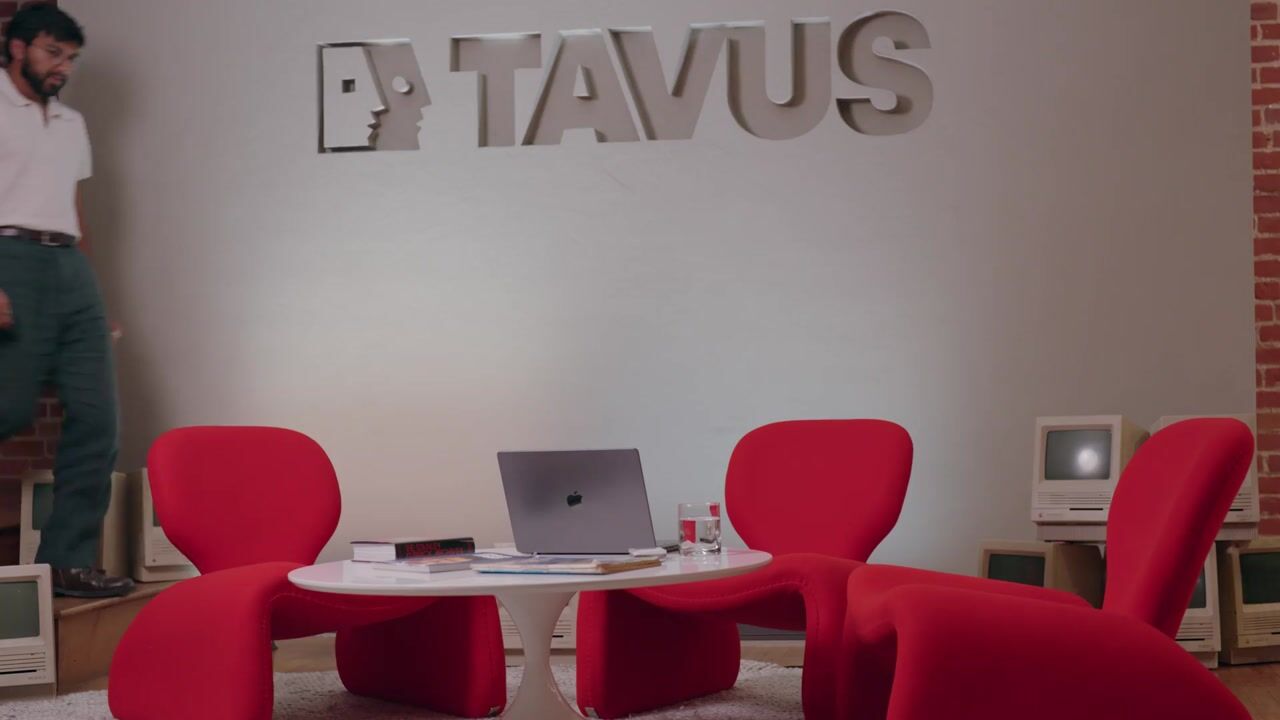
A message from Hassaan:
Humans are evolutionarily designed to communicate face to face. We speak as much through our words as we do our expressions, tone, gestures and timing. So much of human communication is non-verbal. It’s an art, a dance.
Machines don’t understand this art. They require us to meet them where they are, to learn their language- the right command, the right button click, the right prompt.
At Tavus, we believe in a future where machines meet us where we are. Where machines learn to communicate in the way that we most effortlessly do. They learn to see, hear, respond and even look like we do. In effect, we want computing to become invisible. We want it to feel second nature.
In a great conversation, you don’t spend your time evaluating the mechanics. You think about what you want to say, what you're hearing and seeing, and ultimately the conversation just flows. In great conversations, you aren't thinking about the conversation at all.
With machines, those mechanics are distracting and demand your attention.
Did it hear me? Did it understand me? You share something personal or difficult, and the face continues to smile, or the faceless, cold machine sits there, then responds with a monotonous 'I'm sorry to hear that'. You pause to collect your thoughts, and it jumps on and responds to incomplete context. It needs time to answer, but nothing in its expression or voice or gesture tells you it's working on a response.
Each of these moments is you managing the machine. You adjust your timing, simplify your language, make sure to think complete thoughts before saying anything. You remind yourself: don't leave dead air! Remember to be very clear about what you want! You lower your expectations. The system, in all its intelligence, might be capable of infinite incredible work. It can discover new mathematics dammit! Yet, getting the help for the simple stuff takes more effort than you have to give.
Human communication is an art, a dance. The right move, at the right time. A deep understanding of what you mean, when the words themselves could mean many things. A nod of acknowledgment to signal understanding. An expression that tells you everything without saying anything.
All of these are things we do as humans without thinking about it. These signals let your attention stay on the conversation, not how to converse. As a machine becomes more coherent at expressing and understanding these signals, communicating with it, too, becomes something you don't have to think about.
01
Griffin-Lite is a preview of our first Human Interaction Model: a full-duplex video-to-video model that responds to human behavior in real time. Perception, deciding when and how to respond, and expressive speech and video generation all happen at the same time.
To see what it looks like in practice, we brought people who had never used Griffin together with Tavus researchers for open-ended conversations and short demonstrations.
Behavior and emotion modelling
Griffin is able to express behaviors, emotions, and gestures according to conversational context. It laughs, changes its tone, and shifts in response to what the other person says and does.
Rudy gets a promotion.
Brittney and the Buckeyes.
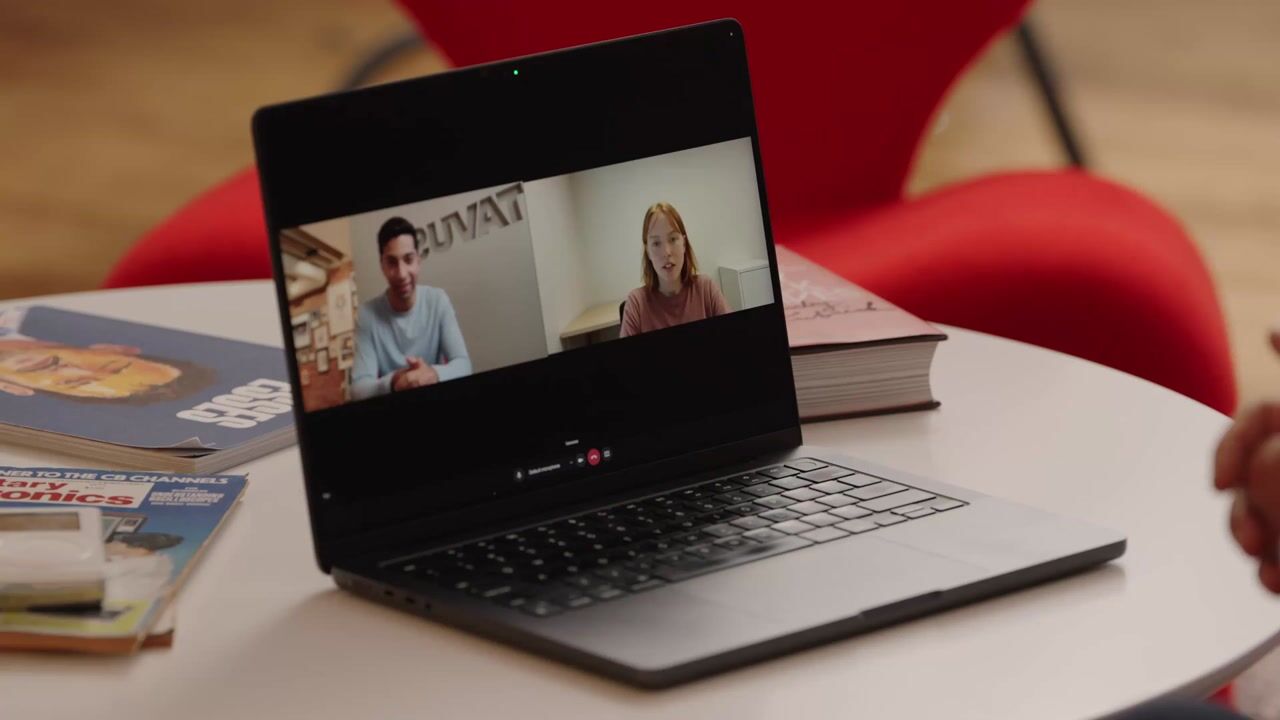
Clip: Rudy gets a promotion.
Full-scene generation
Griffin generates every pixel in every frame in real time from one reference image. It controls the whole scene, not just the face, arms, and fingers, but also things like the movement of the chair the person is sitting in, the shadows they cast, and the background behind them.
Mars plays Simon Says.
Brittney plays Simon Says.
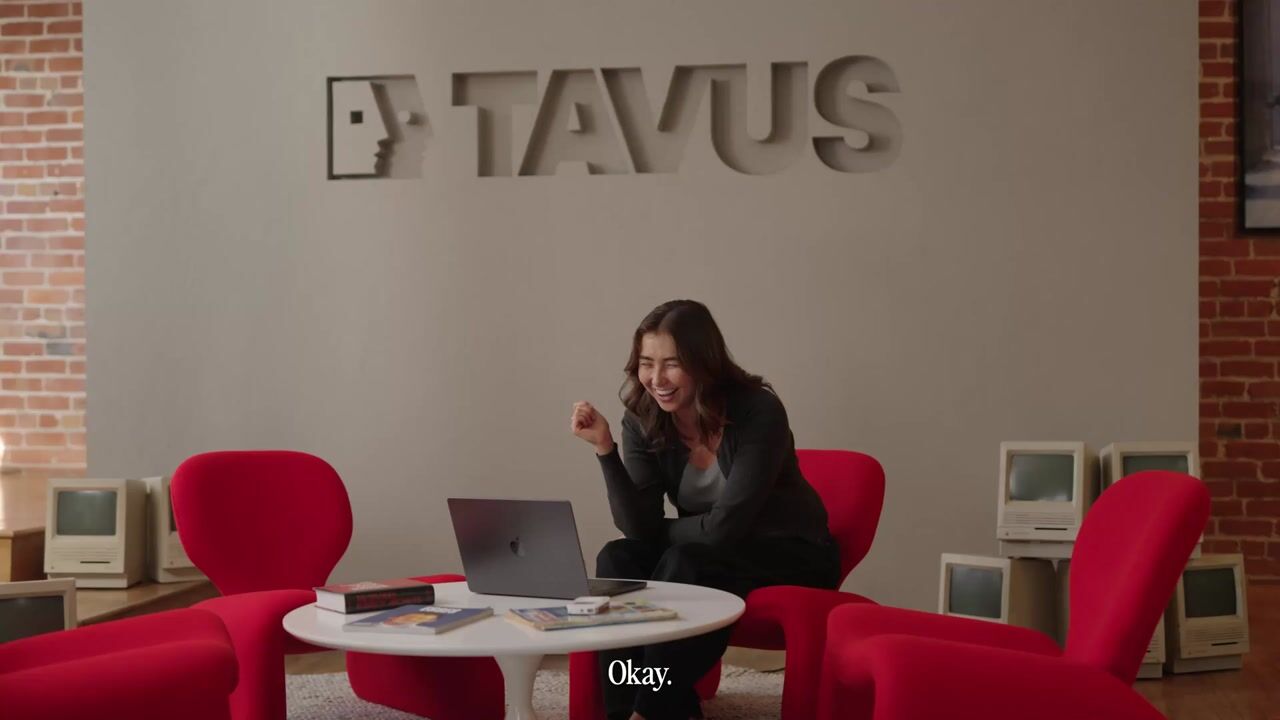
Clip: Mars plays Simon Says.
Full-duplex conversation
Griffin continuously evaluates the state of the conversation and independently of conversational turns. It can interrupt, adjust, back-channel, or be interrupted without losing its place.
Ari tells a story.
Mars talks about a date.
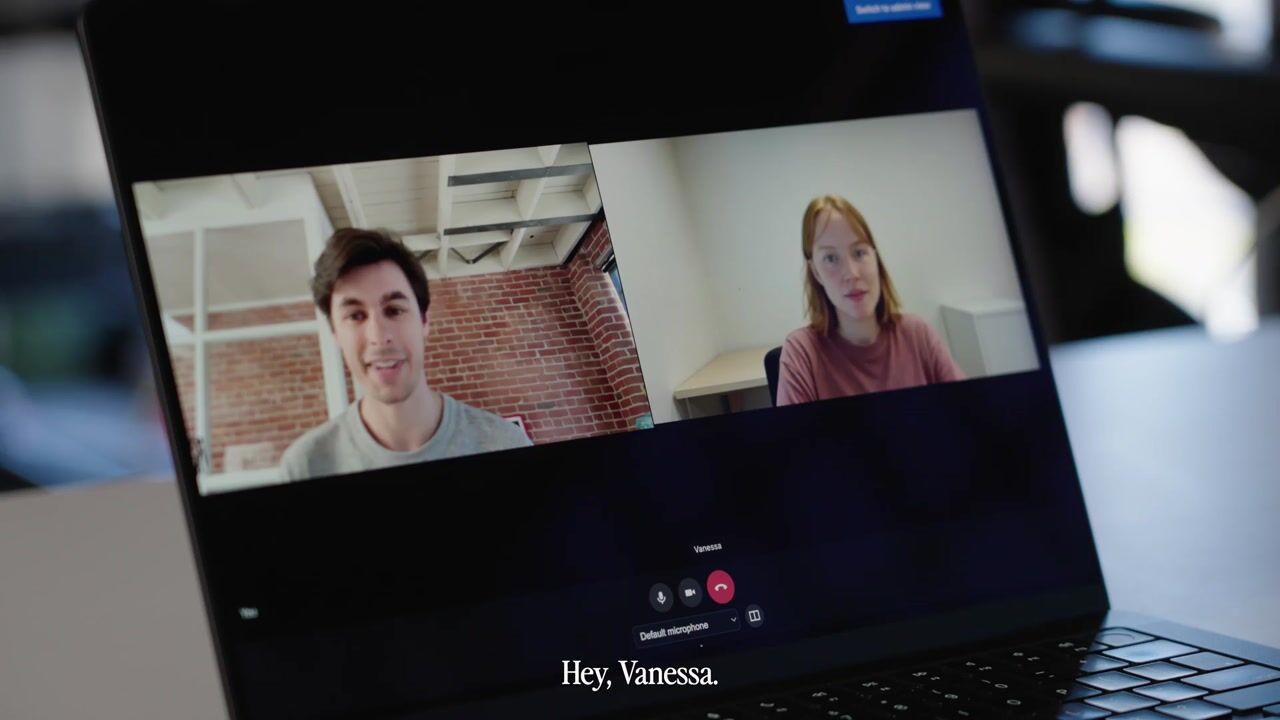
Clip: Ari tells a story.
Perception
Griffin elevates dialogue beyond just verbal understanding, comprehending and reacting to visual context when appropriate.
Ari solves a Rubik's cube.
Mars shows a peacock.
Brittney looks cozy.
Clip: Ari solves a Rubik's cube.
Temporal understanding
Griffin understands time as part of the conversation: how long a silence has lasted, what a sustained silence means, and when to speak again on its own.
Sagar solders a board.
Clip: Sagar solders a board.
02
Technical approach: Building a full-duplex, video-to-video interaction model
Perception, conversational decision-making, and generation are in continuous interplay throughout human-to-human interaction, and we designed Griffin around the same principle. Central to our approach is a conversational model that controls speech and nonverbal behavior directly, with streaming speech and video generators that follow its decisions as they change. Griffin, is a two part system:
- A Continuous Conversational Modeling engine that perceives the incoming audio and video, decides when and how to respond, and produces signals that determine what should be said and how.
- An Audio Visual Generation engine comprising a Streaming Speech Generation and a Streaming Video Generation architecture that convert those signals into speech and video, respectively.
Perception, decision-making, and generation run concurrently throughout the conversation, so the model can respond to changes in the conversation while it’s speaking as well as while it’s listening.
Griffin: A Human Interaction Model
Text tokenControl signalAudio tokenVisual tokenShared processing
PAL system prompt
TTTTTT
User video input
VVVVV
User audio input
AAAAA
Full-Duplex Continuous Conversational Modelling
Listen continuouslyProcess audio and video in real time, without interruption.
Turn-taking: speak / hold / yieldDecide when to speak, hold, or yield the floor naturally.
Barge-in: continue / pause / stopRespond to user interruptions or changes.
Backchannels & non-verbal cuesGenerate natural acknowledgements, expressions and gestures.
Active listening during speechKeep listening and understanding while speaking.
Low-latency streaming coordinationAlign audio, video and conversation flow in real time.
Verbal/non-verbal tokens and controls
Reference audio
Reference image
Streaming Audio-Visual Generation
Audio latents
Video latents
A1A2A3A4A5A6A7A8
V1V2V3V4V5V6V7V8
Rendering
Streaming Audio-Visual Decoding
Output audio & video
Continuous Conversational Modeling: (Conversational) intelligence, Perception and Control
Griffin makes conversational decisions at regular sub-second intervals rather than once per turn. At each interval it assesses the state of the conversation, including what has been said and the user's verbal and nonverbal behavior, and decides what to say next and how to say it. This differs from cascade systems that chain speech recognition, a language model, and speech synthesis, one after the other, and which wait for the user to finish speaking before they begin to respond.
The output controls not only what is said but also how the speech is delivered and how the model behaves nonverbally, including emotional tone, stance, facial expression, and gesture. Because these decisions are made continuously and are conditioned on context, the model can take and yield the turn on the basis of what is being said rather than when the audio stops, so a pause for thought is not treated as the end of the turn. The same mechanism lets the model nod in agreement while the user is speaking, backchannel and confirm at natural points, and adjust the emotional content of its response to the user's speech and nonverbal behavior.
Additionally, Griffin perceives video as well as audio, where most interactive systems perceive audio alone. Visual input lets the model read the user's nonverbal communicative signals, such as gaze and facial expression, and it also gives the model access to the user's environment and to visual material the user chooses to share, such as their screen.
This is illustrated in the figure below.
Griffin Full Duplex Conversational Modeling
Emotionally Responsive Full Duplex Conversational Model
InputsSystem promptConversation historyUser AudioUser Video
Full Duplex MiniturnCCM
01 Perceive ...SpeechToneGestureFacial expressionScenescreen & background
02 ... and act accordingly
User
Model
Can you book a table for four at an Italian restaurant tomorrow night?
Of course, I’ll look for available reservations.
Silence
I am checking Italian restaurants with tables for four...
Mm-hm.Backchannel (no interruption)
Actually, make it sushi instead.⚡︎ Interrupted
Sure, I’ll switch to sushi options for tomorrow night.
Found a few — 7:00 pm and 8:30 pm are available.
Silence
PhasesBehaviors
User speaking
- Understand content and intent
- Track nonverbal cues (e.g., tone, gesture)
- Anticipate turn end
Model responding
- Generate speech, video and nonverbal behavior
- Keep listening for user signals
- Allow natural overlap
User backchannel
- Detect feedback (e.g., “mm-hm”, “I see”)
- Continue without interruption
Model continuing
- Incorporate backchannel
- Continue the response naturally
- Maintain engagement
User interrupting
- Detect interruption in real time
- Stop current response
- Adapt to new input
Model adapting
- Acknowledge and re-plan
- Generate updated response
- Maintain conversational flow
Idle conversation
- Wait for next user input
- Stay engaged with appropriate nonverbal behavior
Across all phasesCall a toolChange demeanor depending on user emotion
OutputsTextControl signals for streaming audio and video generation
Perception continues during speech and silence.
The emitted outputs are converted to streaming audio outputs and together with streaming control signals are driving video generation as explained below.
Fast and Expressive Streaming Speech Generation
Griffin-Lite's speech generation produces high-quality speech at conversational latency and can clone a speaker's voice from about 10 seconds of audio. The model is a fast autoregressive diffusion transformer. It takes an encoding of the reference clip as a prefix and generates the new speech progressively, as increments of outputs and controls arrive from the conversational model, instead of waiting for the full utterance.
A compact continuous codec
Tavec v1.7
High fidelity. Extraordinary speed.
2,193×
real-time decoding
4.242
ViSQOL MOS-LQO
28.42M
decoder parameters
Continuous latents · Causal streamingDecoder throughput measured on H100.
Griffin's speech generation speed and fidelity start with how it represents sound. It relies on Tavec, a convolutional autoencoder that maps 48 kHz audio into a compact continuous latent: 40 values per frame, 100 frames per second, and no codebooks. Its fully causal (streaming-ready) decoder carries state across chunks, turning streamed latents into one seamless waveform, with audio packets as small as 10 ms.
This continuous representation supports straightforward regression-based flow matching and fully differentiable audio pipelines, without quantizer gradient approximations. Its compactness also makes long sequences manageable: a minute of speech corresponds to 6,000 latent frames, against 2.88 million samples of raw audio.
Griffin: Fast and Expressive Streaming Video generation
The other side of Griffin's audiovisual generation system is fast diffusion-based generation architecture. Previous Tavus models relied on extensive 3D priors, which limited what they could express: complex, human-like behavior such as hand and large body gestures was out of reach, and so were dynamic backgrounds.
We built it to meet three requirements:
- Respond quickly to each incoming chunk of audio and expressive controls
- Handle controls that change fast
- Hold visual quality, lip sync, and identity consistency over long generations
Autoregressive latent video models typically compromise on at least one of these. The architecture we arrived at generates 720p video in real time, one latent at a time, and accepts streaming controls that let the conversation model direct nonverbal behavior such as gesturing, looking away, or changing emotion.
1DMD2
Few-step generation
Pretrained teacher
Many-stepBidirectional
DMD
Student
Few-stepBidirectional
DMD + adversarial loss
Few forward callsNot yet streaming
2Robust Teacher Forcing
Causal generation
Conditioning
ReferenceGround-truth history
Student
Few-stepCausal
Next latent
One latent at a timeStreaming enabled
3Self-Forcing
Long-horizon stability
Conditioning
ReferenceGenerated history
Student
Few-stepCausal
Next latent
Final step only
DMD
Gradient**Feed back / detached
Progressively longer rollouts
Robust Teacher Forcing
Reference
Ref
No compression
Oldest history
1…L
High compression
Intermediate
L+1…L+M
Medium compression
Most recent
L+M+1…L+M+S
Low compression
Target
Noise
No compression
DiT
Next latent
To build it, we distilled a large, bidirectional, many-step diffusion model into a few-step autoregressive generator. The generator takes a reference image together with streaming audio and controls, and produces one latent at a time. The distillation ran in three stages. First, we distilled the teacher into a few-step student with Distribution Matching Distillation. This student is fast but not autoregressive; it generates a long video as a single long chunk. Second, we converted it into an autoregressive model with teacher forcing, so as to arrive in an architecture that can generate in a few steps one latent at a time. Third, we trained with Self-Forcing so that we can run long autoregressive rollouts without drift, and we added a mechanism acting on the history frames, the previously generated frames the model continues from, to improve stability.
03
Griffin-Lite: Evaluations and benchmarks
Ahead of this preview, we ran Griffin-Lite through a set of evaluations at different levels, from a single component to a live conversation:
- The video generator on its own, against published streaming diffusion models, on latency, visual quality, and lip sync
- The full system on VideoFDB, NVIDIA's leading industry benchmark for full-duplex audio-visual conversation, which scores how a model reads a person's behavior and how it responds
- The full system in live one-minute video calls with people who did not know they were talking to a model
Video Generation
We compared the video generator of Griffin-Lite against four published streaming diffusion models in an audio-to-video setting, where each model is given speech and a reference image and has to produce the talking face.
Griffin-Lite produces one latent at a time and does not wait for future audio, so there is little delay between a piece of audio arriving and its effect appearing on screen. On H100s this averaged 0.43 seconds, half that of the next fastest method. In a conversation, this significantly cuts down the delay before the face reacts when the person interrupts or when a nod is due.
This is depicted in the diagram below, where the dark bar represents the time required by different models to generate the smallest chunk of video they can produce, and pink the time required to playback a video chunk. In the figure, we mark the best average and the worst case latency of each model.
Source audioGeneration timePlayback time
Griffin-Lite also scored highest on visual quality. It led every baseline on DOVER and FID, the two standard measures of video quality, and on THEval, a recently published framework built for talking heads. On lip sync it placed second on LSE-C, at 7.27. LSE-C rewards pronounced mouth movement, including movement past the point where it looks natural, which THEval accounts for.
THEval ↑
LiveTalk0.667
SoulX-FlashTalk0.696
AvatarForcing0.698
LiveAvatar0.657
Griffin Lite0.748
FID ↓
LiveTalk24.2
SoulX-FlashTalk21.4
AvatarForcing25.8
LiveAvatar20.9
Griffin Lite13.8
DOVER ↑
LiveTalk0.636
SoulX-FlashTalk0.583
AvatarForcing0.711
LiveAvatar0.702
Griffin Lite0.750
LSE-C ↑
LiveTalk7.05
SoulX-FlashTalk6.79
AvatarForcing7.73
LiveAvatar6.61
Griffin Lite7.27
Full-Duplex Conversation
NVIDIA's VideoFDB is a research and industry benchmark for evaluating the naturalness and accuracy of full-duplex audio-visual conversations. It examines how a model responds to and produces the signals of human interaction, including dialogue, gaze, facial expression, and body movement, measuring both conversation quality and response time. The benchmark scores a model on two tracks, generation and perception, each with its own rubric and its own leaderboard. NVIDIA conducts the evaluation independently using the published metrics and its own judge.
Griffin-Lite scored highest on both tracks against the benchmark's published baselines, which include commercial and open-source systems— and it is the only case where the same model is evaluated on both tracks.
The generation track tests whether the model produces the right behavior. Given a person's audio, it scores the model's speech and video together for fluency, affect matching, and whether the nonverbal behavior fits the moment, laughing with the person rather than after them. Griffin-Lite scored 3.83, over 1 full point ahead of the next-highest system and only 0.09 below the human reference at 3.92, which is more than 12x closer to human performance than any other system evaluated.
Generation
Cascaded A2AV — what the agent produced, audio and video together, in response to a dynamic event in the user's stream.
Overall ↑TOR ↑ / Timing ↓
Human ground truth3.9278% / 900 ms
Tavus Griffin Lite3.8362.8% / 1892 ms
Gemini 2.5 + Anam2.8044% / 2840 ms
Gemini 2.5 + Keyframe2.3931% / 3520 ms
VideoFDB's perception track tests the other side of the conversation, which is whether the model understands the moment. Given a person's audio and video, it scores the model's spoken response for fluency, conversational flow, and visual grounding, meaning whether the model uses what it sees, a pause with a glance away, for instance, rather than reacting to the words alone. Griffin-Lite scored 3.73, 0.29 points ahead of the strongest second best and 0.47 below the human reference at 4.20, marking Griffin-Lite as the most perceptive model on the benchmark among the 15 models evaluated, ahead of every frontier realtime model on the leaderboard.
Perception
AV2A — audio-visual in, audio out. Did the agent read the moment correctly? (A2A) rows are the audio-only variants of the same systems.
Overall ↑TOR ↑ / Timing ↓
Human reference4.2090% / 1400 ms
Tavus Griffin Lite3.7373.8% / 2232 ms
MiniCPM-o 4.5 (A2A)3.4472% / 920 ms
MiniCPM-o 4.53.4073% / 720 ms
Gemini 2.5 Flash Native3.1772% / 3160 ms
Gemini 2.5 Flash Native (A2A)3.1773% / 2760 ms
Gemini 3.1 Flash Live (A2A)3.0369% / 1240 ms
OpenAI gpt-realtime (A2A)2.9767% / 4440 ms
OpenAI gpt-realtime-mini (A2A)2.8869% / 5000 ms
Gemini 3.1 Flash Live2.8466% / 1720 ms
OpenAI gpt-realtime2.7572% / 5400 ms
OpenAI gpt-realtime-mini2.7366% / 5320 ms
VITA-1.5 (A2A)2.0061% / 800 ms
VITA-1.51.7658% / 400 ms
MiniOmni2 (A2A)1.7269% / 2760 ms
MiniOmni21.1964% / 3080 ms
VideoFDB also reports takeover-rate alignment, which measures how closely the model's decisions about when to speak match the timing in the reference conversations. Griffin-Lite scored 62.8% on generation and 73.8% on perception, the highest of any system on both tracks.
Face-to-face study
Griffin-Lite
48%
of participants (n=54) believed their partner was a real person.
Phoenix-4.5
2.4%
of participants (n=41) believed their partner was a real person.
Quantitative benchmarks are important, but some aspects of naturalness are difficult to measure. For every new model, we run a study with participants recruited through an independent research platform to understand how human-like it is in a real, live conversation. Participants have a short video call with the model without being told what it is, and afterward we ask whether they think their partner was a real person. Until now, almost no one has said yes.
On Phoenix-4.5, 2.4% of participants (n=41) believed their partner was a real person. On Griffin-Lite, nearly half did: 48% (n=54). This represents a milestone of, to the best of our knowledge, the first model to have ever passed the video Turing test.
Methodology
Participants were told they would be matched with another participant for a one-minute video call to discuss what they were looking forward to this year. Their partner was in fact a PAL powered by Griffin-Lite, generating her face, voice, and responses in real time. After the call, participants were asked to write down their partner's answer to the question and to rate their partner on several axes around naturalness and trustworthiness. They were also asked to rate the conversation itself: how well it flowed, and whether they felt their partner was really listening. Only at the end of the survey were participants asked whether it had crossed their mind that their partner might not be a real person, and if so, when. Every participant was then told that their partner had been an AI model.
Results
Of the 54 participants who spoke with Griffin-Lite, 26 believed their partner was a real person. Participants on both sides were confident in their answer: those who said real averaged 79% confidence, and those who said AI averaged 81%.
Over half of participants said the possibility had not crossed their mind during the call, and nearly all of that group went on to say their partner was real. Those who did suspect tended to suspect within the first 20 seconds.
Griffin-Lite was rated favorably on every axis. On a 7-point scale, participants on average rated it a 5.4 for seeming natural, 5.6 for seeming trustworthy, and 5.8 for whether they would enjoy talking with it again, a score that held at 5.4 among participants who said it was AI. The conversation scored 5.5 for whether participants felt their partner was really listening and 4.9 for flowing naturally, the lowest of the five.
04
Safety, limitations, and responsibility
Given Griffin-Lite is the first model to pass the Turing test, we understand the responsibility to be thoughtful on the risks and release strategies.
The same properties that make Human Interaction Models powerful interfaces for natural communications between human and machine allow them to deceive a human into believing it is not AI.
We believe further alignment and safety procedures are required for safe release, and we are working on safe disclosure features, as well as with organizations tackling AI safety. Contact us if you'd like to participate in these evaluations and testing.
Griffin-Lite will not be available for use for customers at this time, though it is available for select trusted testers as a research preview. To request access, you can submit this form. We anticipate releasing Griffin very soon after these safety concerns are addressed.
05
What's next
Griffin is an early step toward computers that people can work with instead of operate. As these models improve, they can bring knowledge and emotional understanding together and play a larger part in how people learn, work, and get help.
For a student, that could mean a tutor who notices when an explanation isn't making sense and tries another one. For someone at work, it could mean rehearsing a hard conversation with a counterpart who reacts the way a real person might. For a customer, it could mean holding a broken part up to the camera and working out the fix together, without knowing what the part is called.
In each of those cases, the person doesn't have to turn what they need into the right command or menu first. They can explain it the way they would to another person, and the model can work out what they mean from their words, their face, and the moment. That's what we mean by human computing, and Griffin is our biggest step yet toward it.
Credits
Griffin was built by the Tavus research and engineering teams. Our thanks to Baseten, Daily and Cerebrium for the infrastructure behind the preview, to Queen Mary University of London for research collaboration, and to NVIDIA for building and scoring the Video Full-Duplex Benchmark.
Citation
Tavus Research, “Griffin: The First Human Interaction Model”, Tavus, October 2026.
Build with Tavus today
Griffin isn’t on the Tavus platform yet. It’ll come once we’ve worked out how to release it safely. Until then, you can build PALs, AI you talk to face to face, on the models 150,000 developers and businesses already use: Phoenix generates the face, Raven sees and understands you, and Sparrow knows when to talk.